Introduction

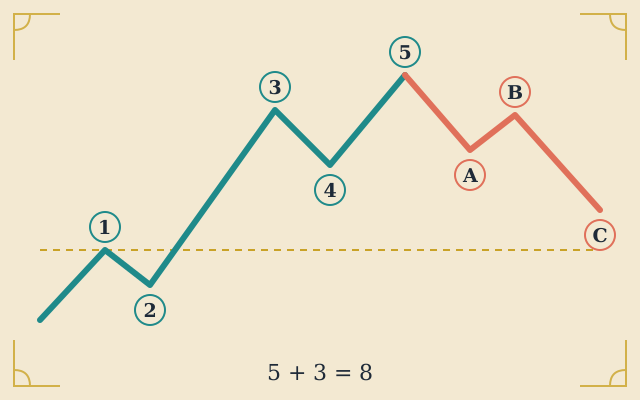
The Elliott Wave Principle says that a market crowd does not move at random: it rises and falls in a repeating rhythm of hope and fear. A trend moves in five waves — waves 1, 3 and 5 go with the trend, waves 2 and 4 go against it — and is then corrected in three waves, labelled A, B and C. Five plus three makes eight waves: one full cycle.
This guide follows the order the film sings it: who Ralph Nelson Elliott was and how the idea survived him, how to count 1-2-3-4-5 and A-B-C, the three hard rules of an impulse, the guidelines that are only ever "often", how every wave contains smaller waves, how to use a count in practice, and where the method is honestly weak.
None of this is a signal service. A wave count is a map of possibilities with a line on it where the map is proven wrong. Educational content only — not financial advice.
Who was R.N. Elliott

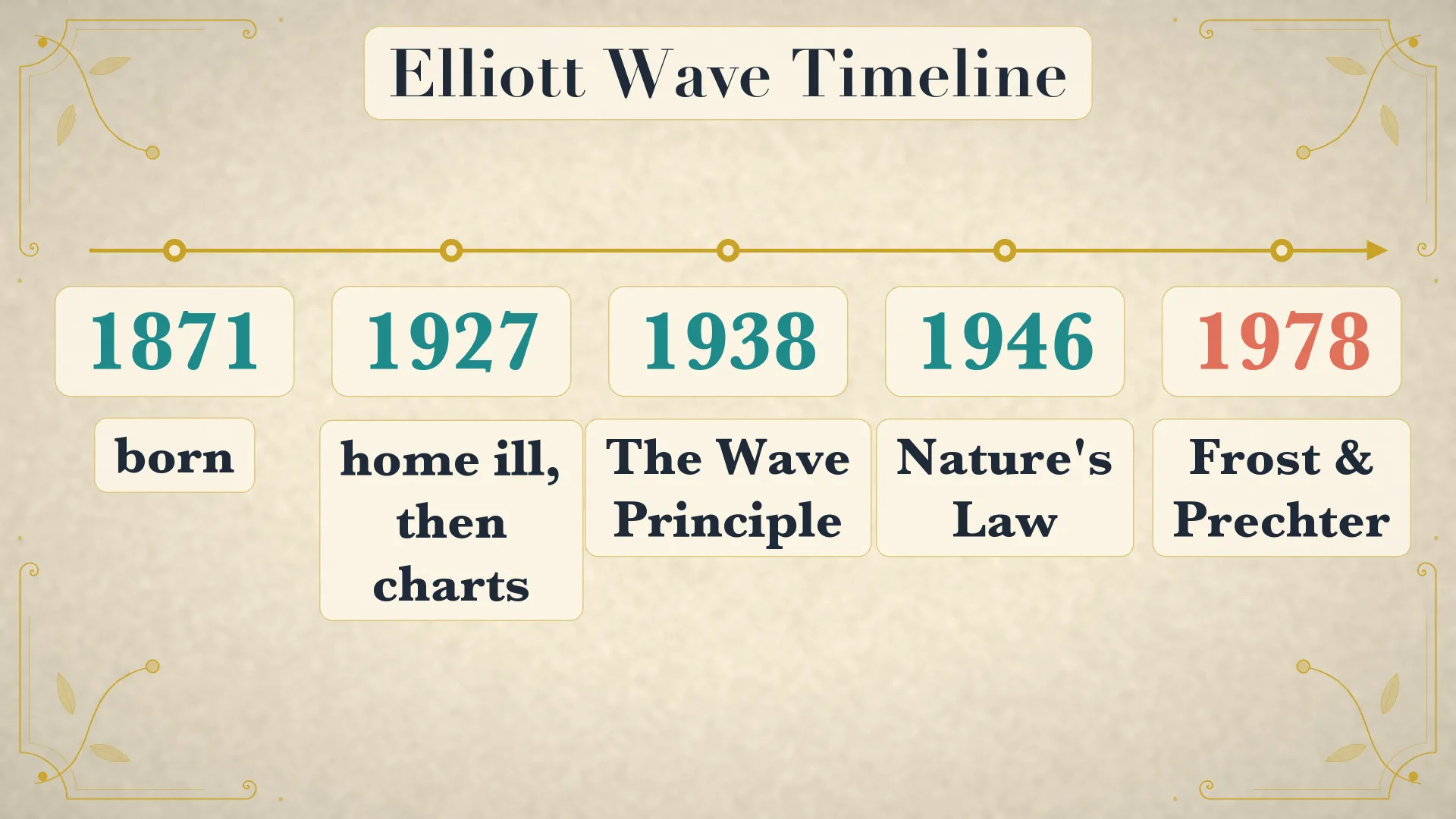
Ralph Nelson Elliott was born on 28 July 1871 in Marysville, Kansas, and died on 15 January 1948. He was an American accountant. From the mid-1890s he worked as an accounting executive for railroad companies in Mexico and Central America, and in 1924 the US State Department made him Chief Accountant for Nicaragua.
In 1927 he came home to Los Angeles ill, with an intestinal illness caught in Central America; later, pernicious anaemia left him bedridden and unable to keep his career. In the early 1930s, while sick, he studied about 75 years of stock-market data (the Dow Jones), on charts from yearly all the way down to half-hourly — and saw the crowd moving in repeating waves.
In August 1938 he published The Wave Principle, with the help of Charles J. Collins. After it, *Financial World* magazine commissioned twelve articles from him (1939). In June 1946 came Nature's Law – The Secret of the Universe, his most complete work, where he linked the waves to the Fibonacci numbers.
After Elliott's death the method did not disappear. In the 1950s and 1960s Hamilton Bolton kept it alive in *The Bank Credit Analyst*. In 1978 A.J. Frost and Robert Prechter published the book Elliott Wave Principle, which brought it to modern traders.
How to count 1-2-3-4-5 and A-B-C

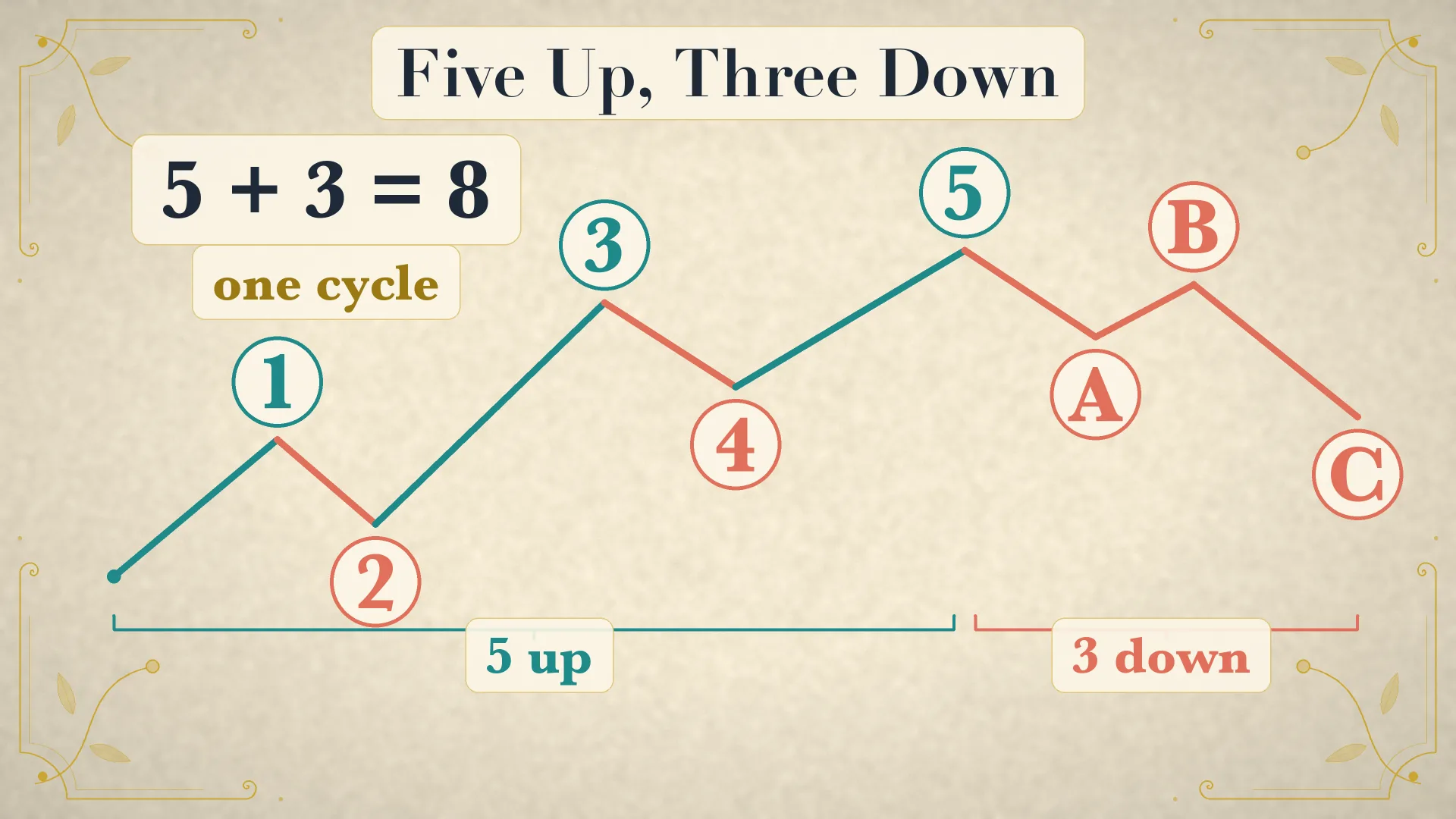
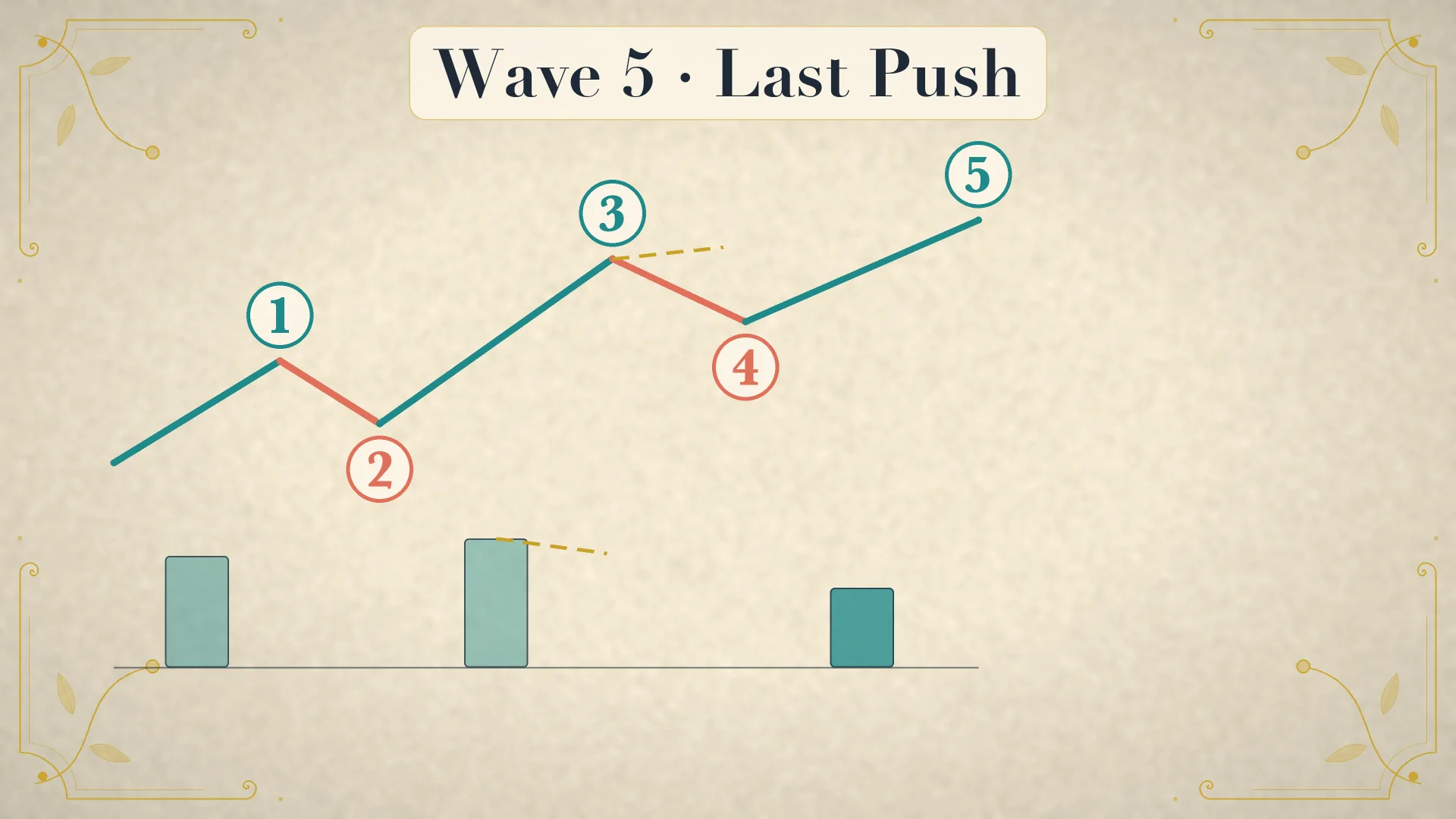
Start with the direction of the larger trend. The part that moves with it is the impulse: five waves, labelled 1 to 5.
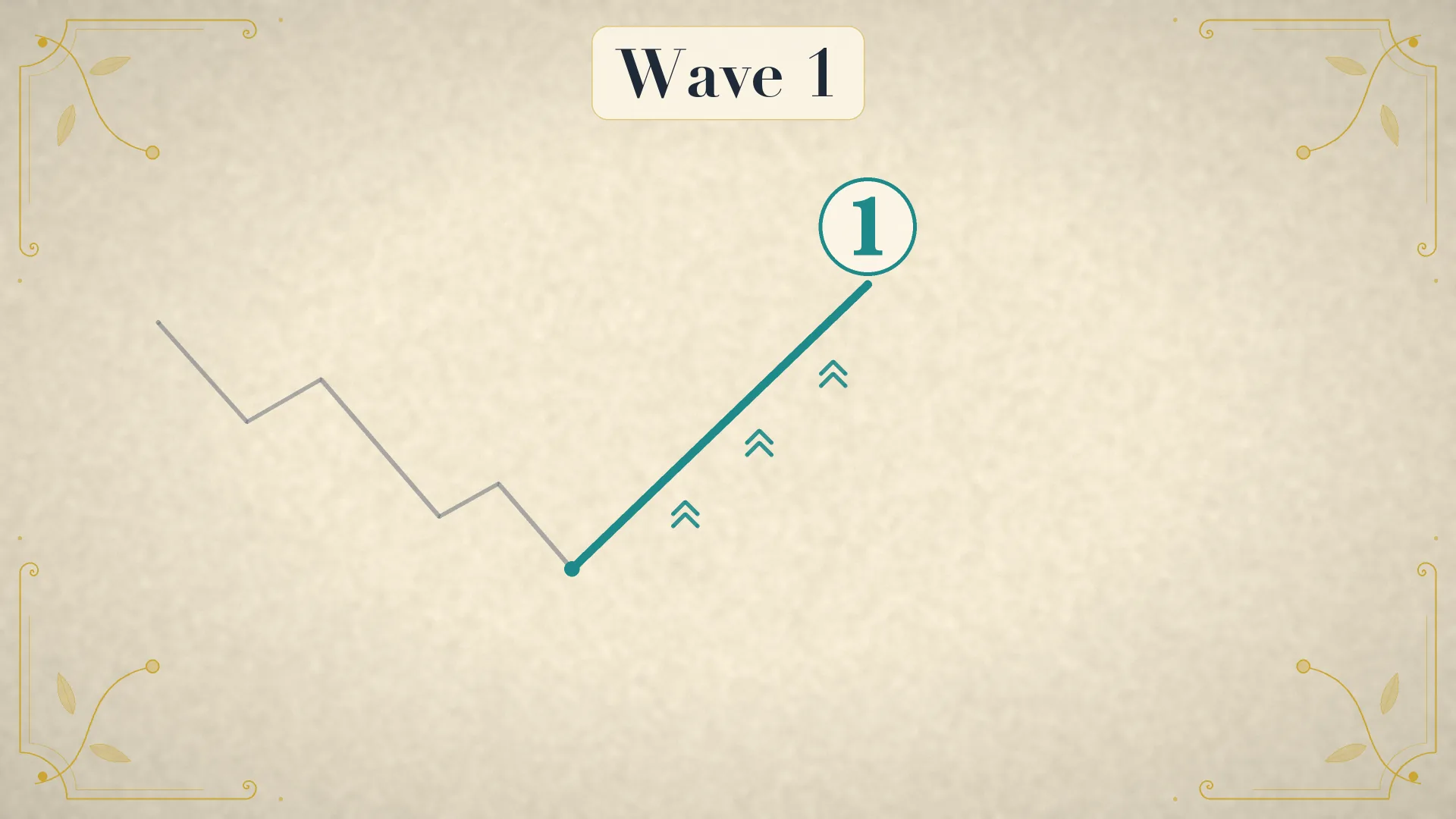
- Wave 1 — the first buyers step in.
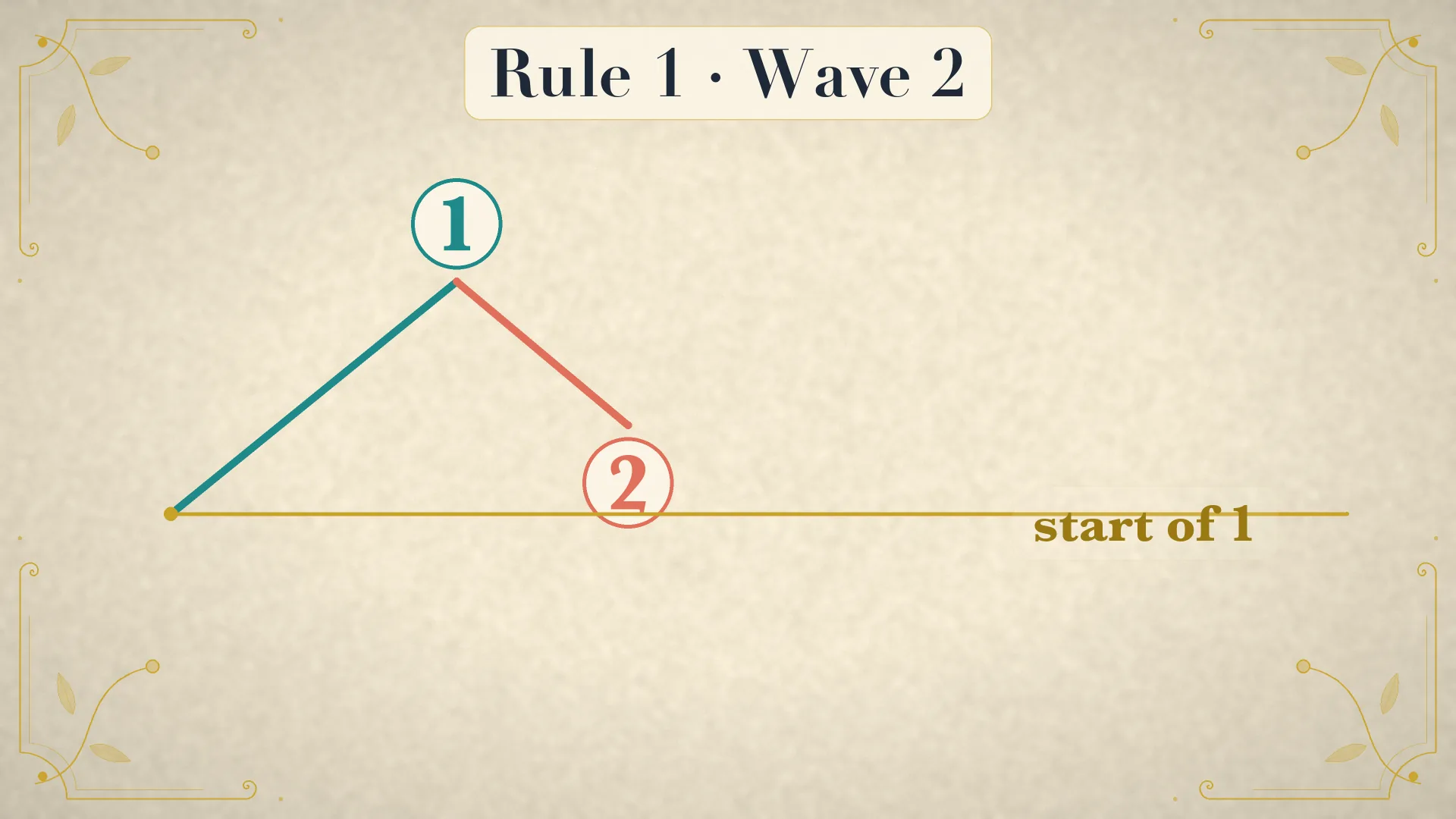
- Wave 2 — a pullback against wave 1. It can retrace a lot, but never past the start of wave 1.
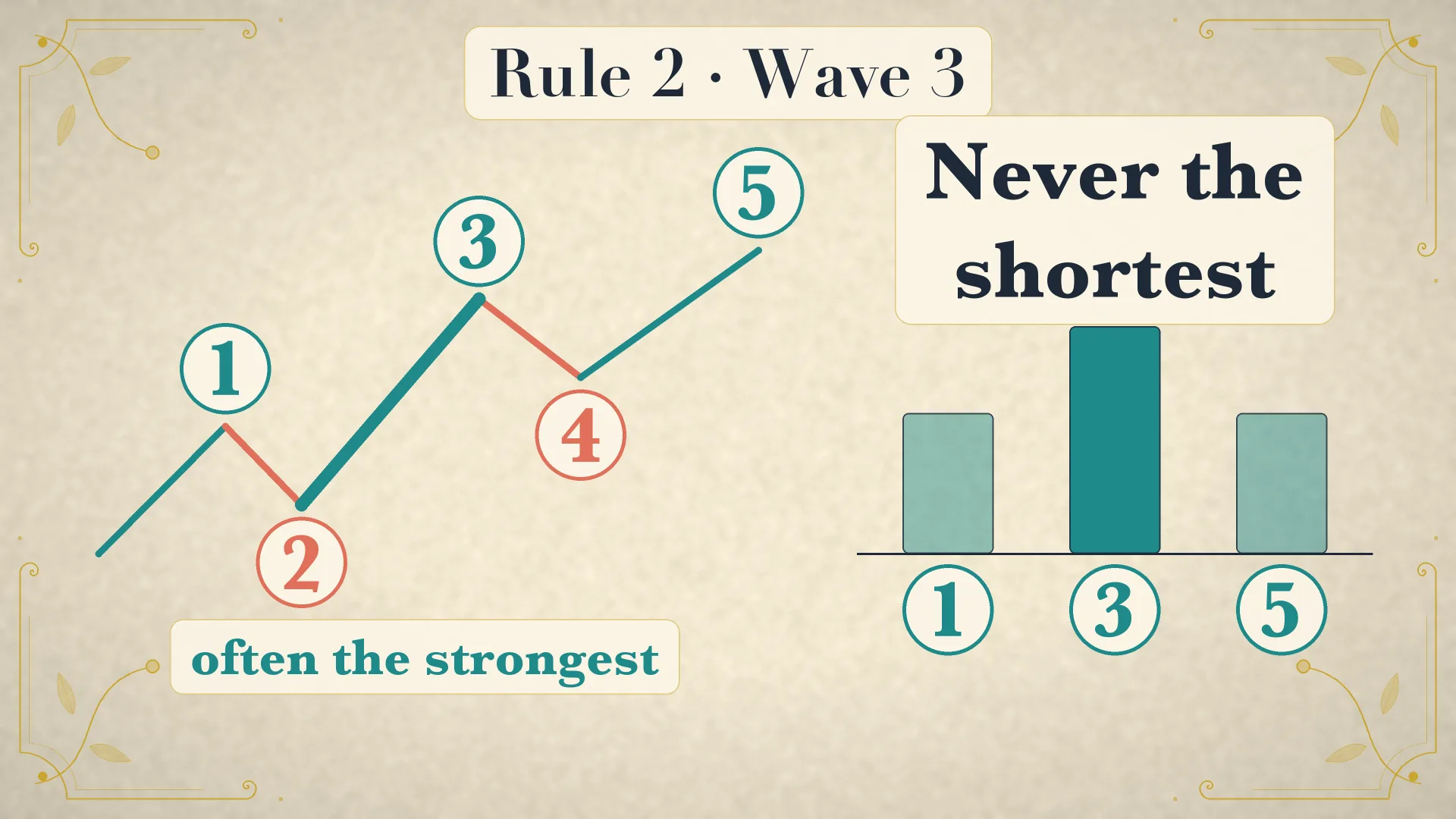
- Wave 3 — the crowd joins in; it is often the strongest wave, and it is never the shortest of 1, 3 and 5.
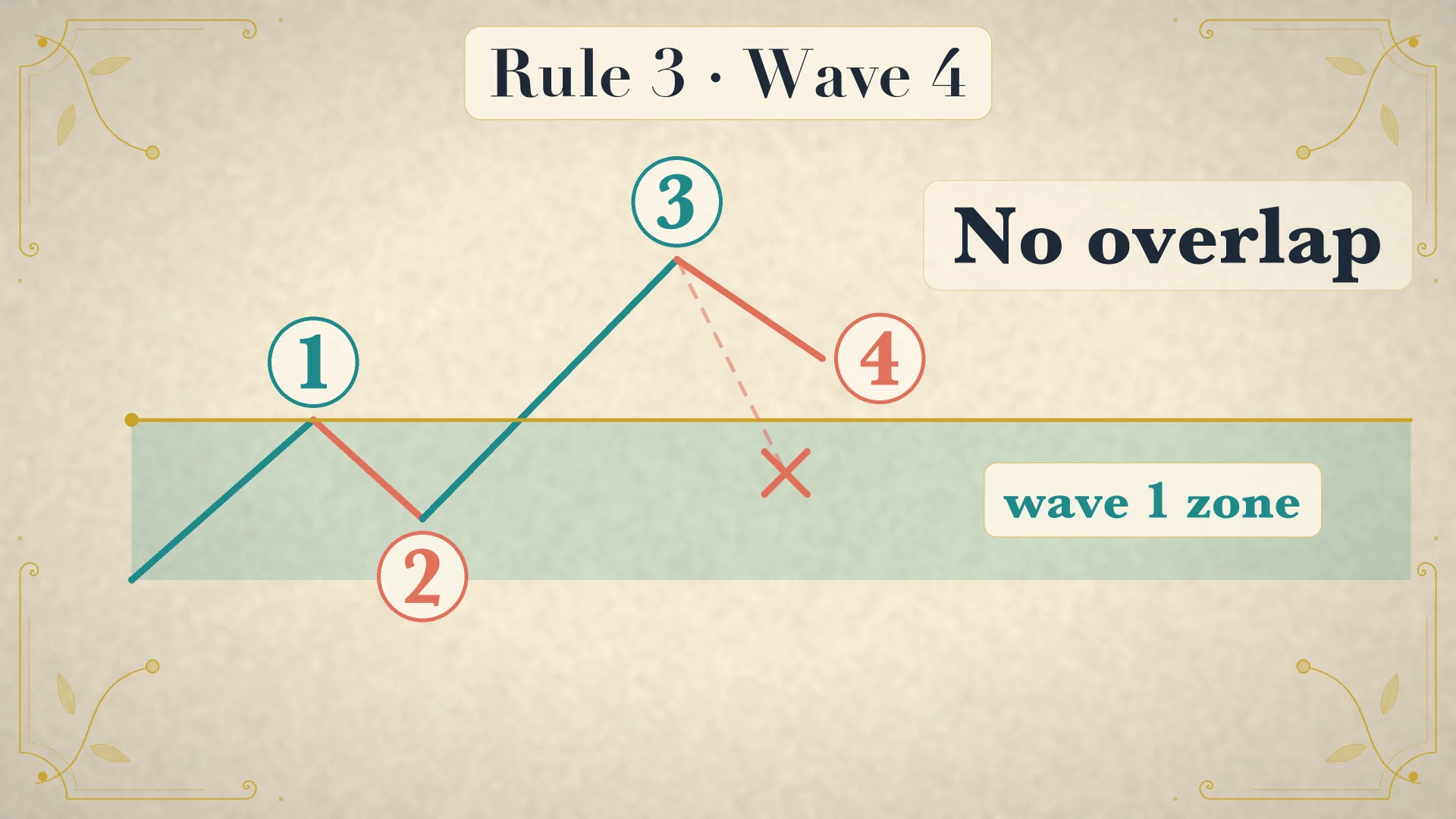
- Wave 4 — a rest, often sideways and slow. It must not enter the price territory of wave 1.
- Wave 5 — the last push. The cheers get loud, but the momentum behind it often feels weaker than in wave 3.
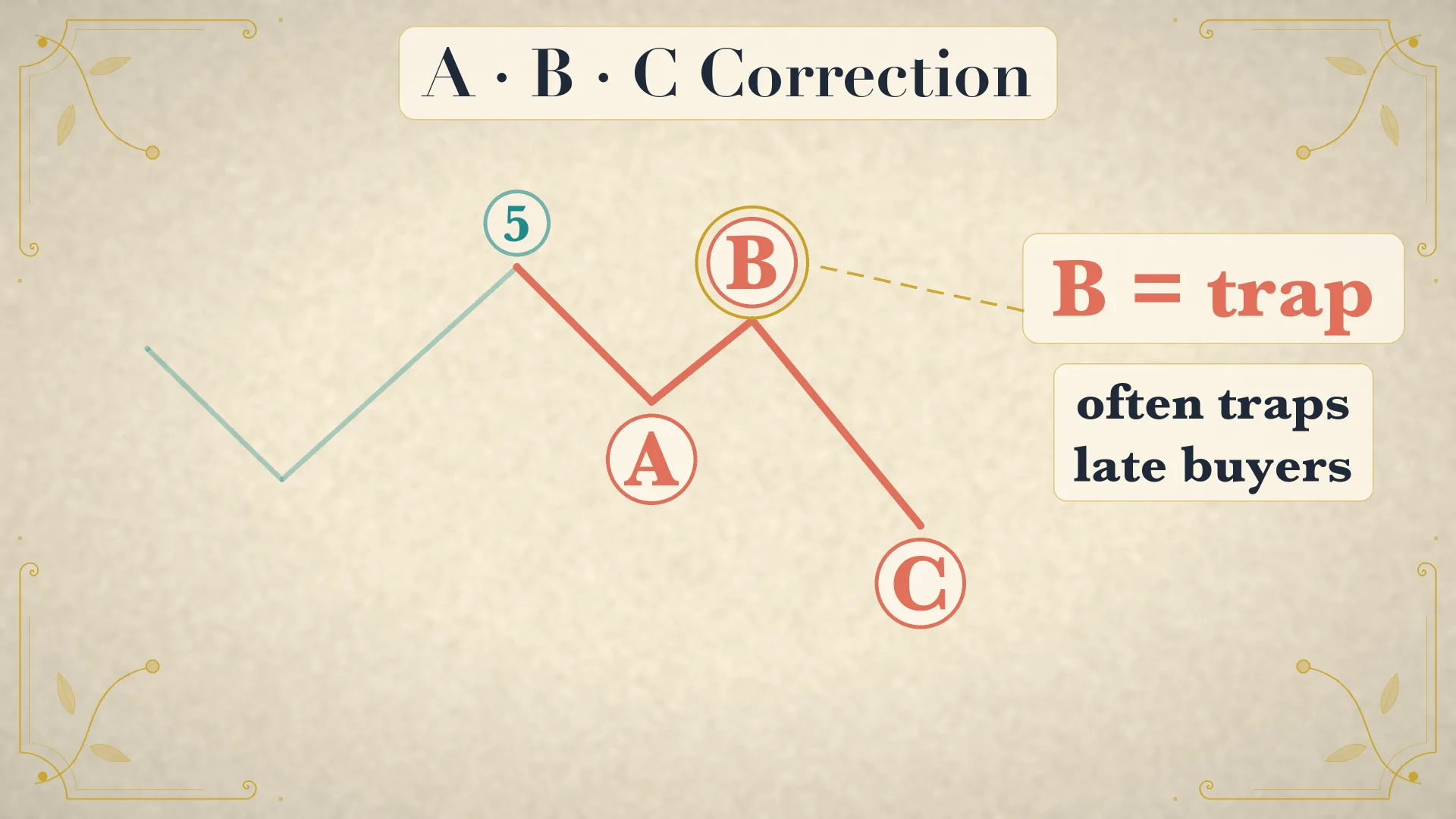
Then comes the correction: three waves, labelled A, B and C. A is the first fall; B is a bounce that often traps late buyers; C drags the crowd down again.
Five with the trend plus three against makes eight waves — one full cycle. In a down-trend the same shape simply appears upside down.
The three hard rules
Most of Elliott wave analysis is judgment, but three things about a five-wave impulse are treated as rules — not tendencies:
- Rule 1: wave 2 never retraces more than 100% of wave 1.
- Rule 2: wave 3 is never the shortest of waves 1, 3 and 5.
- Rule 3: wave 4 never enters the price territory of wave 1.
If a count breaks any one of these, the count is wrong — not the market. Throw it away and recount. That is exactly what makes the rules useful: each one gives you a price level where your reading is proven wrong.
Fibonacci and alternation (“often”)
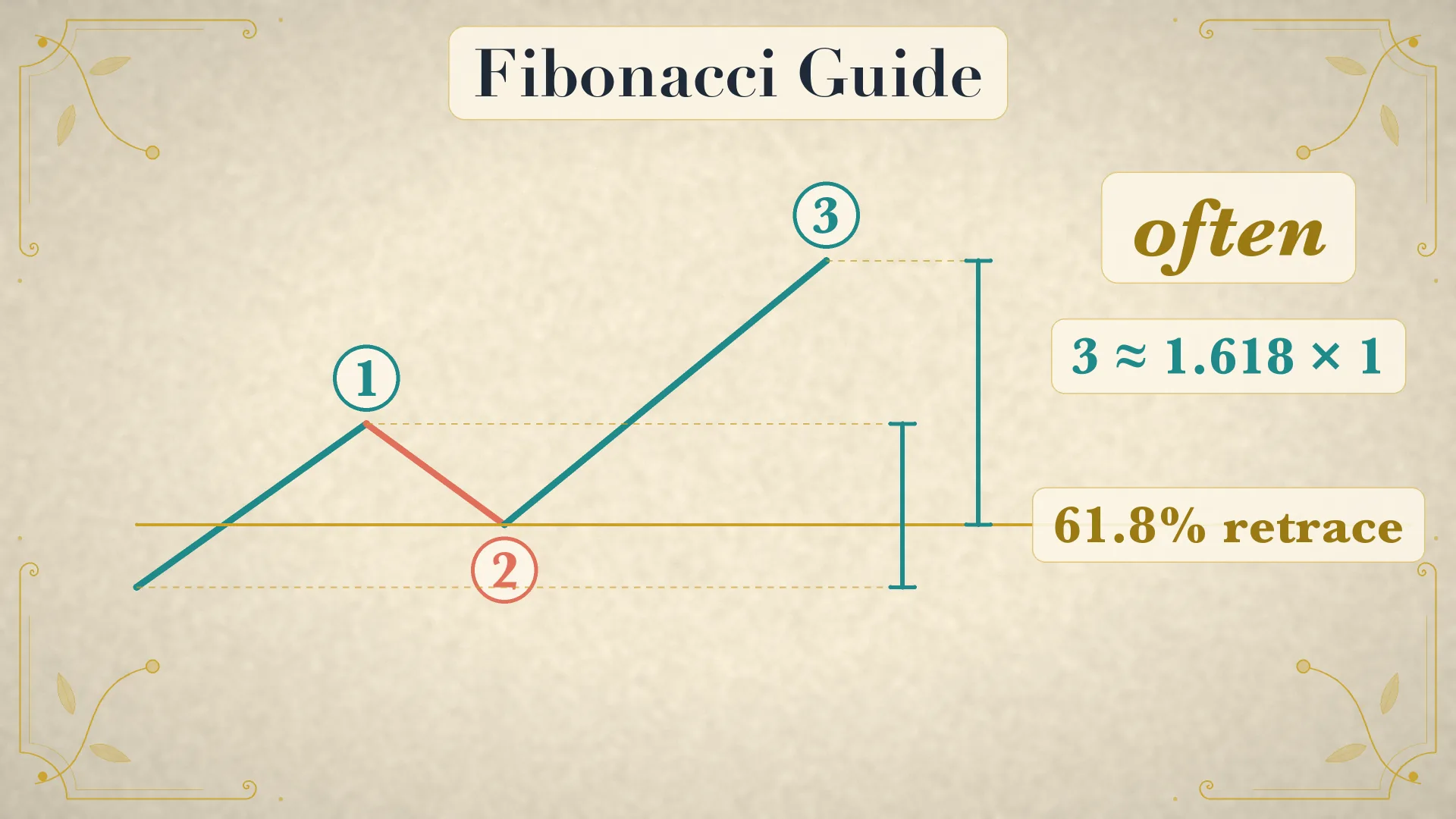
Elliott linked the waves to the Fibonacci numbers in *Nature's Law*. Notice the counts themselves: 5, 3 and 8 are all Fibonacci numbers. Traders use Fibonacci ratios as a guide to where a wave might end — but these are guidelines, and the honest word for every one of them is often:
- Wave 2 often retraces 50–61.8% of wave 1.
- Wave 3 is often about 1.618 times the length of wave 1, and is often the strongest wave.
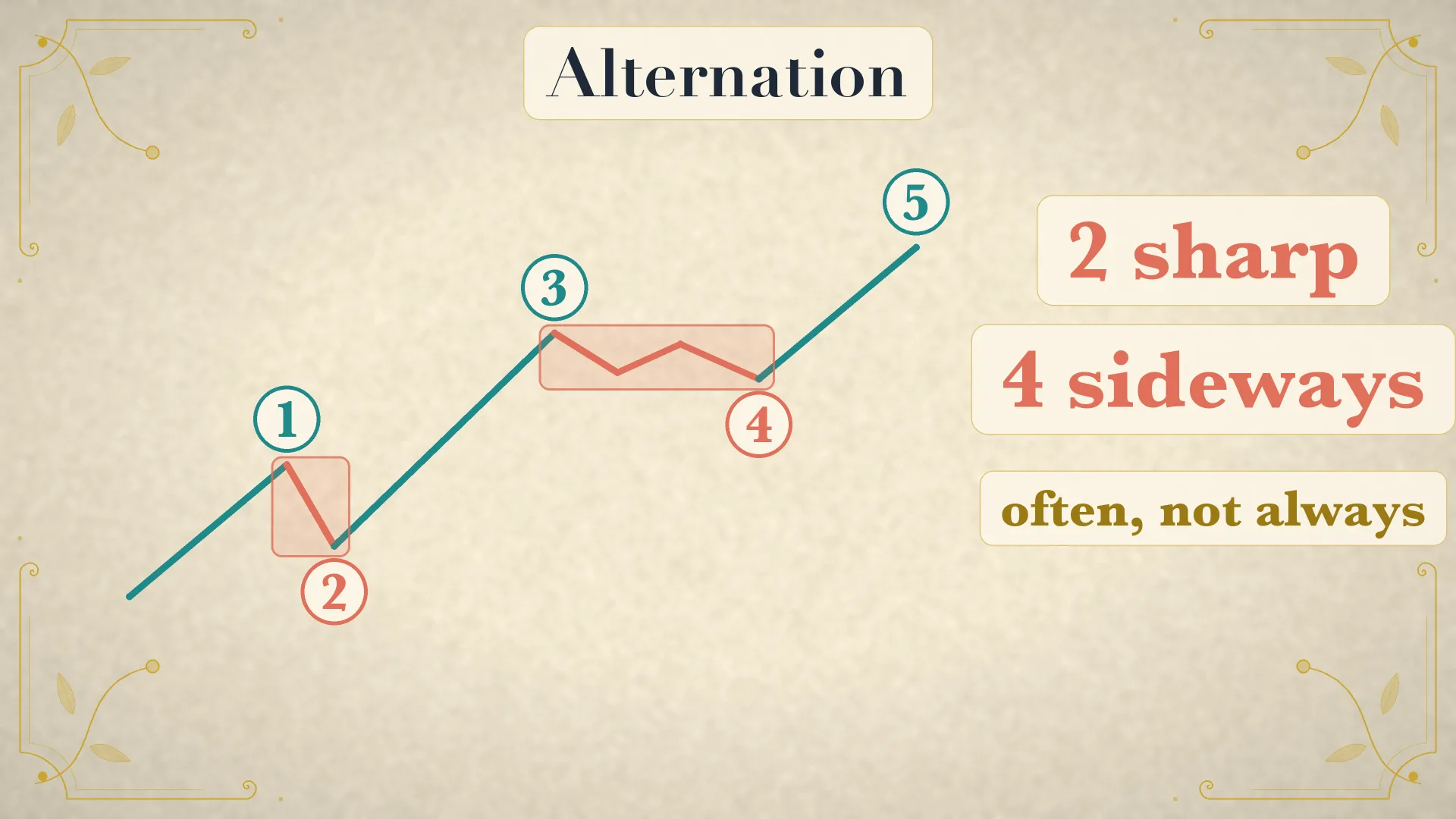
- Waves 2 and 4 often alternate: if one is sharp and deep, the other tends to be sideways and flat.
- Wave B often traps late buyers.
Treat a guideline as a place to look, not a place to act blindly. When a guideline fails, the count can still be valid; when a rule fails, it cannot.
Waves inside waves: degrees
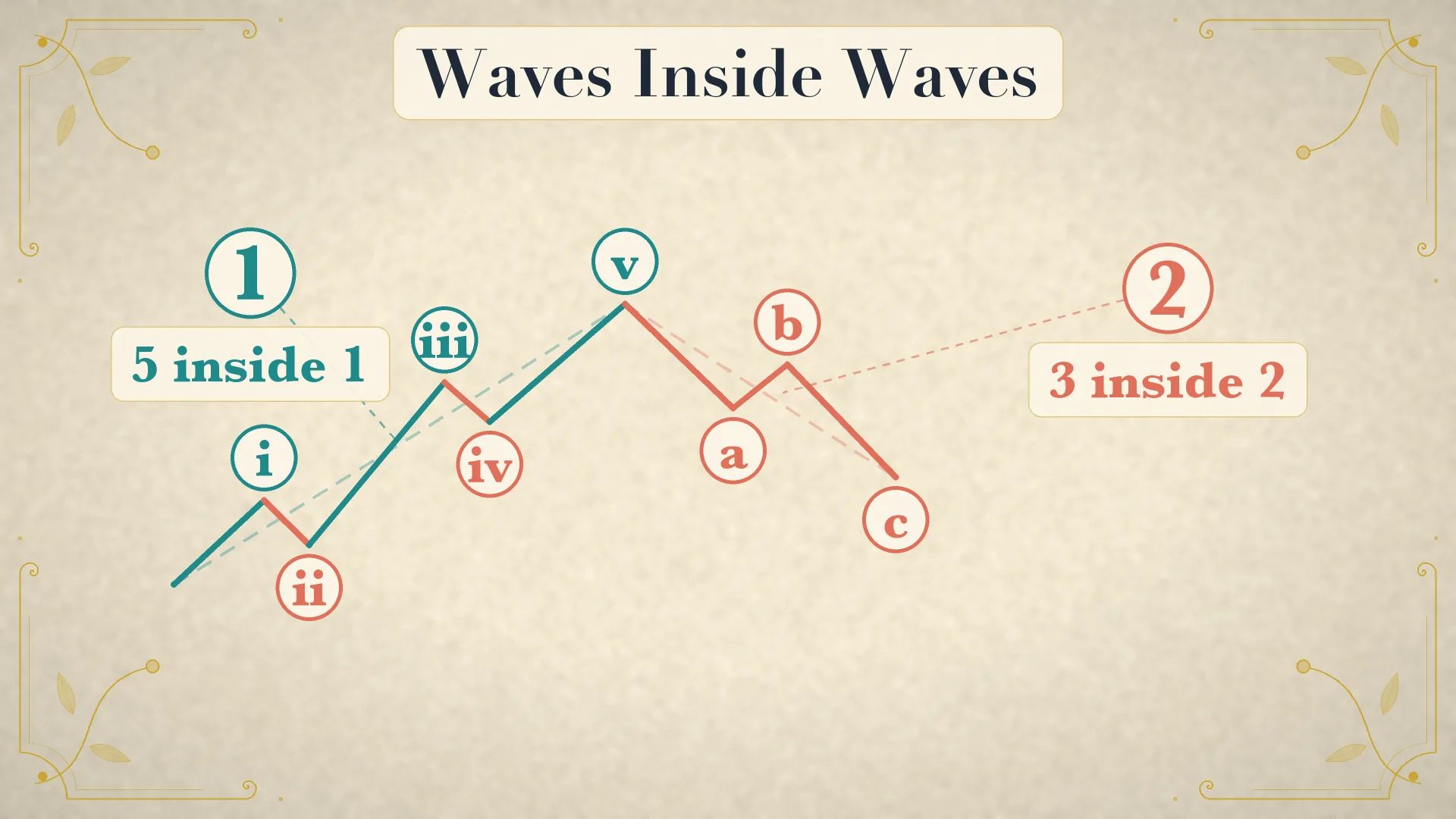
Look closer and every wave holds smaller waves inside it. The pattern is fractal: an impulse subdivides as 5-3-5-3-5 — waves 1, 3 and 5 are themselves five-wave moves, waves 2 and 4 are three-wave moves. A zigzag correction subdivides as 5-3-5, and a flat correction as 3-3-5.
Each level of size is called a degree. Degrees run from the Grand Supercycle at the very large end down to the Subminuette at the small end. The same shape can be traced from an hourly chart up to a century of prices — which is why Elliott studied everything from yearly to half-hourly charts.
In practice this means a count is always "at a degree": wave 3 on the daily chart can be made of five smaller waves on the hourly chart. Label which degree you are counting, or the counts on different timeframes will contradict each other.
How to use a count
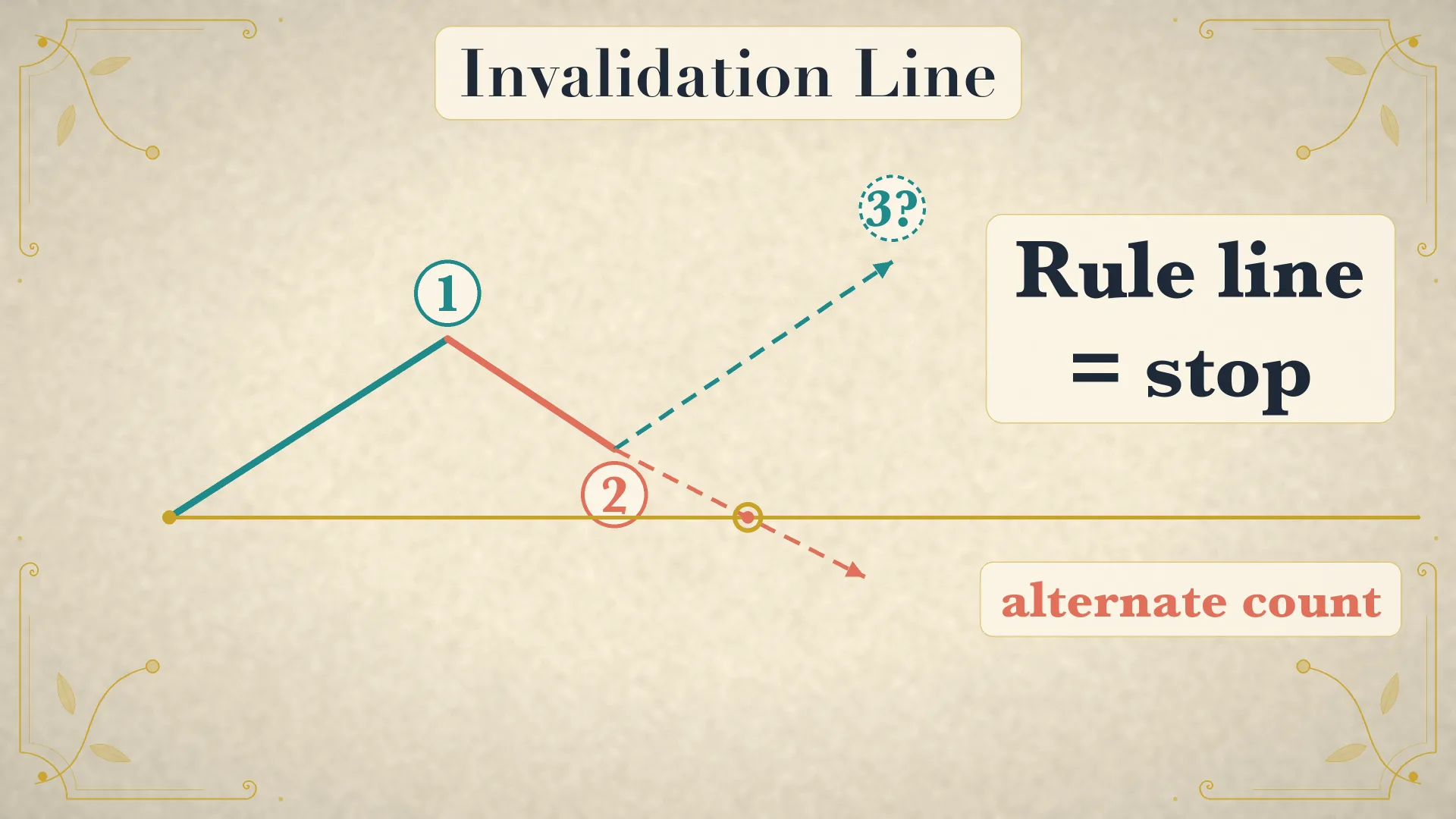
The most practical part of the method is not the forecast — it is the invalidation level. Every count you make has a price where one of the three rules would break. For example, if you believe wave 2 is still unfolding, the start of wave 1 is that line; if you believe you are in wave 4, the top of wave 1 (in an up-trend) is that line.
That rule line is your stop. If price crosses it, you do not argue with the market — the count is wrong, and you recount.
Always keep an alternate count: the second-best reading of the same chart. When the main count is invalidated, the alternate often becomes the new main count, and you are not starting from zero.
- Count the waves at one clear degree.
- Check all three rules.
- Mark the invalidation level — use it as the stop.
- Write down the alternate count.
- Treat the whole thing as a map, not a promise.
Honest limits

Wave counting is subjective. Two experienced analysts can look at the same chart and label it differently. Critics such as Mandelbrot and Aronson have questioned the method on exactly this point.
That is why this guide leans on the parts that can be checked: the three rules, the invalidation level and the alternate count. They do not make the method objective, but they make your own mistakes visible and limit what a wrong count can cost.
Use the Elliott Wave Principle as a map with an exit marked on it — a signal, not a promise.
Glossary
- Elliott Wave Principle
- R.N. Elliott's idea that crowd-driven markets move in a repeating pattern: five waves with the trend, three against, eight waves per cycle.
- Impulse wave
- The five-wave move with the trend, labelled 1-2-3-4-5. It subdivides 5-3-5-3-5 and must obey the three hard rules.
- Corrective wave
- A move against the larger trend. The basic correction is three waves labelled A-B-C; waves 2 and 4 inside an impulse are also corrective.
- Motive wave
- Any wave that moves in the direction of the larger trend — waves 1, 3 and 5, and the impulse as a whole.
- Degree
- The size level of a wave. Every wave contains smaller waves of lower degree; degrees run from Grand Supercycle down to Subminuette.
- Zigzag
- A corrective pattern A-B-C that subdivides 5-3-5.
- Flat
- A corrective pattern A-B-C that subdivides 3-3-5.
- Triangle
- A sideways corrective pattern in which price swings back and forth inside converging (or diverging) boundary lines.
- Extension
- A motive wave that stretches much longer than its neighbours. Wave 3 is often the strongest wave.
- Alternation
- The guideline that waves 2 and 4 often differ in form — one sharp, one sideways. A tendency, not a rule.
- Invalidation level
- The price at which a count would break one of the three hard rules. Crossing it means the count is wrong; traders use it as the stop.
- Alternate count
- The second-best labelling of the same chart, kept ready in case the main count is invalidated.
- Fibonacci ratio
- Ratios such as 61.8% and 1.618 derived from the Fibonacci numbers; in Elliott wave they are guidelines for where a wave often ends.
Frequently asked questions
Who created the Elliott Wave Principle?
Ralph Nelson Elliott (1871–1948), an American accountant. He developed it in the early 1930s while ill, by studying about 75 years of Dow Jones stock-market data, and published The Wave Principle in August 1938 with the help of Charles J. Collins.
What is the basic Elliott wave pattern?
A trend moves in five waves — 1, 3 and 5 with the trend, 2 and 4 against it — and is then corrected in three waves labelled A, B and C. Five plus three makes eight waves, one full cycle.
What are the three rules of Elliott wave?
In an impulse: wave 2 never retraces more than 100% of wave 1; wave 3 is never the shortest of waves 1, 3 and 5; and wave 4 never enters the price territory of wave 1. If any rule is broken, the count is wrong and should be redone.
How does Fibonacci relate to Elliott waves?
Elliott linked the waves to the Fibonacci numbers in Nature's Law (1946). As guidelines, wave 2 often retraces 50–61.8% of wave 1 and wave 3 is often about 1.618 times wave 1. These are "often", never "always".
What is alternation in Elliott wave?
A guideline that waves 2 and 4 often differ in form: if one is sharp, the other tends to be sideways and flat. It is a tendency, not a rule.
How do you use an Elliott wave count for risk?
Every count has an invalidation level — the price where one of the three rules would break. Use that level as your stop, and keep an alternate count ready in case the main one is invalidated.
Is Elliott wave analysis reliable?
Counting is subjective: analysts can disagree on the same chart, and critics such as Mandelbrot and Aronson have questioned the method. Use it as a map with an invalidation level, not as a prediction. This is educational content, not financial advice.
Who made the Elliott Wave Principle popular?
Hamilton Bolton kept it alive in The Bank Credit Analyst in the 1950s and 1960s, and in 1978 A.J. Frost and Robert Prechter's book Elliott Wave Principle brought it to modern traders.
Sources
- Ralph Nelson Elliott · Wikipedia
Birth, death, career in Mexico/Central America and Nicaragua, illness, the 1938 and 1946 books, Financial World articles. - Elliott wave principle · Wikipedia
Wave structure, degrees, the three rules, guidelines, Fibonacci relationships, later popularisers and criticism. - A Singular History · Elliott Wave International
History of the Wave Principle after Elliott, including its survival in the 1950s–60s.