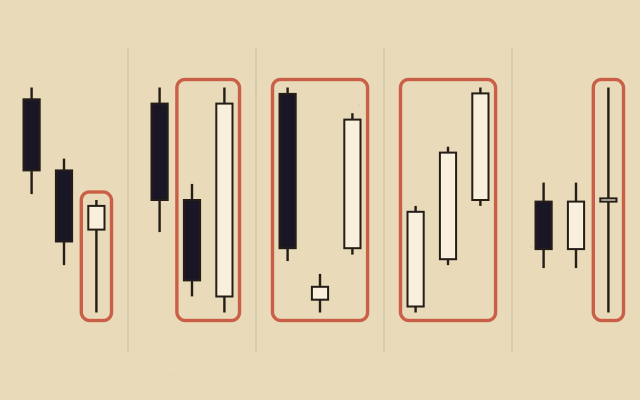
What this guide covers
A candlestick packs four prices — open, high, low and close — into one small drawing. Put enough of them side by side and you can see who controlled each session, where buyers or sellers gave up, and where the market hesitated. Japanese traders gave these shapes vivid names: the paper umbrella, the dragonfly, the gravestone, three crows, the morning star.
This guide collects every classical pattern in one place, grouped from single candles to two- and three-candle combinations and the Sakata five methods. Each entry gives the Japanese name and reading, precise identification rules, what the shape says about the buyers and sellers, what confirmation to wait for, where the idea is invalidated, and the most common mistake.
One rule runs through all of it, and it is the chorus of our film 堂島ローソク足: shape, location, confirmation. A pattern in the wrong place, or one the next candle refuses to confirm, is just a drawing. Educational content only — not financial advice.
History: from Dojima rice to Wall Street
In 1730 the Tokugawa shogunate officially licensed rice trading at Dojima in Osaka. Merchants dealt in physical rice coupons (kome-kitte) and in chōai-mai, a book-entry contract settled by price difference. Japan Exchange Group and the City of Osaka describe the Dojima rice market as a pioneer of organized futures exchanges worldwide.

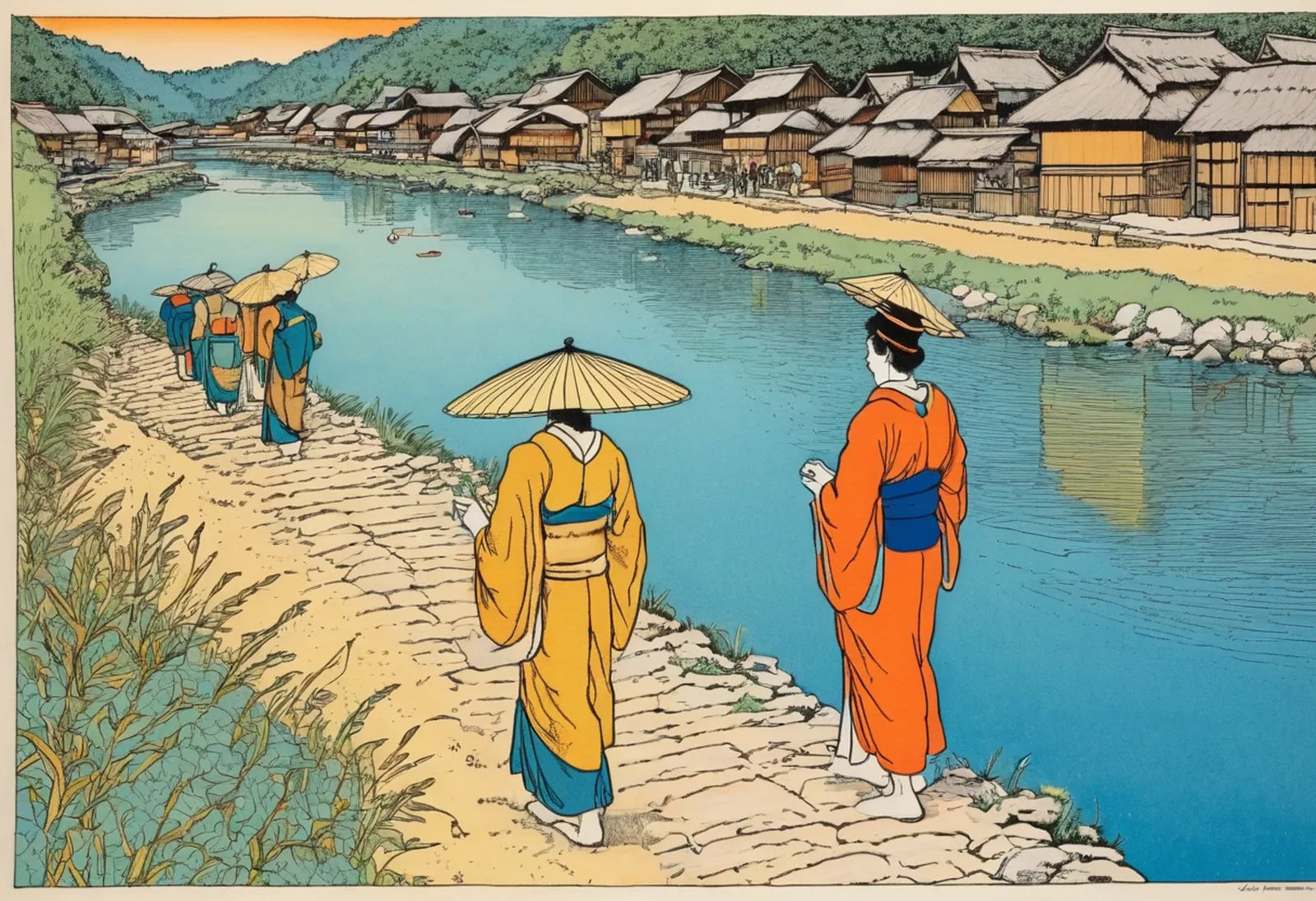
Tradition links candlesticks to Homma Munehisa (1724–1803), a rice merchant from Sakata in Dewa province who is said to have grown rich trading rice, and credits him with the Sakata rules (酒田五法). Treat this as legend rather than documented fact: Steve Nison himself later wrote that Homma probably did not use candle charts and that they likely took shape in the early Meiji period in the late 1800s.

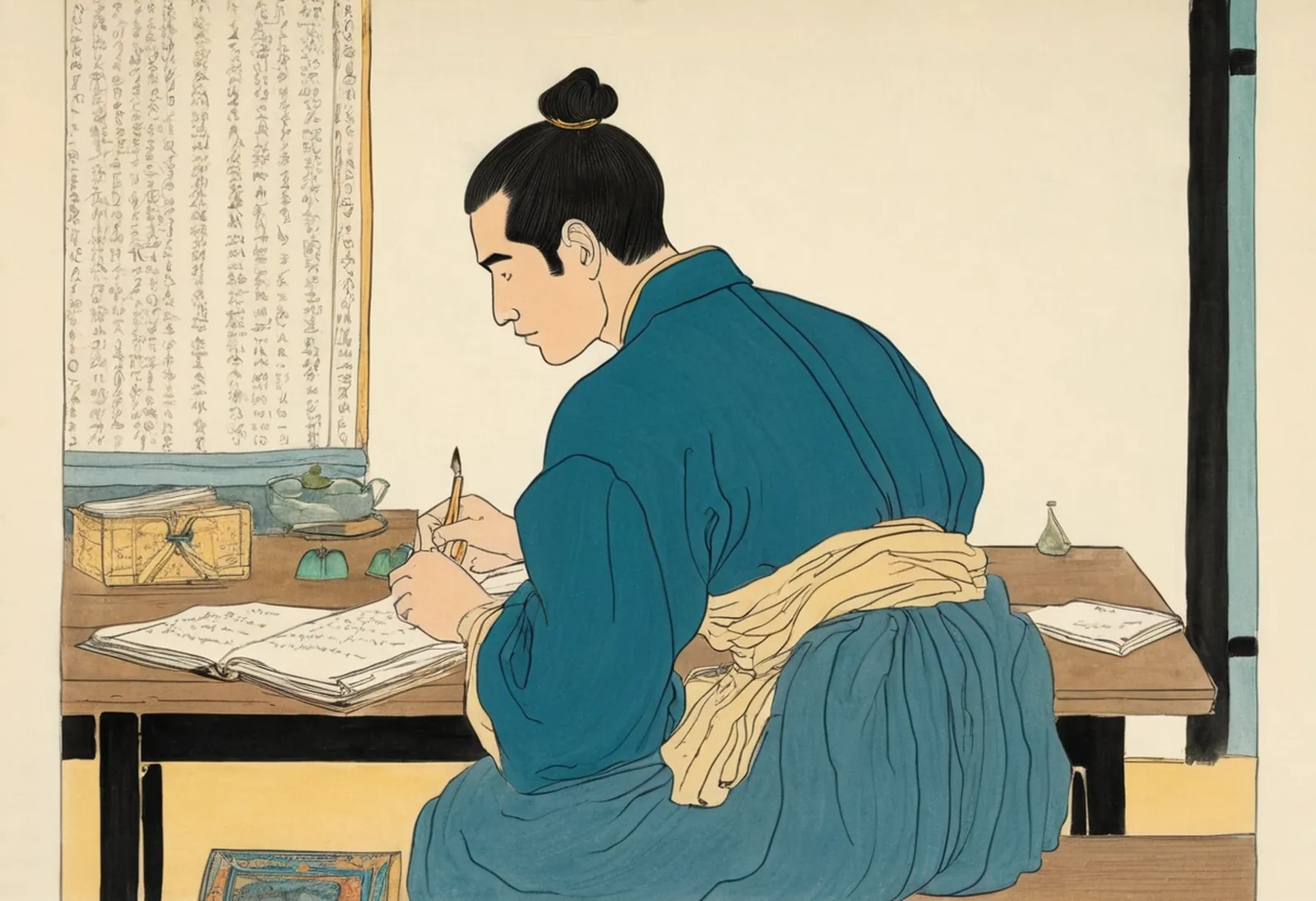
In Japanese the chart is rōsoku-ashi, literally ‘candle legs’ — the body looks like a candle and the thin lines like its wick. The names of the patterns come from everyday Edo and Meiji life: umbrellas, tweezers, gravestones, crows and stars.


The West met candlesticks through Steve Nison's 1991 book Japanese Candlestick Charting Techniques. Within a few years almost every charting platform offered them, and today they are the default chart for forex, gold, stocks and crypto.
Anatomy of a candle
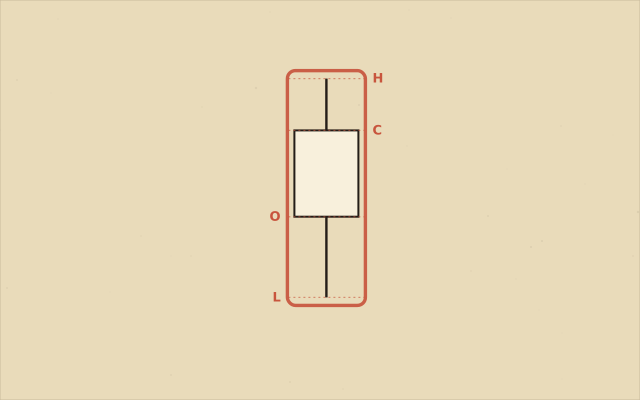
Every candle records four prices for its period: the open (始値 hajimene), high (高値 takane), low (安値 yasune) and close (終値 owarine). The thick box between open and close is the real body (実体 jittai). The thin lines above and below are the shadows or wicks (ヒゲ hige): the upper shadow reaches the high, the lower shadow reaches the low.
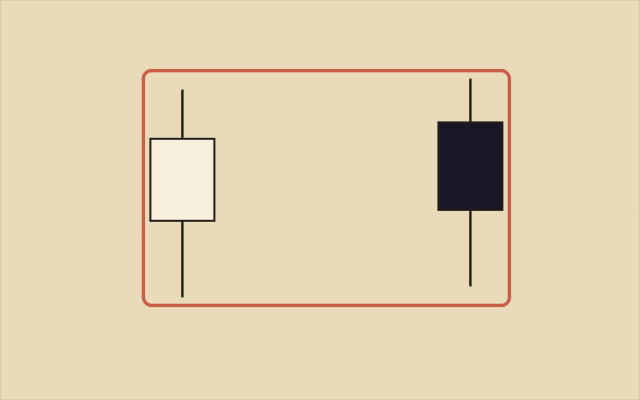
If the close is above the open, the candle is a yōsen (陽線), a bullish candle. If the close is below the open, it is an insen (陰線), a bearish candle. The body tells you who won the session; the shadows tell you where the other side pushed and failed.
Colours differ by market culture. Classical Japanese charts draw yōsen hollow white and insen solid black, and many Japanese platforms use red for up and blue for down — the 赤 in 赤三兵 comes from red rising candles. Western software usually shows green for up and red for down. Always check your platform's settings: red means ‘up’ in Japan and ‘down’ in most Western charts.
How to read any pattern: shape, location, confirmation
Shape: measure, don't eyeball. Compare body and shadows with the candle's own range and with the last 10–20 candles. ‘Long’ and ‘small’ are always relative to recent candles on the same chart.
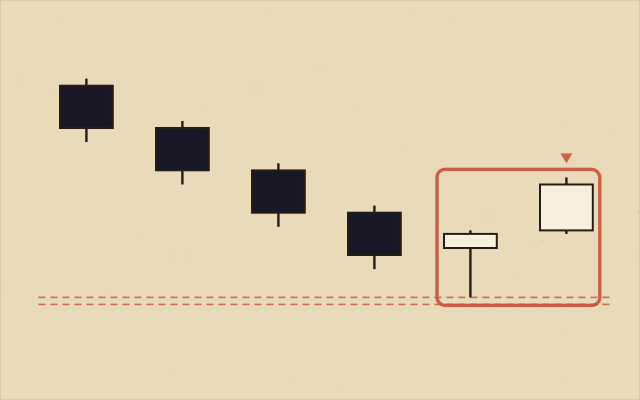
Location: a reversal pattern needs something to reverse. A hammer means little in the middle of a sideways range; after a clear decline into support, a prior low or a Fibonacci level, it deserves attention. Continuation patterns need an established trend.
Confirmation: let the next candle decide. For a bullish signal, look for a close above the pattern's high or at least above its body; for a bearish signal, a close below. Until then the pattern is a question, not an answer.
Risk: place the stop beyond the wick — below the pattern's lowest low for bullish setups, above its highest high for bearish ones — and size the position so that stop is affordable.
Timeframe and volume: the same pattern on a daily or weekly chart carries more information than on a one-minute chart, where noise is high. Rising volume on the signal candle adds weight in stocks and futures; in spot forex, broker tick volume is only a rough proxy.
Pattern finder
Every pattern in this guide. Choose one to jump to its explanation.
 Candle anatomyローソク足の構造
 Yōsen and insen (bullish and bearish candles)陽線・陰線
 Shape · Location · Confirmation形・場所・確認
 Long bullish candle大陽線
 Long bearish candle大陰線
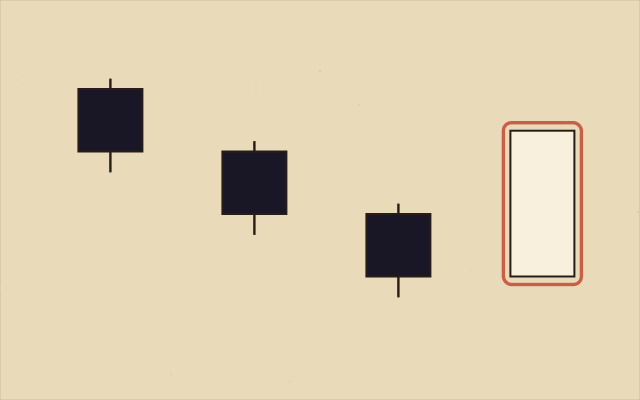 White marubozu陽の丸坊主
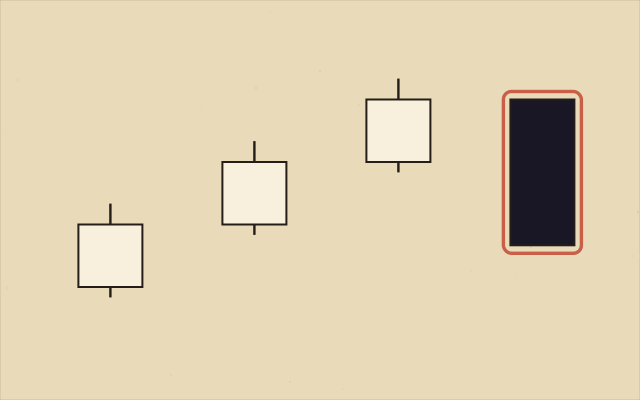 Black marubozu陰の丸坊主
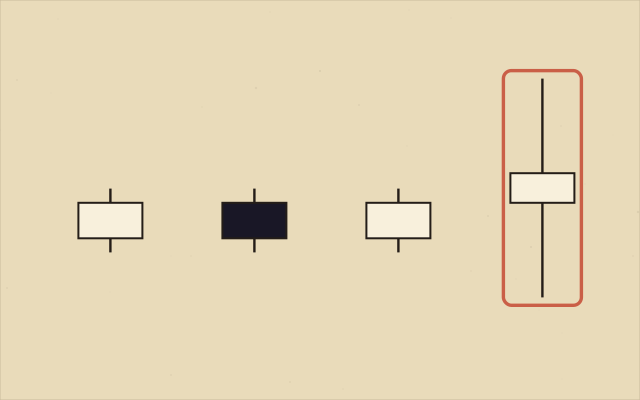 Spinning topコマ
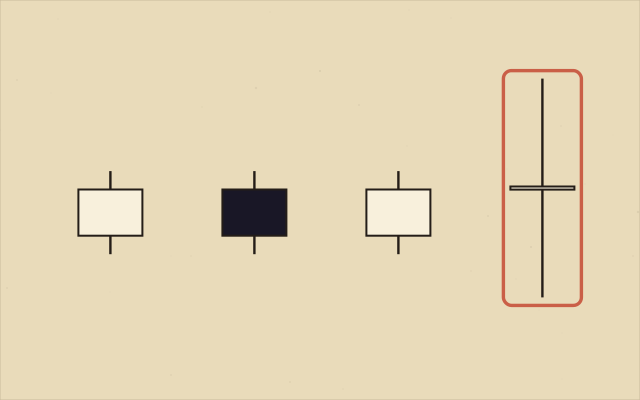 Doji十字線
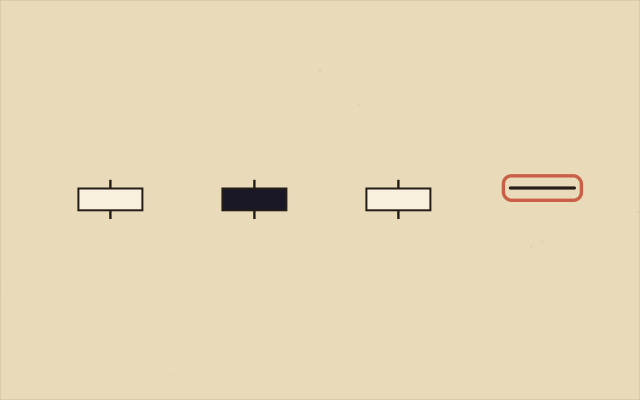 Long-legged doji足長同時線
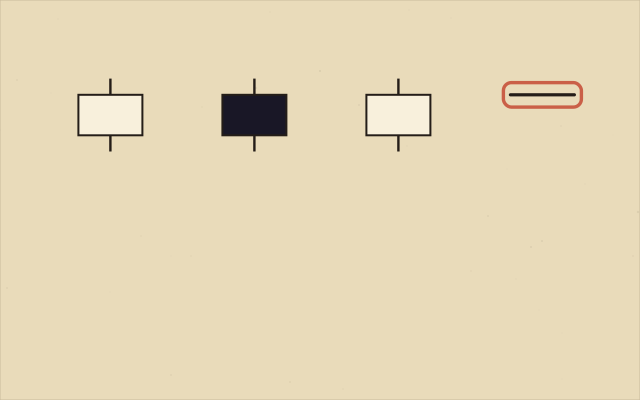 Dragonfly dojiトンボ
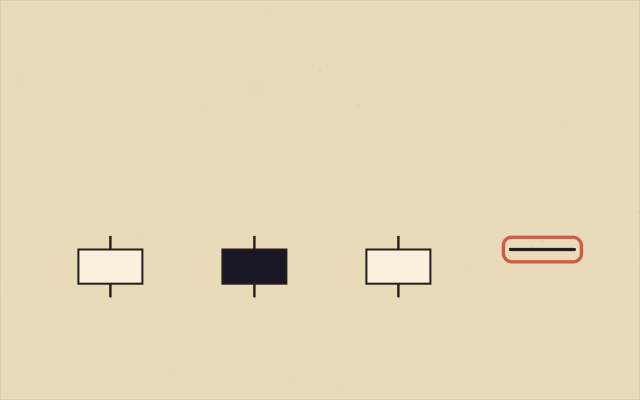 Gravestone dojiトウバ
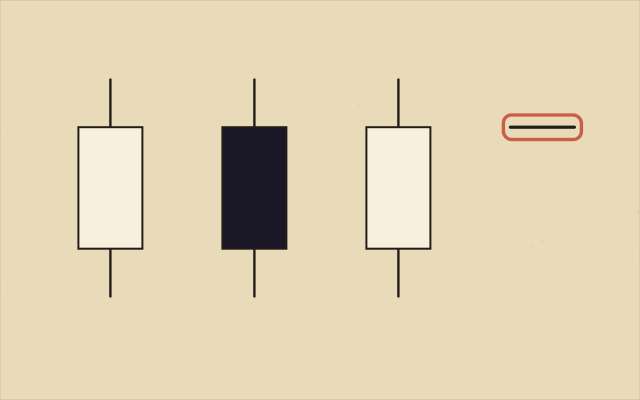 Four-price doji一本線
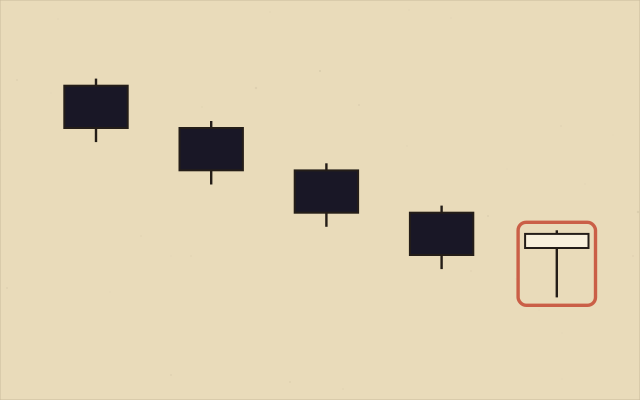 Hammerカラカサ
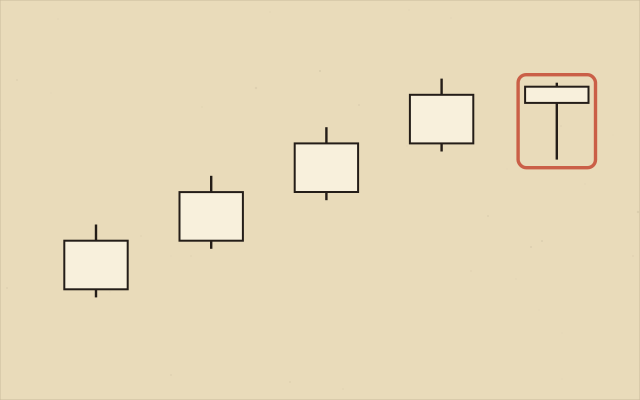 Hanging man首吊り線
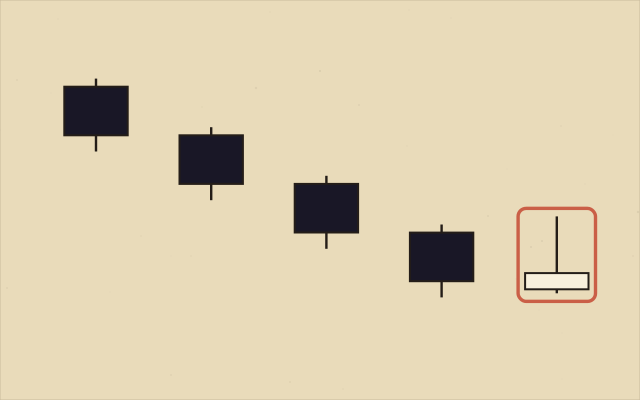 Inverted hammerトンカチ
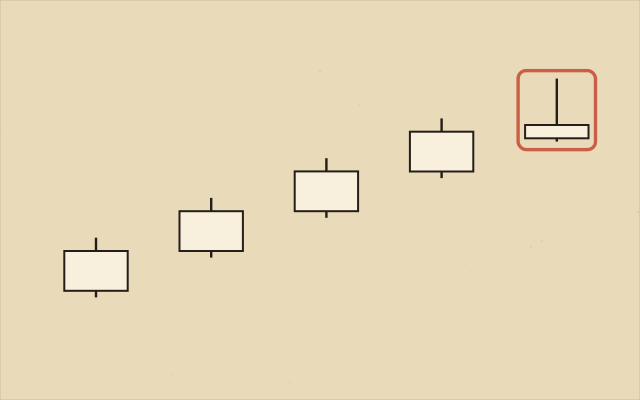 Shooting star流れ星
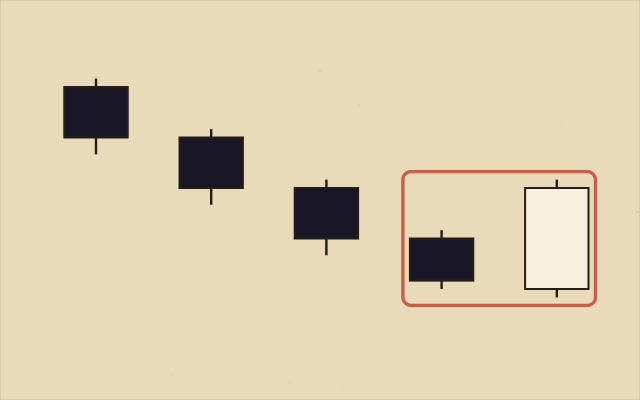 Bullish engulfing陽の包み線
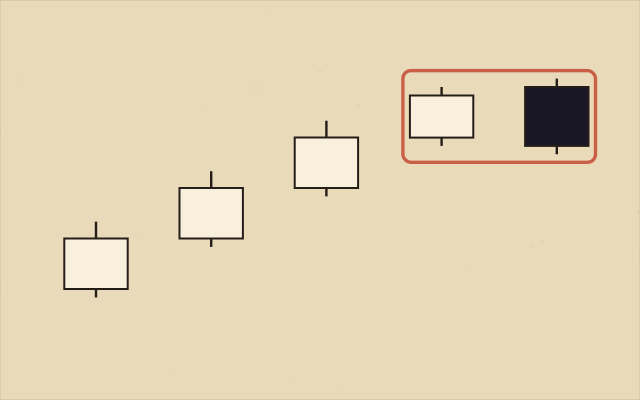 Bearish engulfing陰の包み線
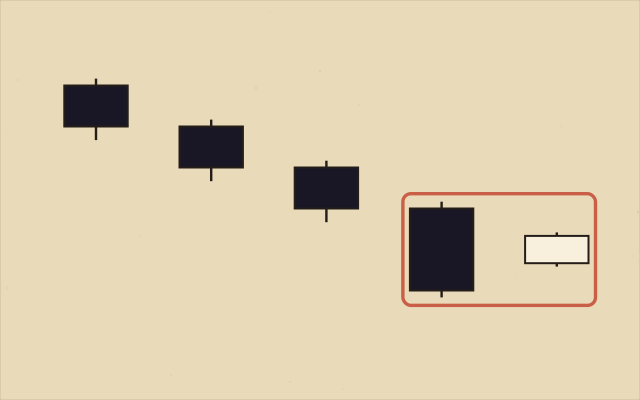 Bullish haramiはらみ線(陰の陽はらみ)
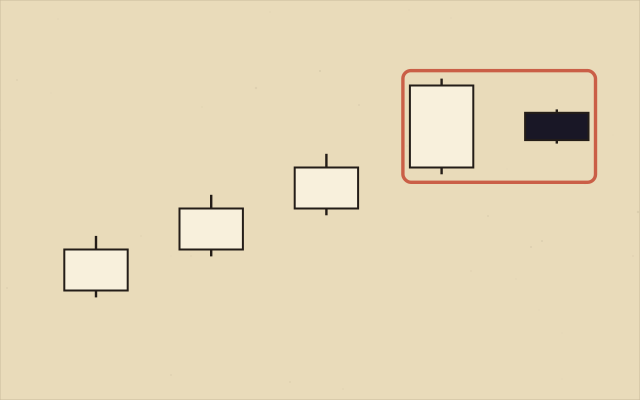 Bearish haramiはらみ線(陽の陰はらみ)
 Harami crossはらみ寄せ線
 Piercing line切り込み線
 Dark cloud coverかぶせ線
 Tweezer top毛抜き天井
 Tweezer bottom毛抜き底
 Meeting lines出合い線
 Separating lines振り分け線
 Kicker (kicking pattern)行き違い線(キッカー)
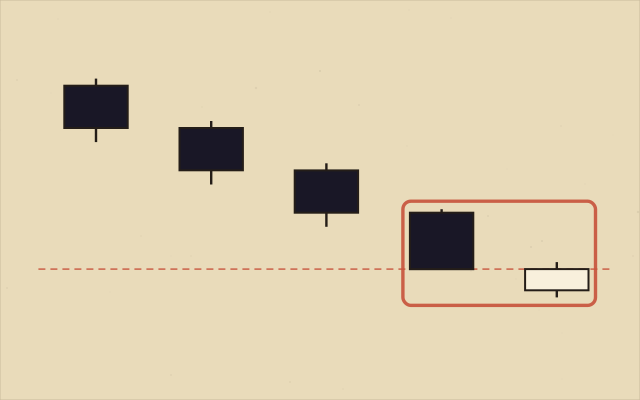 On-neck lineあて首線
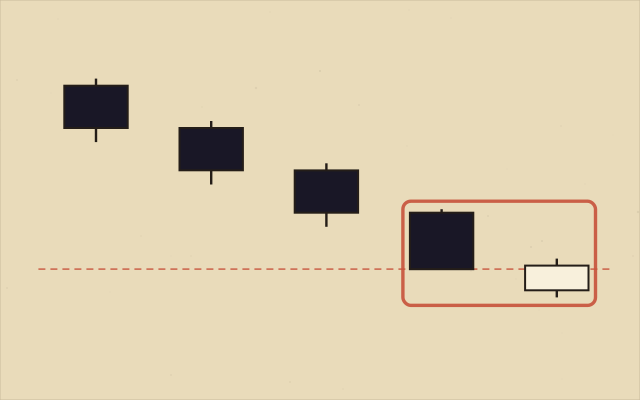 In-neck line入り首線
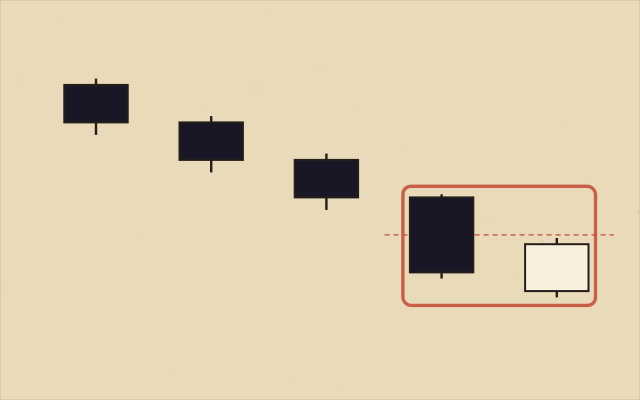 Thrusting line差し込み線
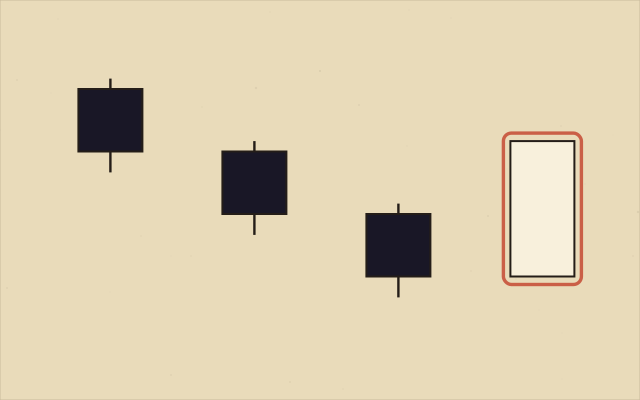 Belt hold寄り切り線
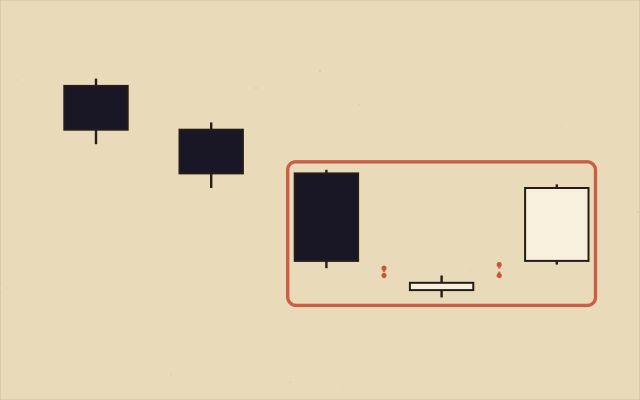 Morning star明けの明星
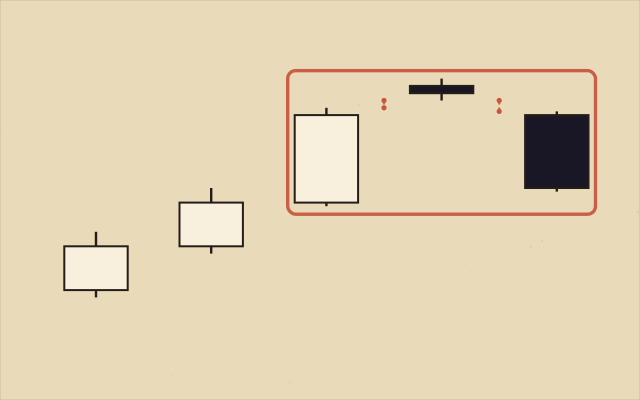 Evening star宵の明星
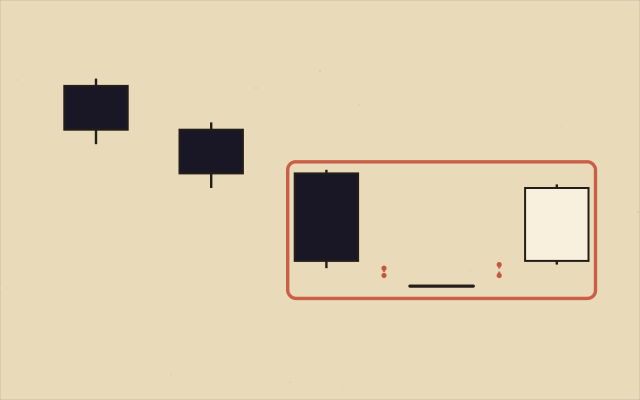 Morning doji star明けの明星(十字星)
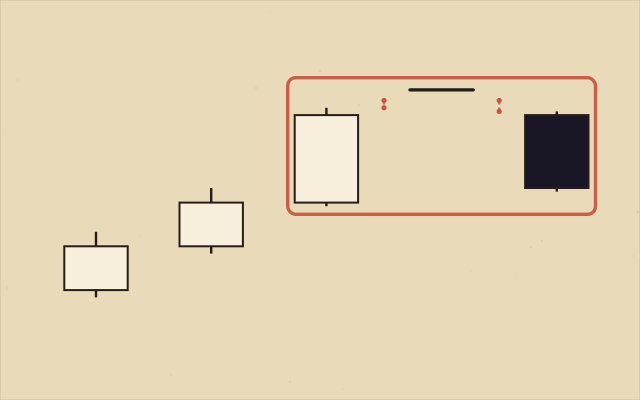 Evening doji star宵の明星(十字星)
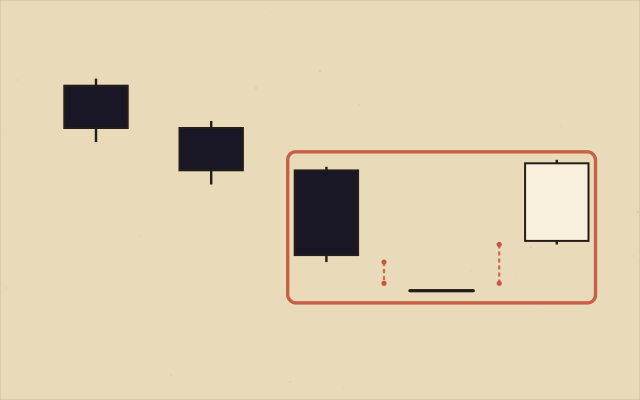 Abandoned baby捨て子線
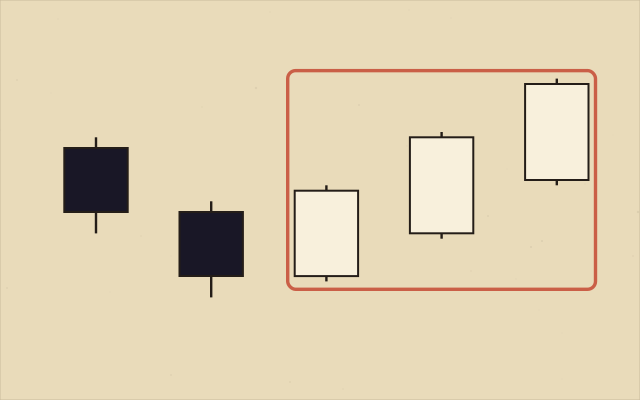 Three white soldiers赤三兵
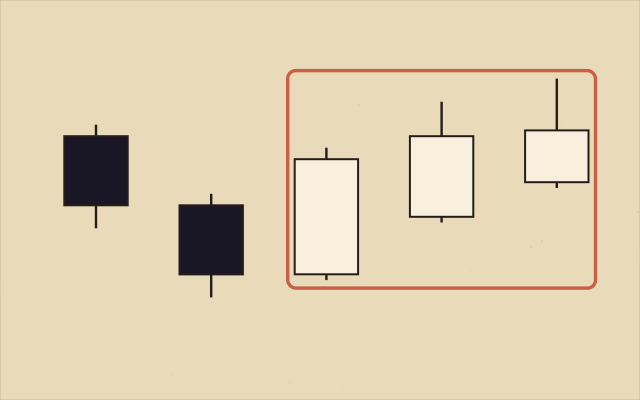 Advance block赤三兵先詰まり
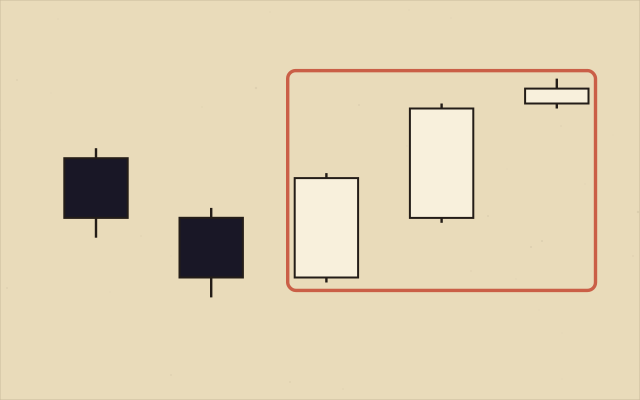 Deliberation赤三兵思案星
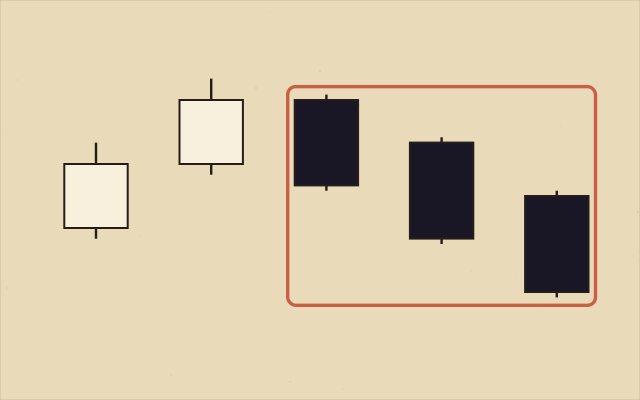 Three black crows三羽烏
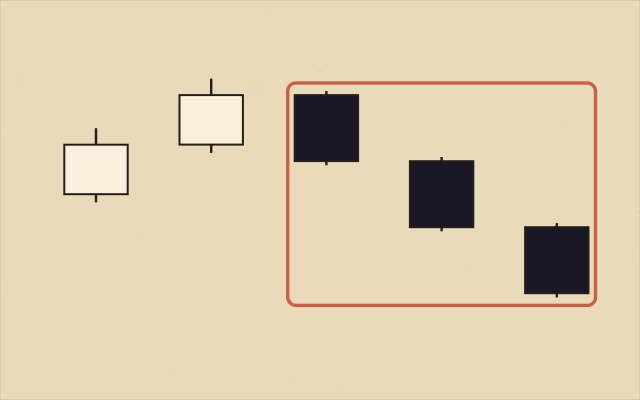 Identical three crows同事三羽
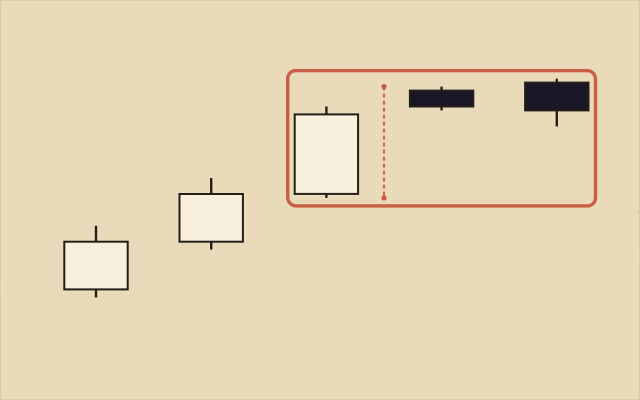 Upside gap two crows上放れ二羽烏
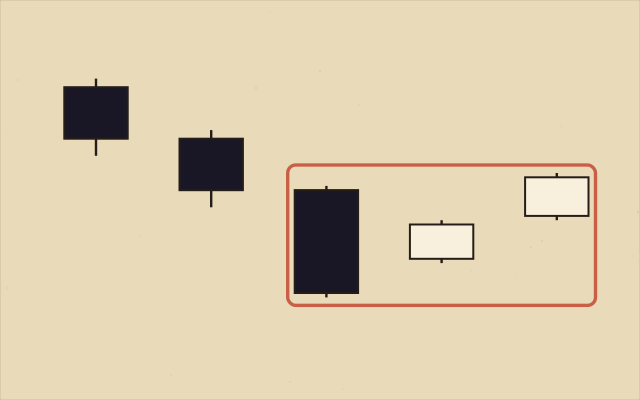 Three inside upスリー・インサイド・アップ
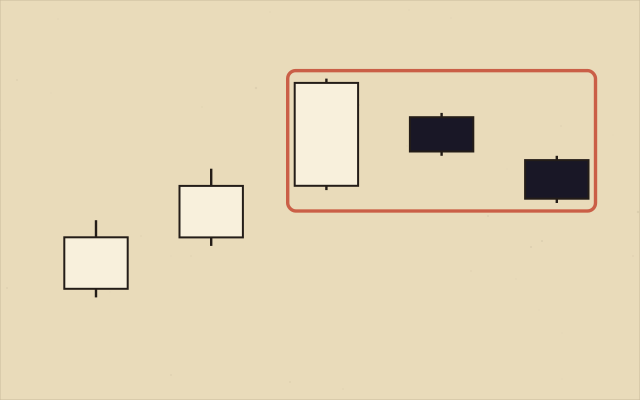 Three inside downスリー・インサイド・ダウン
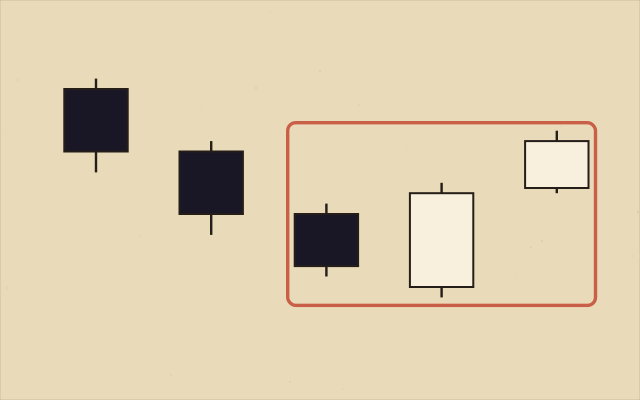 Three outside upスリー・アウトサイド・アップ
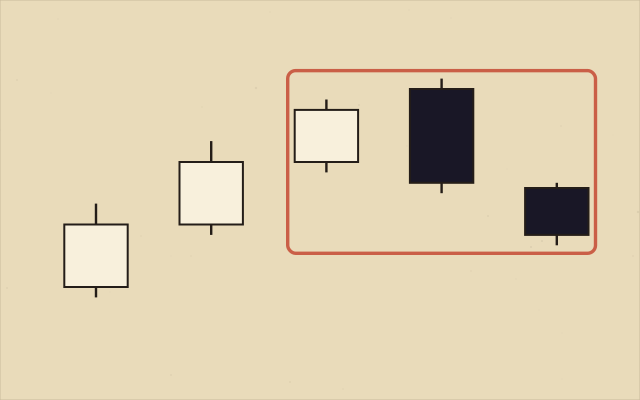 Three outside downスリー・アウトサイド・ダウン
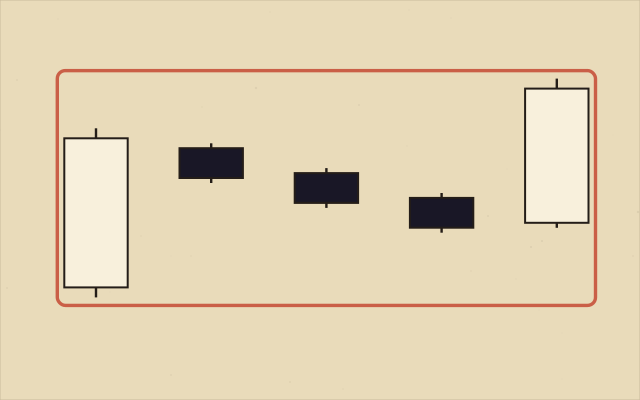 Rising three methods上げ三法
 Falling three methods下げ三法
 Upside tasuki gap上放れタスキ
 Downside tasuki gap下放れタスキ
 Window (gap)窓
 Side-by-side white lines上放れ並び赤
 Sanzan (three mountains)三山
 Sansen (three rivers)三川
 Sanku (three gaps)三空
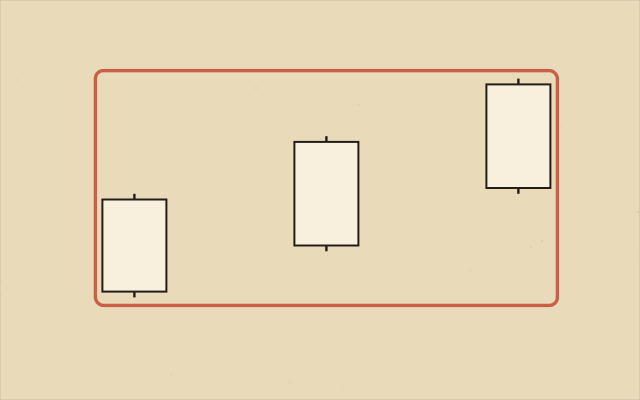 Sanpei (three soldiers)三兵
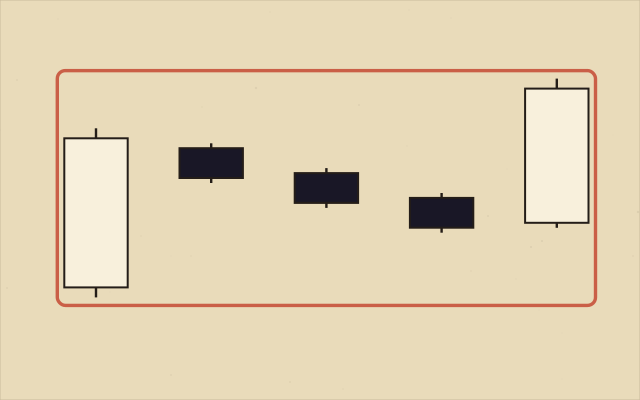 Sanpō (three methods)三法
Basics: reading one candle
Candle anatomy
日本語 ローソク足の構造(ろうそくあし) · rōsoku-ashiไทย ส่วนประกอบของแท่งเทียนAlso called Open, high, low, close; real body and shadows
One candle = four prices: the body spans open to close, the shadows reach the high and low.
How to spot it
- Open and close form the real body (the box).
- The upper shadow runs from the top of the body to the high.
- The lower shadow runs from the bottom of the body to the low.
- Body length shows the net move; shadow length shows rejected prices.
- What it means
- The body shows who won the period; each shadow marks prices one side reached but could not hold.
- Confirmation
- Anatomy is not a signal; read it in context with the candles before and after.
- Invalidation and stop
- Not applicable — this is the vocabulary every other pattern uses.
- Common mistake
- Reading only the colour and ignoring the shadows, which often carry the real story.
In the film「始値 高値 安値 終値 / 箱が実体 はみ出す線がヒゲ」Open, high, low, close / The box is the body, the lines past it are wicks
Yōsen and insen (bullish and bearish candles)
日本語 陽線・陰線(ようせん・いんせん) · yōsen / insenไทย แท่งบวกและแท่งลบ (Yosen / Insen)Also called White/black, up/down candles
Close above open is a yōsen (bullish); close below open is an insen (bearish).
How to spot it
- Yōsen (陽線): close > open. Traditionally drawn hollow/white, red on many Japanese platforms, green on most Western ones.
- Insen (陰線): close < open. Traditionally drawn solid black, blue on many Japanese platforms, red on most Western ones.
- If close = open the candle is a doji and has no colour of its own.
- What it means
- A run of yōsen shows buyers finishing each period stronger than they started; a run of insen shows the reverse.
- Confirmation
- Colour alone confirms nothing; compare the body size with recent candles.
- Invalidation and stop
- Not applicable.
- Common mistake
- Assuming red always means down. On Japanese and other Asian platforms red usually means up.
In the film「始値より上で終われば 陽線は白 / 下で終われば 陰線は黒」Close above the open: yōsen, drawn white / Close below it: insen, painted black
Shape · Location · Confirmation
日本語 形・場所・確認(かたち・ばしょ・かくにん) · katachi, basho, kakuninไทย รูปร่าง · ตำแหน่ง · การยืนยันAlso called The three-step reading rule
Before trusting any pattern: is the shape exact, is it in the right place, and has the next candle confirmed it?
How to spot it
- Shape: the candle(s) meet the measured rules (shadow-to-body ratios, closes beyond midpoints, gaps).
- Location: it appears where a reversal or continuation makes sense — after a trend, at support/resistance, a prior high/low, a Fibonacci level or a gap.
- Confirmation: the next candle closes in the signal's direction (for example above the hammer's high).
- Risk: the stop goes beyond the wick of the pattern, and the position is sized to that stop.
- What it means
- Most pattern failures are one of the three missing: a sloppy shape, a pattern in the middle of nowhere, or a trade taken before confirmation.
- Confirmation
- All three steps checked, in order.
- Invalidation and stop
- Price closes beyond the pattern's wick — the idea is wrong, exit.
- Common mistake
- Skipping step two; location decides more than shape.
In the film「形 場所 確認 次の足で決めて / ストップはヒゲの外 焦らず待て」Shape, location, confirm — let the next candle decide / Stop beyond the wick — no rush, just wait
Note on the Japanese name: ackalgo teaching mnemonic built from standard candlestick practice (used in the film's chorus); not a traditional Japanese technical term.
Single-candle patterns
Long bullish candle
日本語 大陽線(だいようせん) · dai-yōsenไทย แท่งบวกยาว (Long Bullish Candle)Also called Long white candle, big green candle
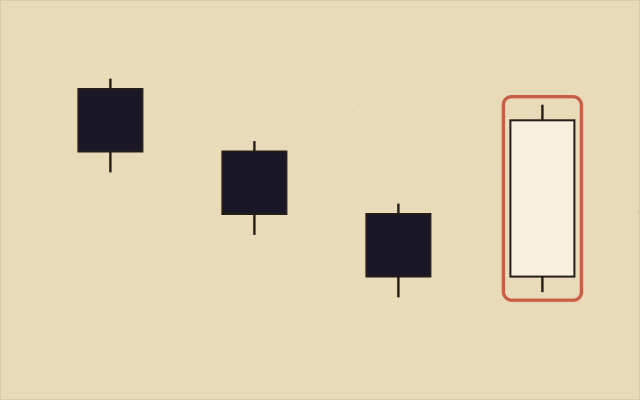
A tall yōsen whose body is clearly longer than recent candles.
How to spot it
- Close > open.
- Body clearly longer than the average of the last 10–20 bodies (no fixed threshold).
- Close at or near the high; shadows short relative to the body.
- What it means
- Buyers controlled the whole period and closed near the top. After a base or at a breakout it shows fresh demand; after a long rally it can also be a buying climax.
- Confirmation
- The next candle holds above the midpoint of the long body.
- Invalidation and stop
- A close back below the candle's low; a close below the midpoint already weakens it.
- Common mistake
- Chasing it after an extended rally, where a long candle is often the last burst of buying.
Long bearish candle
日本語 大陰線(だいいんせん) · dai-insenไทย แท่งลบยาว (Long Bearish Candle)Also called Long black candle, big red candle
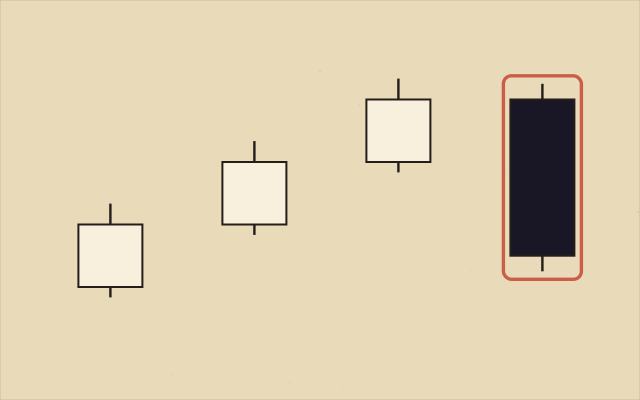
A tall insen whose body is clearly longer than recent candles.
How to spot it
- Close < open.
- Body clearly longer than the average of the last 10–20 bodies.
- Close at or near the low; shadows short relative to the body.
- What it means
- Sellers dominated the whole period. At a breakdown it signals new supply; after a long fall it can be a selling climax.
- Confirmation
- The next candle stays below the midpoint of the long body.
- Invalidation and stop
- A close back above the candle's high; a close above the midpoint already weakens it.
- Common mistake
- Selling into it after a long decline, when panic candles often mark exhaustion.
White marubozu
日本語 陽の丸坊主(ようのまるぼうず) · yō no marubōzuไทย มารูโบซุขาว (White Marubozu)Also called Bullish marubozu, shaven head
A long yōsen with no shadows: it opened at the low and closed at the high.
How to spot it
- Close > open, body long.
- Open = low (no lower shadow).
- Close = high (no upper shadow); a tiny tick of shadow is usually tolerated.
- What it means
- Buyers were in charge from the first trade to the last, with no pullback below the open and no retreat from the high.
- Confirmation
- The next candle opens and holds above the marubozu's midpoint, ideally trading higher.
- Invalidation and stop
- A close below the marubozu's open (its low).
- Common mistake
- Treating every shadowless candle as strong — a small marubozu in a quiet market means little.
In the film「丸坊主は 実体だけで ヒゲはない / 買いか売りか 片方の完全支配」Marubozu: all body, no wicks at all / Buyers or sellers — one side in full control
Black marubozu
日本語 陰の丸坊主(いんのまるぼうず) · in no marubōzuไทย มารูโบซุดำ (Black Marubozu)Also called Bearish marubozu
A long insen with no shadows: it opened at the high and closed at the low.
How to spot it
- Close < open, body long.
- Open = high (no upper shadow).
- Close = low (no lower shadow).
- What it means
- Sellers controlled every moment of the period; buyers never lifted price above the open or off the low.
- Confirmation
- The next candle stays below the marubozu's midpoint, ideally trading lower.
- Invalidation and stop
- A close above the marubozu's open (its high).
- Common mistake
- Shorting it right at a major support after a long fall, where it can mark capitulation.
Spinning top
日本語 コマ(こま) · komaไทย ลูกข่าง (Spinning Top)Also called Koma
A small body with upper and lower shadows: neither side won the period.
How to spot it
- Small real body (open and close close together), either colour.
- Both upper and lower shadows present, usually each longer than the body.
- The body sits roughly in the middle of the range.
- What it means
- Buyers and sellers both pushed and both failed. After a strong trend it signals that momentum is fading; inside a range it is ordinary noise.
- Confirmation
- Direction comes from the next candle: a close beyond the spinning top's high or low.
- Invalidation and stop
- Not a directional pattern; the opposite break simply decides the other way.
- Common mistake
- Calling every spinning top a reversal. It shows hesitation, not a turn.
Doji
日本語 十字線(じゅうじせん) · jūjisenไทย โดจิ (Doji)Also called Cross, jūjisen
Open and close are equal or virtually equal: a picture of indecision.
How to spot it
- Open = close, or the body is a tiny fraction (roughly ≤5–10%) of the candle's range.
- Upper and lower shadows present.
- Most meaningful after a clear trend or a long candle, not inside a range.
- What it means
- After a strong move, a doji shows the trend-side could not finish the period ahead — the balance of power has paused and may shift.
- Confirmation
- For a top: the next candle closes below the doji's low. For a bottom: it closes above the doji's high.
- Invalidation and stop
- A close beyond the doji in the trend's direction resumes the trend.
- Common mistake
- Treating a doji as a signal by itself. In quiet markets dojis appear constantly.
In the film「十字線 始値と終値が ほぼ同じ / 買いも売りも決めきれない 迷いのしるし」Doji: the open and close almost the same / Neither side can decide — a sign of doubt
Long-legged doji
日本語 足長同時線(あしながどうじせん) · ashinaga dōjisenไทย โดจิขายาว (Long-Legged Doji)Also called Rickshaw man (when the body is centred)
A doji with very long upper and lower shadows: a wide fight that ended level.
How to spot it
- Open = close (or nearly).
- Both shadows long, together much larger than recent average ranges.
- Body near the middle of the range.
- What it means
- Price swung hard both ways and settled where it started. After a trend it signals serious loss of conviction.
- Confirmation
- A close beyond the long-legged doji's high or low in the reversal direction.
- Invalidation and stop
- A close beyond the other extreme resumes the prior trend.
- Common mistake
- Placing a tight stop just past the body; the wide range means the logical stop is beyond the wick, far away — size down.
Dragonfly doji
日本語 トンボ(とんぼ) · tonboไทย โดจิแมลงปอ (Dragonfly Doji)Also called Tonbo
Open, close and high at the same price with a long lower shadow — a T shape.
How to spot it
- Open = close = high (or nearly).
- Long lower shadow; little or no upper shadow.
- Bullish meaning only after a decline or at support.
- What it means
- Sellers drove price down hard, then buyers pushed it all the way back to the open by the close.
- Confirmation
- The next candle closes above the dragonfly's high.
- Invalidation and stop
- A close below the dragonfly's low (the tip of the long shadow).
- Common mistake
- Reading it as bullish at the top of a rally — there the same shape warns of a failed sell-off only for now.
Gravestone doji
日本語 トウバ(とうば) · tōbaไทย โดจิป้ายหลุมศพ (Gravestone Doji)Also called Tōba
Open, close and low at the same price with a long upper shadow — an inverted T.
How to spot it
- Open = close = low (or nearly).
- Long upper shadow; little or no lower shadow.
- Bearish meaning mainly after an advance or at resistance.
- What it means
- Buyers lifted price far above the open, then sellers pushed it all the way back down by the close.
- Confirmation
- The next candle closes below the gravestone's low.
- Invalidation and stop
- A close above the gravestone's high (the tip of the upper shadow).
- Common mistake
- Shorting every gravestone without a prior advance to reverse.
Four-price doji
日本語 一本線(いっぽんせん) · ippon-senไทย โดจิราคาเดียว (Four-Price Doji)Also called One-price bar
Open, high, low and close are all the same: a flat horizontal line.
How to spot it
- Open = high = low = close.
- No body and no shadows — a single dash.
- Appears in extremely thin trading, or in stocks locked limit-up/limit-down all session.
- What it means
- Either almost nobody traded, or price was pinned at an exchange limit. It reflects market conditions more than a buyer-seller battle.
- Confirmation
- No directional confirmation; check why it formed (holiday session, illiquid symbol, daily limit).
- Invalidation and stop
- Not applicable.
- Common mistake
- Treating it as an ordinary doji signal. In forex it usually means a data gap or a closed session.
Hammer
日本語 カラカサ(からかさ) · karakasaไทย ค้อน (Hammer)Also called Karakasa (paper umbrella), takuri
After a decline: small body at the top, long lower shadow at least twice the body, little or no upper shadow.
How to spot it
- Appears after a decline (location is part of the definition).
- Lower shadow ≥ 2× the real body (many Japanese texts prefer about 3×).
- Little or no upper shadow; small body in the upper part of the range.
- Body colour can be either; a white body is slightly stronger.
- What it means
- Sellers pushed price to a new low, then buyers pushed it back up near the open or higher. The long shadow is rejected lower prices.
- Confirmation
- The next candle closes above the hammer's high (or at least its body).
- Invalidation and stop
- A close below the hammer's low — the stop goes just beyond that wick.
- Common mistake
- Buying every hammer in a strong downtrend without waiting for confirmation.
In the film「下げのあとのカラカサ 小さな実体は上 / 下ヒゲは実体の二倍以上 買いが押し返す」After a fall, the hammer: small body on top / Lower wick twice the body or more — buyers push back
Note on the Japanese name: Japanese uses カラカサ for the shape; たくり線 is the same shape when it appears after a decline, typically gapping lower. SPEC listed both.
Hanging man
日本語 首吊り線(くびつりせん) · kubitsuri-senไทย คนแขวนคอ (Hanging Man)Also called Kubitsuri-sen
The hammer's shape after an advance: small body at the top, long lower shadow, little or no upper shadow.
How to spot it
- Appears after an advance, near the highs.
- Lower shadow ≥ 2× the real body.
- Little or no upper shadow.
- A black body, or a gap up into the candle, adds weight.
- What it means
- Price fell hard during the session and recovered, but the deep dip shows that selling pressure has appeared at the top — and those who bought the close are now at risk.
- Confirmation
- Essential: the next candle closes below the hanging man's body (ideally below its low).
- Invalidation and stop
- A close above the hanging man's high — the stop goes just beyond it.
- Common mistake
- Shorting it without bearish confirmation; unconfirmed hanging men often lead to more upside.
Inverted hammer
日本語 トンカチ(とんかち) · tonkachiไทย ค้อนกลับหัว (Inverted Hammer)Also called Tonkachi
After a decline: small body at the bottom, long upper shadow at least twice the body, little or no lower shadow.
How to spot it
- Appears after a decline.
- Upper shadow ≥ 2× the real body.
- Little or no lower shadow; small body in the lower part of the range.
- What it means
- Buyers tried a rally and were pushed back, but the attempt itself shows sellers are no longer unopposed. It is weaker than a hammer and depends on confirmation.
- Confirmation
- The next candle opens above the inverted hammer's body and closes above its high.
- Invalidation and stop
- A close below the inverted hammer's low.
- Common mistake
- Buying it before confirmation — on its own the long upper shadow is a rejection of higher prices.
Note on the Japanese name: iFinance defines トンカチ by shape only (long upper shadow, no lower shadow); the bullish 'after a decline' reading follows Nison's inverted hammer.
Shooting star
日本語 流れ星(ながれぼし) · nagareboshiไทย ดาวตก (Shooting Star)Also called Nagareboshi
After an advance: small body at the bottom, long upper shadow at least twice the body, little or no lower shadow.
How to spot it
- Appears after an advance; ideally the body gaps above the prior body.
- Upper shadow ≥ 2× the real body.
- Little or no lower shadow; small body near the low of the range.
- Not a doji (that would be a gravestone).
- What it means
- Buyers pushed to a new high, then sellers drove price back to near the open. The high was rejected.
- Confirmation
- The next candle closes below the shooting star's body, ideally below its low.
- Invalidation and stop
- A close above the shooting star's high — the stop goes just beyond that wick.
- Common mistake
- Shorting any long upper shadow mid-range; the pattern needs an advance to reverse.
In the film「流れ星は 上げのあとに落ちる光 / 長い上ヒゲ 小さな実体は下」Shooting star: a light that falls after a rise / Long upper wick, small body at the bottom
Two-candle patterns
Bullish engulfing
日本語 陽の包み線(ようのつつみせん) · yō no tsutsumi-senไทย กลืนกินขาขึ้น (Bullish Engulfing)Also called Bullish engulfing line
After a decline, a yōsen whose body completely covers the previous insen's body.
How to spot it
- Appears after a decline.
- Candle 1: insen (black).
- Candle 2: yōsen whose real body opens at/below candle 1's close and closes at/above its open, covering the whole body.
- Stronger when candle 2 is much larger and also covers candle 1's shadows.
- What it means
- Sellers opened the second period in control, and buyers overwhelmed them, closing above everything the sellers achieved the day before.
- Confirmation
- The next candle holds above the engulfing candle's midpoint and ideally closes above its high.
- Invalidation and stop
- A close below the low of the two-candle pattern.
- Common mistake
- Counting it when candle 1 is a tiny doji-like body — swallowing almost nothing proves little.
In the film「下げのあとの包み線 大きな陽線で / 前の陰線の実体を まるごと包んで」After a fall, the engulfing: a big yōsen / Wraps the last insen's body whole
Note on the Japanese name: iFinance's 抱き線/つつみ線 definition requires engulfing the prior candle including shadows; Nison's version requires only the real body. The guide teaches the body rule and mentions the stricter Japanese reading.
Bearish engulfing
日本語 陰の包み線(いんのつつみせん) · in no tsutsumi-senไทย กลืนกินขาลง (Bearish Engulfing)Also called Bearish engulfing line
After an advance, an insen whose body completely covers the previous yōsen's body.
How to spot it
- Appears after an advance.
- Candle 1: yōsen (white).
- Candle 2: insen whose real body opens at/above candle 1's close and closes at/below its open.
- Stronger when candle 2 also covers candle 1's shadows.
- What it means
- Buyers opened the period in control and sellers overwhelmed them, closing below the whole prior advance.
- Confirmation
- The next candle stays below the engulfing candle's midpoint and ideally closes below its low.
- Invalidation and stop
- A close above the high of the two-candle pattern.
- Common mistake
- Ignoring location — mid-range engulfing candles are common and weak.
Bullish harami
日本語 はらみ線(陰の陽はらみ)(はらみせん(いんのようはらみ)) · harami-sen (in no yō-harami)ไทย ฮารามิขาขึ้น (Bullish Harami)Also called Harami (pregnant), inside candle
After a decline, a small body that sits entirely inside the previous long black body.
How to spot it
- Appears after a decline.
- Candle 1: long insen.
- Candle 2: small real body (usually white) whose open and close are both inside candle 1's body.
- Only the bodies must be contained; shadows may extend beyond.
- What it means
- The selling momentum stops: after a big down period, the next one trades in a narrow band inside it. It signals a pause more than a reversal.
- Confirmation
- A later candle closes above candle 1's open (the top of the black body) — this third candle creates the three inside up.
- Invalidation and stop
- A close below candle 1's low.
- Common mistake
- Treating the harami as an immediate buy; it only says the fall has paused.
In the film「はらみ線は 大きな実体の中に / 小さな実体 勢いがひと休み」Harami: inside a big body / A small body — momentum takes a breath
Note on the Japanese name: SPEC groups bullish/bearish as はらみ線; iFinance names the bullish form 陰の陽はらみ.
Bearish harami
日本語 はらみ線(陽の陰はらみ)(はらみせん(ようのいんはらみ)) · harami-sen (yō no in-harami)ไทย ฮารามิขาลง (Bearish Harami)Also called Harami, inside candle
After an advance, a small body that sits entirely inside the previous long white body.
How to spot it
- Appears after an advance.
- Candle 1: long yōsen.
- Candle 2: small real body (usually black) whose open and close are both inside candle 1's body.
- What it means
- The buying momentum stalls: the market that raced higher now trades in a narrow band inside yesterday's body.
- Confirmation
- A later candle closes below candle 1's open (the bottom of the white body) — this becomes the three inside down.
- Invalidation and stop
- A close above candle 1's high.
- Common mistake
- Shorting the harami itself in a strong uptrend; it often resolves as a brief pause.
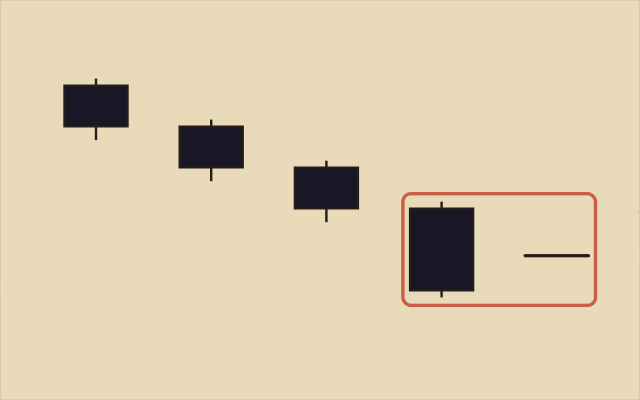
Harami cross
日本語 はらみ寄せ線(はらみよせせん) · harami yose-senไทย ฮารามิครอส (Harami Cross)Also called Harami with a doji
A harami whose second candle is a doji — a sharper pause after a long candle.
How to spot it
- Candle 1: long body (white after an advance, black after a decline).
- Candle 2: doji whose open/close lie inside candle 1's body.
- Bearish variant after an advance; bullish variant after a decline.
- What it means
- The trend delivered a big candle and then total indecision. It flags a possible turn more strongly than an ordinary harami.
- Confirmation
- Bullish: a close above candle 1's body top. Bearish: a close below candle 1's body bottom.
- Invalidation and stop
- A close beyond candle 1's extreme in the trend direction.
- Common mistake
- Forgetting that it is two-sided: the same shape is bearish at a top and bullish at a bottom.
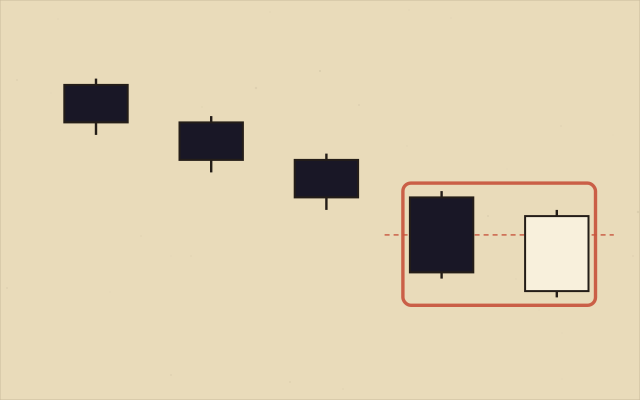
Piercing line
日本語 切り込み線(きりこみせん) · kirikomi-senไทย เส้นแทงทะลุ (Piercing Line)Also called Piercing pattern
After a decline, a white candle opens below the prior low and closes above the midpoint of the prior black body.
How to spot it
- Appears after a decline.
- Candle 1: long insen.
- Candle 2: yōsen that opens below candle 1's low (a gap down; Japanese texts accept an open below candle 1's close).
- Candle 2 closes above the midpoint of candle 1's body but below its open.
- If it closes above candle 1's open, it is an engulfing pattern instead.
- What it means
- The market opened even weaker, but buyers reclaimed more than half of the previous day's loss — sellers who shorted the open are trapped.
- Confirmation
- The next candle closes above candle 2's high.
- Invalidation and stop
- A close below candle 2's low.
- Common mistake
- Accepting a close below the midpoint — that is a thrusting, in-neck or on-neck line, which lean bearish.
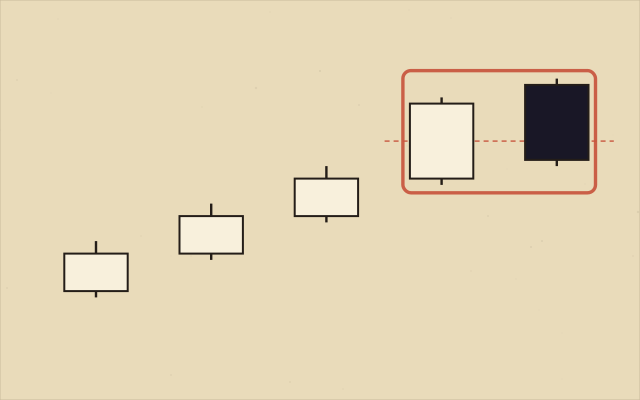
Dark cloud cover
日本語 かぶせ線(かぶせせん) · kabuse-senไทย เมฆดำปกคลุม (Dark Cloud Cover)Also called Dark cloud
After an advance, a black candle opens above the prior high and closes below the midpoint of the prior white body.
How to spot it
- Appears after an advance.
- Candle 1: long yōsen.
- Candle 2: insen that opens above candle 1's high (Japanese texts accept an open above candle 1's close).
- Candle 2 closes below the midpoint of candle 1's body but above its open.
- The deeper the close into the white body, the stronger.
- What it means
- The market opened with a new high and then sellers erased more than half of the prior day's gain — the buyers who chased the open are now underwater.
- Confirmation
- The next candle closes below candle 2's low.
- Invalidation and stop
- A close above candle 2's high.
- Common mistake
- Counting a shallow close above the midpoint; that is only a pause.
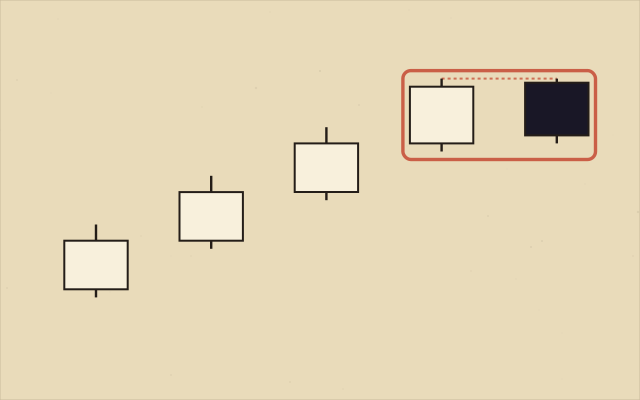
Tweezer top
日本語 毛抜き天井(けぬきてんじょう) · kenuki tenjōไทย ยอดแหนบ (Tweezer Top)Also called Tweezers top
Two or more adjacent candles with matching highs after an advance.
How to spot it
- Appears after an advance.
- Two (or more) consecutive candles make the same or nearly the same high.
- Stronger when combined with another signal, e.g. a long white candle followed by a shooting star or bearish engulfing at the same high.
- What it means
- The market tested the same ceiling twice and failed both times, showing a firm supply level.
- Confirmation
- A close below the low of the tweezer candles.
- Invalidation and stop
- A close above the shared high.
- Common mistake
- Treating any two equal highs as a top; on short timeframes equal highs are often coincidence.
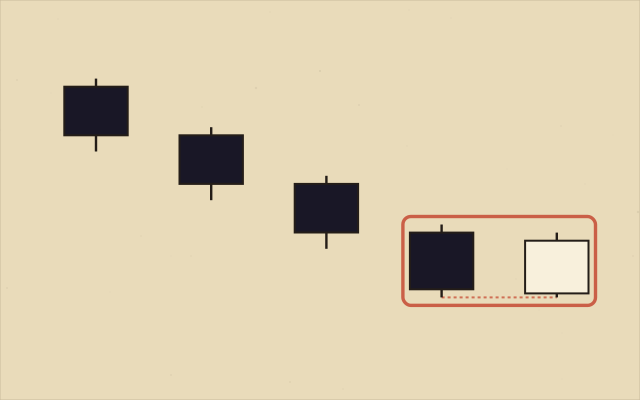
Tweezer bottom
日本語 毛抜き底(けぬきぞこ) · kenuki-zokoไทย ก้นแหนบ (Tweezer Bottom)Also called Tweezers bottom
Two or more adjacent candles with matching lows after a decline.
How to spot it
- Appears after a decline.
- Two (or more) consecutive candles make the same or nearly the same low.
- Stronger with another signal at that low, e.g. a hammer or bullish engulfing.
- What it means
- Sellers pressed the same floor twice and could not break it, revealing demand at that level.
- Confirmation
- A close above the high of the tweezer candles.
- Invalidation and stop
- A close below the shared low.
- Common mistake
- Buying on the second touch without any bullish candle to confirm.
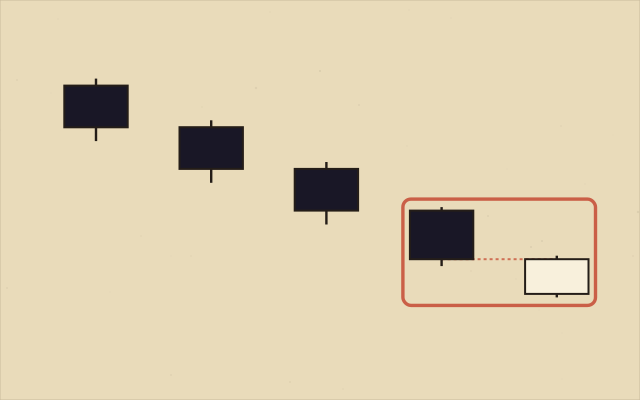
Meeting lines
日本語 出合い線(であいせん) · deai-senไทย เส้นพบกัน (Meeting Lines)Also called Counterattack lines
Two opposite-coloured long candles that close at (or very near) the same price.
How to spot it
- Bullish version, after a decline: a long insen, then a long yōsen that opens sharply lower and rallies to close at or near candle 1's close.
- Bodies of similar length.
- Bearish version (mirror), after an advance: long yōsen, then a long insen that opens sharply higher and closes back at candle 1's close.
- What it means
- The new period started with a strong continuation of the trend, but the counterattack pushed price all the way back to the previous close — the trend's extension was fully refused.
- Confirmation
- Bullish: a close above candle 2's high. Bearish: a close below candle 2's low.
- Invalidation and stop
- A close beyond candle 2's extreme in the old trend direction.
- Common mistake
- Confusing it with the piercing line: meeting lines only return to the prior close, so they are weaker.
Note on the Japanese name: iFinance: 出合い線 (出会い線) also called 逆襲線 — matches Nison's counterattack lines.
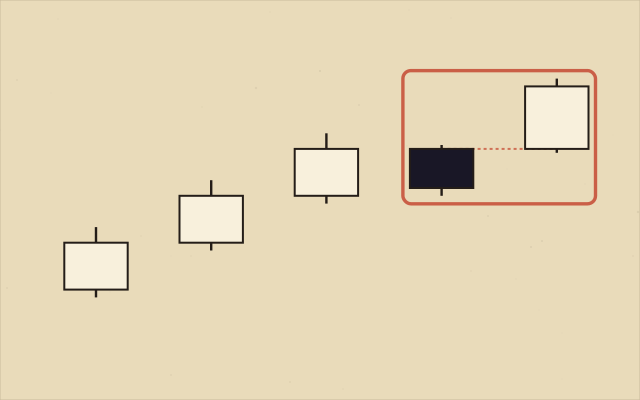
Separating lines
日本語 振り分け線(ふりわけせん) · furiwake-senไทย เส้นแยกทาง (Separating Lines)Also called Bullish/bearish separating lines
In a trend, a counter-trend candle is followed by a trend candle that opens at the same price and runs the other way.
How to spot it
- Bullish version, in an uptrend: a black candle, then a long white candle that opens at (or very near) the black candle's open and closes higher.
- Bodies of similar length; the second is often a belt-hold/opening marubozu.
- Bearish version (mirror), in a downtrend: a white candle, then a long black candle opening at the white candle's open.
- What it means
- The one-period pullback is erased at the next open: the trend side reopens at yesterday's starting price and resumes control.
- Confirmation
- The next candle continues in the trend direction beyond candle 2's close.
- Invalidation and stop
- A close back beyond candle 1's extreme against the trend (below its low for the bullish version).
- Common mistake
- Using it without an established trend; without one it is just two opposite candles.
Note on the Japanese name: iFinance defines 振り分け線 exactly as separating lines. Several Japanese sites (e.g. OANDA Japan, テコマネ) use 行き違い線 as a synonym, while TradingView Japan uses 行き違い線 for the kicking pattern — see kicker.
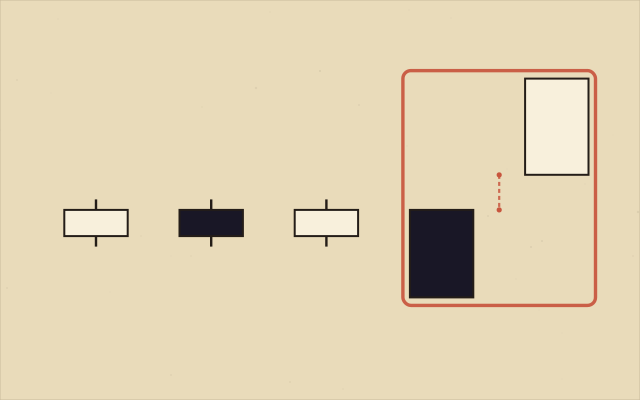
Kicker (kicking pattern)
日本語 行き違い線(キッカー)(いきちがいせん) · ikichigai-senไทย แท่งเตะ (Kicker)Also called Kicking
A marubozu followed by an opposite marubozu that gaps away beyond the first candle's open.
How to spot it
- Bullish kicker: candle 1 is a black marubozu (or nearly).
- Candle 2 is a white marubozu that gaps up, opening above candle 1's open, and never trades back into candle 1's body.
- Bearish kicker (mirror): white marubozu, then a black marubozu gapping below candle 1's open.
- Prior trend is not required; the gap itself is the message.
- What it means
- A sudden shift in sentiment — often news-driven — flips control from one side to the other with no overlap between the two sessions.
- Confirmation
- The next candle does not close back inside the gap.
- Invalidation and stop
- A close back below candle 2's open (the gap is filled).
- Common mistake
- Forcing it on forex or crypto charts where true opening gaps rarely exist; there it mostly appears around weekends or market-moving news.
Note on the Japanese name: Japanese usage is split: TradingView Japan names the kicking pattern 行き違い線 (both marubozu, gap beyond candle 1's open), while iFinance-style glossaries use 行き違い線/振り分け線 for same-open separating lines. Kept 行き違い線 per SPEC with キッカー added for clarity.
On-neck line
日本語 あて首線(あてくびせん) · atekubi-senไทย ออนเน็ก (On-Neck Line)Also called On neck
In a downtrend, a small white candle opens below the prior low and closes only at the prior black candle's low.
How to spot it
- Appears in a downtrend.
- Candle 1: long insen.
- Candle 2: yōsen (usually small) that opens below candle 1's low.
- Candle 2 closes at or near candle 1's low — it does not enter candle 1's body.
- What it means
- Buyers managed only a weak bounce back to yesterday's low. The rebound is too feeble to challenge the sellers.
- Confirmation
- The next candle closes below candle 2's low, resuming the decline.
- Invalidation and stop
- A close above candle 1's body midpoint turns the picture neutral-to-bullish.
- Common mistake
- Reading any white candle after a fall as a reversal. Where it closes matters: at the low, in the body, or above the midpoint are three different patterns.
In-neck line
日本語 入り首線(いりくびせん) · irikubi-senไทย อินเน็ก (In-Neck Line)Also called In neck
In a downtrend, a white candle opens below the prior low and closes just inside the prior black body, at or slightly above its close.
How to spot it
- Appears in a downtrend.
- Candle 1: long insen.
- Candle 2: yōsen that opens below candle 1's low.
- Candle 2 closes at or slightly above candle 1's close — only just into the body.
- What it means
- A slightly better bounce than the on-neck, but buyers still could not push meaningfully into yesterday's selling.
- Confirmation
- The next candle closes below candle 2's low.
- Invalidation and stop
- A close above candle 1's body midpoint.
- Common mistake
- Confusing it with the piercing line; the in-neck barely touches the body.
Thrusting line
日本語 差し込み線(さしこみせん) · sashikomi-senไทย แทรกตัว (Thrusting Line)Also called Thrusting pattern
In a downtrend, a white candle opens below the prior low and closes well into the prior black body but below its midpoint.
How to spot it
- Appears in a downtrend.
- Candle 1: long insen.
- Candle 2: yōsen that opens below candle 1's low.
- Candle 2 closes clearly inside candle 1's body but below its midpoint.
- What it means
- Buyers pushed harder than in the in-neck line, yet still failed to reclaim half of the prior loss. In a falling market it is usually read as a pause.
- Confirmation
- The next candle closes below candle 2's low (bearish continuation).
- Invalidation and stop
- A close above candle 1's midpoint — then it is effectively a piercing line.
- Common mistake
- Assuming it is always bearish; in tests it often resolves upward, so it needs the next candle more than most.
Belt hold
日本語 寄り切り線(よりきりせん) · yorikiri-senไทย เบลต์โฮลด์ (Belt Hold)Also called Opening marubozu, yorikiri
A single long candle that opens at its extreme and runs the other way: bullish after a decline, bearish after an advance.
How to spot it
- Bullish belt hold, after a decline: a long yōsen that opens at its low (no lower shadow) and closes near its high.
- Bearish belt hold, after an advance: a long insen that opens at its high (no upper shadow) and closes near its low.
- The longer the body relative to recent candles, the more significant.
- What it means
- The session opened at the trend's extreme and never looked back — the opposite side took control from the first trade.
- Confirmation
- Bullish: the next candle holds above the belt hold's midpoint and closes higher. Bearish: the mirror.
- Invalidation and stop
- Bullish: a close below the belt hold's open (its low). Bearish: a close above its open (its high).
- Common mistake
- Using a short belt hold; a small shaven-bottom candle carries little information.
Note on the Japanese name: SPEC suggested 寄り付き坊主 (the candle shape). iFinance lists the belt-hold pattern as 寄り切り線 (yorikiri, as in Morris); its shape is 陽の寄り付き坊主/陰の寄り付き坊主. Single-candle pattern kept in the 'two' group to match SPEC order.
Three-candle and multi-candle patterns
Morning star
日本語 明けの明星(あけのみょうじょう) · ake no myōjōไทย ดาวรุ่ง (Morning Star)Also called Sansen ake no myōjō
Long black candle, a small-bodied ‘star’ below it, then a white candle that closes deep into the first body.
How to spot it
- Appears after a decline.
- Candle 1: long insen.
- Candle 2: small real body (either colour) whose body gaps below candle 1's body.
- Candle 3: yōsen that closes above the midpoint of candle 1's body.
- In continuous markets the gaps are often missing; the shape still counts if candle 2 is clearly small and low.
- What it means
- Selling momentum (candle 1) turns into hesitation (the star), and buyers then take over (candle 3). The pattern tells the whole turn in three steps.
- Confirmation
- Candle 3 is itself the confirmation; a following close above candle 3's high adds strength.
- Invalidation and stop
- A close below the star's low — the stop goes just beyond that wick.
- Common mistake
- Accepting a weak candle 3 that closes below candle 1's midpoint.
In the film「明けの明星 宵の明星 三本の物語 / 大きな足 小さな星 強い反転の足」Morning star, evening star: a three-candle story / Big candle, small star, then a strong reversal

Evening star
日本語 宵の明星(よいのみょうじょう) · yoi no myōjōไทย ดาวค่ำ (Evening Star)Also called Sansen yoi no myōjō
Long white candle, a small-bodied star above it, then a black candle that closes deep into the first body.
How to spot it
- Appears after an advance.
- Candle 1: long yōsen.
- Candle 2: small real body whose body gaps above candle 1's body.
- Candle 3: insen that closes below the midpoint of candle 1's body.
- What it means
- Buying momentum stalls into a star of indecision, and sellers then drive price back into the first candle — the rally has lost its engine.
- Confirmation
- Candle 3 is the confirmation; a following close below candle 3's low adds strength.
- Invalidation and stop
- A close above the star's high.
- Common mistake
- Calling it on the star alone, before candle 3 has closed.
In the film「明けの明星 宵の明星 三本の物語 / 大きな足 小さな星 強い反転の足」Morning star, evening star: a three-candle story / Big candle, small star, then a strong reversal

Morning doji star
日本語 明けの明星(十字星)(あけのみょうじょう(じゅうじぼし)) · ake no myōjō (jūji-boshi)ไทย ดาวรุ่งโดจิ (Morning Doji Star)Also called Doji morning star
A morning star whose middle candle is a doji.
How to spot it
- Appears after a decline.
- Candle 1: long insen.
- Candle 2: doji that gaps below candle 1's body.
- Candle 3: yōsen closing above the midpoint of candle 1's body.
- What it means
- Indecision is complete at the low: the doji shows sellers could not finish lower, and the white candle shows buyers stepping in.
- Confirmation
- Candle 3's close above candle 1's midpoint; a further close above candle 3's high strengthens it.
- Invalidation and stop
- A close below the doji's low.
- Common mistake
- Buying on the doji before candle 3 has closed.
Note on the Japanese name: Name as used by 株の達人 (sevendata: 明けの明星(十字星)) and TradingView Japan (明けの明星・同時線).
Evening doji star
日本語 宵の明星(十字星)(よいのみょうじょう(じゅうじぼし)) · yoi no myōjō (jūji-boshi)ไทย ดาวค่ำโดจิ (Evening Doji Star)Also called Doji evening star
An evening star whose middle candle is a doji.
How to spot it
- Appears after an advance.
- Candle 1: long yōsen.
- Candle 2: doji that gaps above candle 1's body.
- Candle 3: insen closing below the midpoint of candle 1's body.
- What it means
- At the high, buyers could not close above the open, and sellers then reclaimed much of the prior rally.
- Confirmation
- Candle 3's close below candle 1's midpoint; a further close below candle 3's low strengthens it.
- Invalidation and stop
- A close above the doji's high.
- Common mistake
- Shorting on the doji alone; many dojis in uptrends are just pauses.
Note on the Japanese name: Name as used by 株の達人 (宵の明星(十字星)) and TradingView Japan (宵の明星・同時線).
Abandoned baby
日本語 捨て子線(すてごせん) · sutego-senไทย ทารกถูกทิ้ง (Abandoned Baby)Also called Island doji reversal
A doji left alone by gaps on both sides — the rarest and cleanest star reversal.
How to spot it
- Bullish version, after a decline: a long insen; then a doji whose entire range (shadows included) gaps below candle 1's low.
- Then a yōsen whose entire range gaps above the doji's high.
- Bearish version (mirror), after an advance: yōsen, doji gapping fully above, insen gapping fully below.
- Shadows must not overlap — that separates it from a doji star.
- What it means
- The trend exhausted itself in an isolated session, and the market then jumped away in the opposite direction, leaving that session ‘abandoned’.
- Confirmation
- Candle 3 must hold the gap: no close back inside the doji's range.
- Invalidation and stop
- Bullish: a close below the doji's low. Bearish: a close above the doji's high.
- Common mistake
- Expecting it on 24-hour markets; outside weekends and news it almost never forms there.
Three white soldiers
日本語 赤三兵(あかさんぺい) · aka sanpeiไทย สามทหารขาว (Three White Soldiers)Also called Aka sanpei (three red soldiers)
Three long white candles in a row, each opening within the prior body and closing near its high.
How to spot it
- Appears after a decline or a base.
- Three consecutive long yōsen with progressively higher closes.
- Each opens within (or near) the previous candle's body.
- Each closes at or near its high; upper shadows short.
- What it means
- Buyers win three periods in a row, each time from a reasonable opening level, showing steady rather than panicky demand.
- Confirmation
- The advance holds above the midpoint of the third candle over the following candles.
- Invalidation and stop
- A close below the first soldier's open.
- Common mistake
- Buying the third soldier far above support after a long rally; watch for the advance block and deliberation variants.
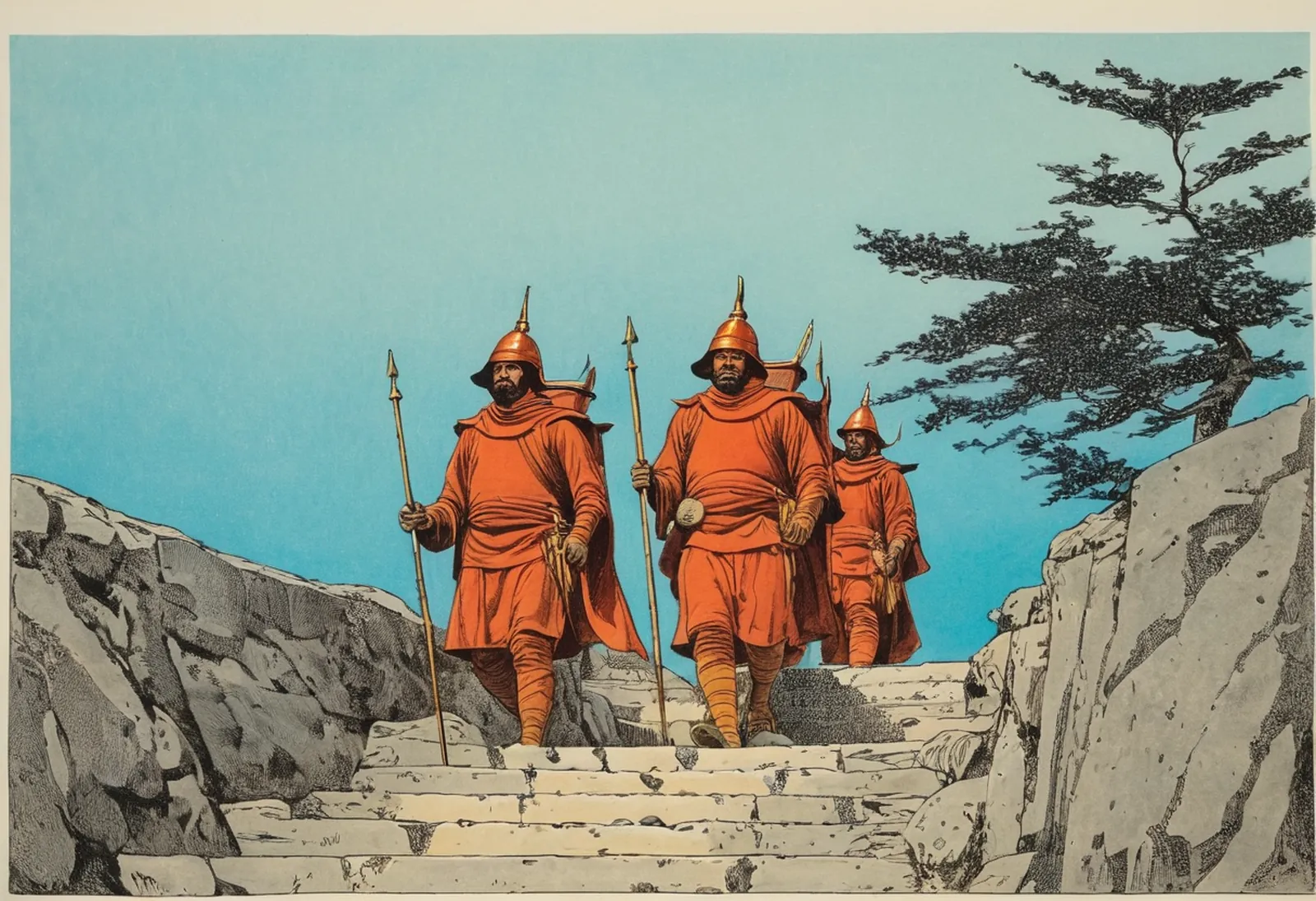
In the film「赤三兵 強い陽線三本 並んで上へ」Three white soldiers: three strong yōsen marching up
Advance block
日本語 赤三兵先詰まり(あかさんぺいさきづまり) · aka sanpei saki-zumariไทย การขึ้นที่ติดขัด (Advance Block)Also called Aka sanpei saki-zumari
Three white candles that keep rising but with shrinking bodies and growing upper shadows — an advance losing steam.
How to spot it
- Appears in an advance.
- Three consecutive yōsen, each opening within the prior body, with higher closes.
- The second and third bodies are progressively smaller.
- Upper shadows on the second and third candles grow longer.
- What it means
- Price still closes higher, but each push gains less and meets more selling near the high. It warns that the rally is tiring rather than calling an immediate top.
- Confirmation
- A close below the third candle's low, or a bearish reversal candle next.
- Invalidation and stop
- Strong white candles resuming with short shadows, or a close above the third candle's high with a long body.
- Common mistake
- Shorting it outright; tests show it often resolves as a continuation. Treat it as a reason to tighten stops on longs.
Deliberation
日本語 赤三兵思案星(あかさんぺいしあんぼし) · aka sanpei shian-boshiไทย การไตร่ตรอง (Deliberation)Also called Stalled pattern, aka sanpei shian-boshi
Two long white candles followed by a small-bodied third candle near the high — the advance pauses to think.
How to spot it
- Appears in an advance.
- Candles 1 and 2: long yōsen with higher closes.
- Candle 3: small body (spinning top or star) that opens near or above candle 2's close.
- Candle 3 may gap up slightly.
- What it means
- After two confident sessions the buyers suddenly hesitate. The small third candle shows the rally is waiting for new buyers.
- Confirmation
- A bearish candle next that closes below candle 3's low, ideally into candle 2's body.
- Invalidation and stop
- A strong white candle closing above candle 3's high.
- Common mistake
- Treating it as a sell signal by itself; it often ends as a pause in a continuing trend.
Three black crows
日本語 三羽烏(さんばがらす) · sanba-garasuไทย สามอีกาดำ (Three Black Crows)Also called Sanba-garasu, kuro sanpei
Three long black candles in a row, each opening within the prior body and closing near its low.
How to spot it
- Appears after an advance or at a high.
- Three consecutive long insen with progressively lower closes.
- Each opens within (or near) the previous candle's body.
- Each closes at or near its low; lower shadows short.
- What it means
- Sellers win three periods in a row, each time pushing the close to the low — distribution rather than a single shock.
- Confirmation
- The decline stays below the midpoint of the third candle over the following candles.
- Invalidation and stop
- A close above the first crow's open.
- Common mistake
- Selling the third crow after the market has already fallen far; oversold bounces often follow.
In the film「三羽烏 陰線三本 そろって下へ」Three black crows: three insen stepping down

Note on the Japanese name: Japanese sources treat 三羽烏 and 黒三兵 as the same family; some reserve 三羽烏 for the high-price-zone version.
Identical three crows
日本語 同事三羽(どうじさんば) · dōji sanbaไทย สามอีกาเหมือนกัน (Identical Three Crows)Also called Dōji sanba
Three black crows in which each candle opens exactly at the previous close.
How to spot it
- Appears after an advance.
- Three consecutive long insen with lower closes.
- Candle 2 opens at (or very near) candle 1's close; candle 3 opens at candle 2's close.
- Closes at or near the lows.
- What it means
- Sellers never let buyers even open the next period higher; each session picks up exactly where selling stopped.
- Confirmation
- The following candles stay below the third crow's midpoint.
- Invalidation and stop
- A close above the first crow's open.
- Common mistake
- Mixing it up with ordinary crows; the defining feature is open = prior close.
Note on the Japanese name: iFinance: 同事三羽 (also written 同時三羽). SPEC's 同時三羽 kept as aka.
Upside gap two crows
日本語 上放れ二羽烏(うわばなれにわがらす) · uwabanare niwa-garasuไทย สองอีกาเหนือช่องว่าง (Upside Gap Two Crows)Also called Sansen uwabanare niwa-garasu
After a long white candle, two black candles gap up; the second engulfs the first black body.
How to spot it
- Appears in an advance.
- Candle 1: long yōsen.
- Candle 2: small insen whose body gaps above candle 1's body.
- Candle 3: larger insen that opens above candle 2's open and closes below candle 2's close, engulfing its body; in Nison's definition it still closes above candle 1's close.
- What it means
- Two attempts to open higher both end with selling. The gap has not closed yet, but buyers are failing at the high.
- Confirmation
- A close below candle 1's close (filling the gap).
- Invalidation and stop
- A close above candle 3's open.
- Common mistake
- Acting before the gap is filled; while it remains open the uptrend is technically intact.
Note on the Japanese name: iFinance lists 三川上放れ二羽鳥 (written with 鳥) and defines the third candle as closing below the second's low; Nison's upside gap two crows requires the third body to engulf the second while the gap stays open. SPEC's 二羽烏 kept as aka.
Three inside up
日本語 スリー・インサイド・アップ(すりー・いんさいど・あっぷ) · surī insaido appuไทย สามแท่งอยู่ในขาขึ้น (Three Inside Up)Also called Confirmed bullish harami
A bullish harami plus a third white candle that closes above the first candle's body.
How to spot it
- Appears after a decline.
- Candles 1–2: a bullish harami (long insen, then a small yōsen inside its body).
- Candle 3: yōsen that closes above candle 1's open (the top of the black body).
- What it means
- The pause shown by the harami turns into an actual recovery: buyers now close above where yesterday's sellers started.
- Confirmation
- Candle 3 is the confirmation; follow-through above candle 3's high strengthens it.
- Invalidation and stop
- A close below candle 1's low.
- Common mistake
- Accepting a third candle that closes only above candle 2 but still inside the black body.
Note on the Japanese name: Western (Morris) pattern with no traditional Japanese name; Japanese education sites (e.g. Babypips Japan, EBC) use the katakana name. Japanese equivalent reading: 陰の陽はらみ confirmed by a third candle.
Three inside down
日本語 スリー・インサイド・ダウン(すりー・いんさいど・だうん) · surī insaido daunไทย สามแท่งอยู่ในขาลง (Three Inside Down)Also called Confirmed bearish harami
A bearish harami plus a third black candle that closes below the first candle's body.
How to spot it
- Appears after an advance.
- Candles 1–2: a bearish harami (long yōsen, then a small insen inside its body).
- Candle 3: insen that closes below candle 1's open (the bottom of the white body).
- What it means
- The stall shown by the harami becomes a decline: sellers now close below where yesterday's buyers started.
- Confirmation
- Candle 3 is the confirmation; follow-through below candle 3's low strengthens it.
- Invalidation and stop
- A close above candle 1's high.
- Common mistake
- Using it in a range where there was no advance to reverse.
Note on the Japanese name: Western (Morris) pattern; katakana name used on Japanese education sites (e.g. TARO INVESTMENT LAB).
Three outside up
日本語 スリー・アウトサイド・アップ(すりー・あうとさいど・あっぷ) · surī autosaido appuไทย สามแท่งอยู่นอกขาขึ้น (Three Outside Up)Also called Confirmed bullish engulfing
A bullish engulfing pattern followed by a third candle that closes higher still.
How to spot it
- Appears after a decline.
- Candles 1–2: bullish engulfing (a black candle, then a white body that engulfs it).
- Candle 3: a candle (usually white) that closes above candle 2's close.
- What it means
- The engulfing reversal gets immediate follow-through, showing the new buying was not a one-session event.
- Confirmation
- Candle 3's higher close is the confirmation.
- Invalidation and stop
- A close below the low of candles 1–2.
- Common mistake
- Buying candle 3 after it has already run far from the stop, making the risk too large.
Note on the Japanese name: Western (Morris) pattern; katakana name used on Japanese education sites.
Three outside down
日本語 スリー・アウトサイド・ダウン(すりー・あうとさいど・だうん) · surī autosaido daunไทย สามแท่งอยู่นอกขาลง (Three Outside Down)Also called Confirmed bearish engulfing
A bearish engulfing pattern followed by a third candle that closes lower still.
How to spot it
- Appears after an advance.
- Candles 1–2: bearish engulfing (a white candle, then a black body that engulfs it).
- Candle 3: a candle (usually black) that closes below candle 2's close.
- What it means
- Selling that appeared in the engulfing candle continues into the next period, turning a one-day event into a trend change.
- Confirmation
- Candle 3's lower close is the confirmation.
- Invalidation and stop
- A close above the high of candles 1–2.
- Common mistake
- Ignoring nearby support directly below candle 3, which limits the room to fall.
Note on the Japanese name: Western (Morris) pattern; katakana name used on Japanese education sites.
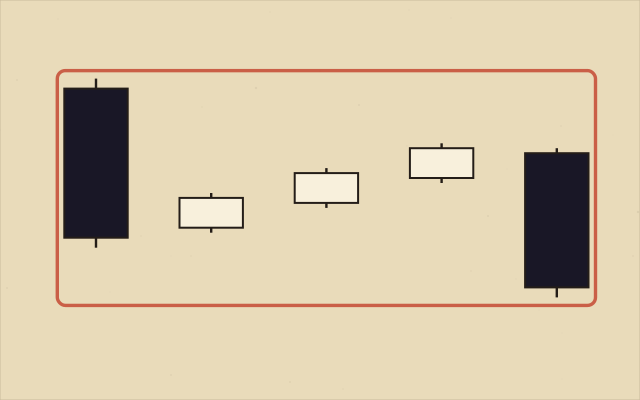
Rising three methods
日本語 上げ三法(あげさんぽう) · age sanpōไทย สามวิธีขาขึ้น (Rising Three Methods)Also called Age sanpō
A long white candle, three small candles that stay within its range, then a new long white candle closing at a new high.
How to spot it
- Appears in an uptrend.
- Candle 1: long yōsen.
- Candles 2–4: small-bodied candles (usually black) that drift lower but stay within candle 1's high–low range.
- Candle 5: long yōsen that closes above candle 1's close (a new high).
- The number of small candles can vary (two to five); three is classic.
- What it means
- The trend rests without giving back its gains — sellers could not even break the first candle's low. The fifth candle shows buyers returning.
- Confirmation
- Candle 5's close above candle 1's close is the confirmation.
- Invalidation and stop
- A close below candle 1's low.
- Common mistake
- Calling it before candle 5; a rest that breaks candle 1's low is a different story.
Falling three methods
日本語 下げ三法(さげさんぽう) · sage sanpōไทย สามวิธีขาลง (Falling Three Methods)Also called Sage sanpō
A long black candle, three small candles that stay within its range, then a new long black candle closing at a new low.
How to spot it
- Appears in a downtrend.
- Candle 1: long insen.
- Candles 2–4: small-bodied candles (usually white) that drift higher but stay within candle 1's range.
- Candle 5: long insen that closes below candle 1's close.
- What it means
- The bounce is weak and contained; sellers resume control with the fifth candle.
- Confirmation
- Candle 5's close below candle 1's close.
- Invalidation and stop
- A close above candle 1's high.
- Common mistake
- Buying the small white candles as a ‘reversal’ while they are still inside the first candle's range.
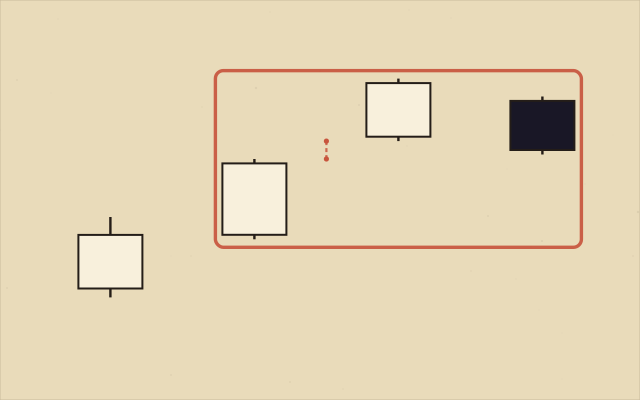
Upside tasuki gap
日本語 上放れタスキ(うわばなれたすき) · uwabanare tasukiไทย ทาสุกิขาขึ้น (Upside Tasuki Gap)Also called Uwabanare tasuki
In an uptrend, a gap between two white candles is followed by a black candle that closes inside the gap without filling it.
How to spot it
- Appears in an uptrend.
- Candle 1: yōsen.
- Candle 2: yōsen that gaps up above candle 1 (a window).
- Candle 3: insen that opens inside candle 2's body and closes inside the gap, without closing below candle 1's high.
- Candles 2 and 3 are of similar size.
- What it means
- Profit-taking pulls price back into the window, but the window holds — support is where it should be for the uptrend.
- Confirmation
- The next candle resumes the advance above candle 3's open.
- Invalidation and stop
- A close below candle 1's high (the window is filled).
- Common mistake
- Waiting for the gap to be filled ‘to be safe’ — once filled, the pattern has failed.
Note on the Japanese name: iFinance/TradingView Japan: 上放れタスキ.
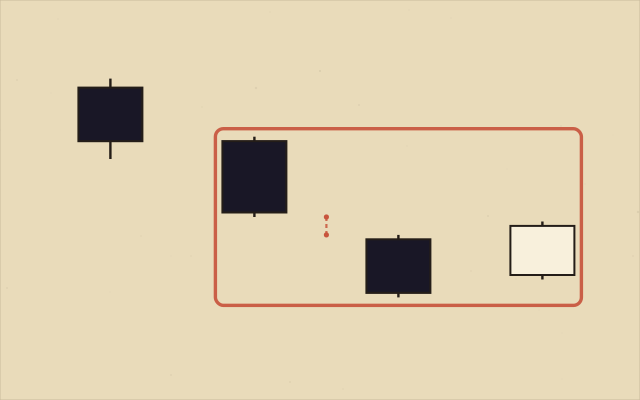
Downside tasuki gap
日本語 下放れタスキ(したばなれたすき) · shitabanare tasukiไทย ทาสุกิขาลง (Downside Tasuki Gap)Also called Shitabanare tasuki
In a downtrend, a gap between two black candles is followed by a white candle that closes inside the gap without filling it.
How to spot it
- Appears in a downtrend.
- Candle 1: insen.
- Candle 2: insen that gaps down below candle 1.
- Candle 3: yōsen that opens inside candle 2's body and closes inside the gap, without closing above candle 1's low.
- What it means
- A relief bounce runs into the window and stalls — the gap acts as resistance and the downtrend stays intact.
- Confirmation
- The next candle resumes the decline below candle 3's open.
- Invalidation and stop
- A close above candle 1's low (the window is filled).
- Common mistake
- Reading the white candle as a reversal; it is only a bounce into resistance.
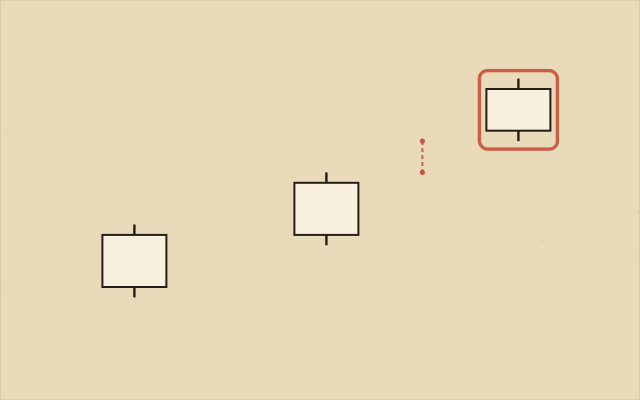
Window (gap)
日本語 窓(まど) · madoไทย หน้าต่าง (Window / Gap)Also called Rising window / falling window, kū
A price gap between two candles: no overlap between one candle's range and the next.
How to spot it
- Rising window: the low of candle 2 is above the high of candle 1.
- Falling window: the high of candle 2 is below the low of candle 1.
- Shadows count — the ranges, not just the bodies, must not overlap.
- What it means
- Demand (or supply) was strong enough to skip a whole price zone. Japanese tradition says the market ‘goes to the window’: a rising window tends to act as support on pullbacks, a falling window as resistance.
- Confirmation
- Price respects the window on the first pullback into it.
- Invalidation and stop
- A close that fills the window completely (below candle 1's high for a rising window).
- Common mistake
- Seeing ‘windows’ on 24/7 charts caused only by illiquid ticks or a broker's weekend data.
Note on the Japanese name: Direction depends on the window's side; set to continuation-bull for the rising window drawn first. Falling window is the mirror (continuation-bear).
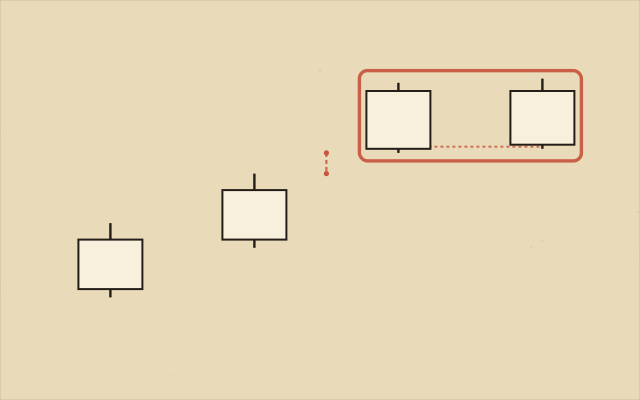
Side-by-side white lines
日本語 上放れ並び赤(うわばなれならびあか) · uwabanare narabi-akaไทย แท่งขาวคู่เคียง (Side-by-Side White Lines)Also called Uwabanare narabi-aka
In an uptrend, a white candle is followed by a gap and two similar white candles opening at about the same price.
How to spot it
- Appears in an uptrend.
- Candle 1: yōsen.
- Candle 2: yōsen that gaps up above candle 1 (a rising window).
- Candle 3: yōsen of similar size that opens near candle 2's open and stays above the window.
- What it means
- The market gapped up, and the next session opened back at the same level yet buyers again carried it higher — the window is being defended.
- Confirmation
- The next candle opens or closes above candle 3's high.
- Invalidation and stop
- A close below candle 1's high (the window is filled).
- Common mistake
- Confusing it with the rare bearish version in a downtrend (下放れ並び赤), which is read differently.
Note on the Japanese name: Japanese sources (iFinance 並び赤, 楽天証券トウシル) describe it as a two-candle 二本足 after a gap; the Western definition counts the pre-gap candle, so candles=3.
Sakata’s five methods (酒田五法)
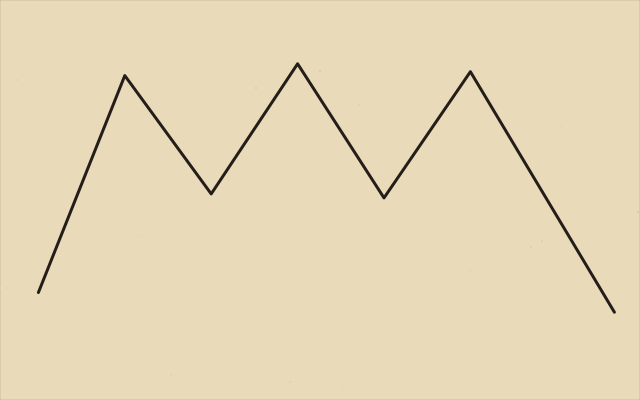
Sanzan (three mountains)
日本語 三山(さんざん) · sanzanไทย ซันซัง (สามภูเขา)Also called Three Buddha top (sanzon), Japanese head and shoulders
Three failed attempts to push through the highs form a top; the version with a taller middle peak is sanzon.
How to spot it
- Appears after an advance.
- Price rallies to a high three times and fails each time (three peaks at similar levels = triple top).
- Sanzon tenjō (三尊天井): the middle peak is the highest, like a Buddha between two attendants — the Western head and shoulders.
- The top is complete when price closes below the lows between the peaks (the neckline).
- Mirror at a bottom: gyaku-sanzan / gyaku-sanzon (逆三尊), the inverse head and shoulders, completed by a close above the neckline.
- What it means
- Buyers had three chances to make new highs and could not. Tradition reads the third failure as exhaustion of the buying side.
- Confirmation
- A close below the neckline joining the troughs between the peaks.
- Invalidation and stop
- A close above the highest peak.
- Common mistake
- Labelling three wobbles a top before the neckline breaks; many ‘third peaks’ become breakouts.
In the film「酒田五法 三山 三川 三空 三兵 三法」Sakata's five: mountains, rivers, gaps, soldiers, rest

Note on the Japanese name: iFinance: 三山 and 三尊天井 (interpretation of 三山). Candle count not fixed (chart formation).
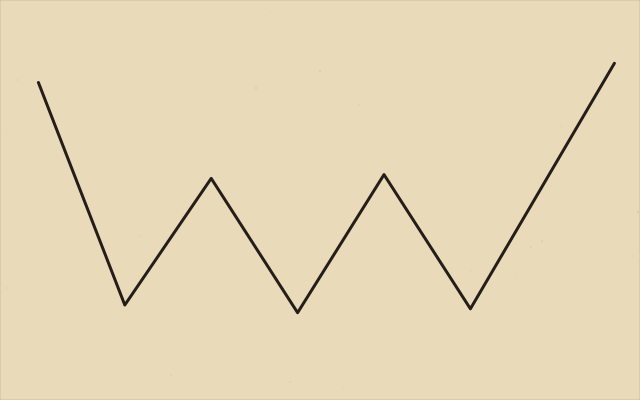
Sansen (three rivers)
日本語 三川(さんせん) · sansenไทย ซันเซ็น (สามแม่น้ำ)Also called Three-line patterns; morning star family
Patterns read from three candles in a row — the morning star family is the classic example.
How to spot it
- In the classical texts 川 (sen) stands for 線, a candle line: sansen means reading three candles together.
- Main examples: sansen ake no myōjō (morning star), sansen yoi no myōjō (evening star), sansen uwabanare niwa-garasu (upside gap two crows).
- Some modern Japanese sites also describe sansen as the mirror of sanzan — three troughs, including the inverse three-Buddha bottom (逆三尊).
- What it means
- Three candles are enough to show a complete turn: a trend candle, a pause, and a candle from the other side taking control.
- Confirmation
- Depends on the specific pattern — for the morning star, the third candle closing above the first candle's midpoint.
- Invalidation and stop
- Depends on the pattern — for the morning star, a close below the star's low.
- Common mistake
- Mixing up the two meanings. On this site sansen means three-candle patterns; the three-trough bottom is listed under sanzan's mirror (逆三尊).
In the film「酒田五法 三山 三川 三空 三兵 三法」Sakata's five: mountains, rivers, gaps, soldiers, rest
Note on the Japanese name: Sources differ: iFinance defines 三川 as three-candle arrangements (三川明けの明星 etc.); ja.wikipedia and some FX sites describe it as the inverse of 三山. SPEC said 'incl. 逆三尊' — both readings are given; 逆三尊 is explained as the mirror of 三山.
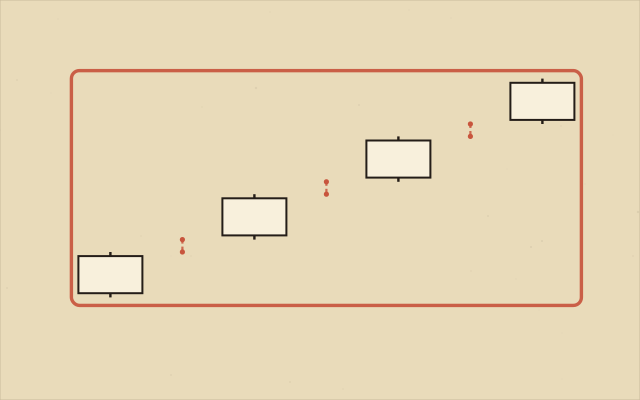
Sanku (three gaps)
日本語 三空(さんくう) · sankūไทย ซังคู (สามช่องว่าง)Also called Sanku fumiage / sanku tatakikomi
Three gaps in a row in the same direction: a runaway move that tradition treats as overextended.
How to spot it
- Four consecutive candles with a window (gap) between each pair — three gaps in total.
- Sanku fumiage (三空踏み上げ): three rising gaps; traditionally a signal to take profits or look for selling.
- Sanku tatakikomi (三空叩き込み): three falling gaps; traditionally a signal to look for buying.
- What it means
- After three gaps the move has been driven by urgency — short covering or panic selling. The Japanese rule treats that urgency as a sign the move is nearly spent.
- Confirmation
- A reversal candle (for example a bearish engulfing after three rising gaps) and a close back into the last gap.
- Invalidation and stop
- A fourth gap in the same direction, or strong closes that keep extending the move.
- Common mistake
- Fading the move on the third gap alone; strong trends can keep gapping. Wait for a reversal candle.
In the film「酒田五法 三山 三川 三空 三兵 三法」Sakata's five: mountains, rivers, gaps, soldiers, rest
Note on the Japanese name: iFinance: 三空, 三空踏み上げ, 三空叩き込み (four candles, three gaps).
Sanpei (three soldiers)
日本語 三兵(さんぺい) · sanpeiไทย ซันเปย์ (สามทหาร)Also called Aka sanpei / kuro sanpei
Three candles in a row stepping the same way: three white soldiers up (aka sanpei) or three black candles down (kuro sanpei).
How to spot it
- Aka sanpei (赤三兵): three yōsen in a row with higher closes — see three white soldiers.
- Kuro sanpei (黒三兵) / sanba-garasu: three insen in a row with lower closes — see three black crows.
- Variants warn of weakness: saki-zumari (advance block), shian-boshi (deliberation); or add strength: bōzu sanba and dōji sanba (identical three crows).
- What it means
- Three periods won by the same side show that a move has become a trend rather than a single push. Where they appear decides whether they start a move or exhaust it.
- Confirmation
- The next candles hold above (for aka sanpei) or below (for kuro sanpei) the midpoint of the third candle.
- Invalidation and stop
- A close back beyond the first candle's open.
- Common mistake
- Ignoring the variants — a third soldier with a long upper shadow is a warning, not a buy.
In the film「酒田五法 三山 三川 三空 三兵 三法」Sakata's five: mountains, rivers, gaps, soldiers, rest
Note on the Japanese name: iFinance/野村證券: 三兵 = 赤三兵 and 黒三兵, with variants 先詰まり, 思案星, 坊主三羽, 同事三羽.
Sanpō (three methods)
日本語 三法(さんぽう) · sanpōไทย ซัมโป (สามวิธี)Also called Age sanpō / sage sanpō; ‘rest is also a position’
The market rests inside a big candle's range; the lesson is to rest with it — buy, sell, or wait.
How to spot it
- A long candle followed by (usually three) small candles contained within its range.
- Age sanpō (rising three methods): the rest ends with a new long white candle to a new high.
- Sage sanpō (falling three methods): the rest ends with a new long black candle to a new low.
- The classical teaching: ‘urubeshi, kaubeshi, yasumubeshi’ — sell, buy, rest.
- What it means
- Not every period needs a trade. A pause inside the prior candle shows the trend is storing energy; the break of the range shows which way it is released.
- Confirmation
- The candle that closes beyond the first candle's close in the trend direction.
- Invalidation and stop
- A close beyond the first candle's opposite extreme.
- Common mistake
- Trading inside the rest — the method's own advice is to wait for the break.
In the film「酒田五法 三山 三川 三空 三兵 三法」Sakata's five: mountains, rivers, gaps, soldiers, rest
Note on the Japanese name: iFinance: 三法 = 売るべし、買うべし、休むべし; 上げ三法/下げ三法.
Limitations: what candlesticks cannot do
No candlestick pattern is reliable on its own. Independent tests of large pattern samples, such as Thomas Bulkowski's, found that many classic ‘reversal’ patterns behave close to random, and several act more often as continuations than as the reversals their names promise.
Patterns describe the past session; they do not know about tomorrow's news, a central-bank decision or a liquidity gap. Continuous markets such as spot forex and crypto rarely print true opening gaps, so gap-based patterns (stars, windows, kickers, abandoned babies) appear differently than in the stock markets where they were described.
Use candles as a reading of market behaviour at a level you already care about, combined with trend, structure and risk management. A candle is a signal, not a promise.
Glossary
- Candlestick (rōsoku-ashi)
- แท่งเทียน (โรโซกุอาชิ) · ローソク足
- Open
- ราคาเปิด (Open) · 始値(はじめね)
- High
- ราคาสูงสุด (High) · 高値(たかね)
- Low
- ราคาต่ำสุด (Low) · 安値(やすね)
- Close
- ราคาปิด (Close) · 終値(おわりね)
- Real body
- เนื้อเทียน (Real Body) · 実体(じったい)
- Shadow / wick
- ไส้เทียน (Shadow / Wick) · ヒゲ・影
- Upper shadow
- ไส้บน (Upper Shadow) · 上ヒゲ(上影)
- Lower shadow
- ไส้ล่าง (Lower Shadow) · 下ヒゲ(下影)
- Bullish candle (yōsen)
- แท่งบวก (โยเซ็น) · 陽線(ようせん)
- Bearish candle (insen)
- แท่งลบ (อินเซ็น) · 陰線(いんせん)
- Doji (open = close)
- โดจิ (ราคาเปิด = ราคาปิด) · 寄引同時線・十字線
- Marubozu (no shadows)
- มารูโบซุ (ไม่มีไส้) · 丸坊主
- Star (small body gapped away)
- ดาว (เนื้อเทียนเล็กที่กระโดดห่างออกไป) · 星(ほし)
- Window / gap
- หน้าต่าง / ช่องว่างราคา (Gap) · 窓・空(くう)
- Gap fill
- การปิดช่องว่างราคา (Gap Fill) · 窓埋め
- Engulfing
- กลืนกิน (Engulfing) · 包み線・抱き線
- Harami (inside)
- ฮารามิ (แท่งอยู่ใน) · はらみ線
- Reversal pattern
- แพทเทิร์นกลับตัว (Reversal) · 反転パターン
- Continuation pattern
- แพทเทิร์นไปต่อ (Continuation) · 継続パターン(中段保ち合い)
- Confirmation
- การยืนยัน (Confirmation) · 確認・確認足
- Support / resistance
- แนวรับ / แนวต้าน (Support / Resistance) · 支持線・抵抗線(サポート・レジスタンス)
- Neckline
- เส้นคอ (Neckline) · ネックライン
- Stop-loss
- จุดตัดขาดทุน (Stop Loss) · 損切り(ストップロス)
- Sakata five methods
- วิธีห้าประการของซากาตะ · 酒田五法(さかたごほう)
Frequently asked questions
What is a candlestick chart?
A candlestick chart shows price as a series of candles. Each candle covers one period — a minute, an hour, a day — and records four prices: open, high, low and close. The box between open and close is the real body; the thin lines are the shadows, reaching the high and low. Bullish candles close above their open, bearish candles below it.
Who invented Japanese candlesticks?
Tradition credits Homma Munehisa (1724–1803), a rice merchant from Sakata, working in the era of the Dojima rice market licensed in Osaka in 1730. That attribution is a legend: Steve Nison, who brought candlesticks to the West in 1991, later wrote that the charts probably developed in the early Meiji period, in the late 1800s.
What is the most reliable candlestick pattern?
None is reliable on its own. Large independent tests show many famous reversal patterns behave close to a coin flip when taken in isolation. What improves the odds is context: a clear prior trend, a meaningful level such as support or a prior high, and confirmation from the next candle. Treat every pattern as a question the market answers next.
What is the difference between a hammer and a hanging man?
They have the same shape — a small body at the top of the range and a long lower shadow at least twice the body. The difference is location. After a decline it is a hammer, a potential bullish reversal. After an advance it is a hanging man, a bearish warning that needs a lower close on the next candle to count.
What does a doji mean?
A doji forms when the open and close are equal or almost equal, so the candle has virtually no body. It shows indecision: buyers and sellers ended the period level. After a strong trend or a long candle a doji can warn that momentum is fading; inside a sideways range it means very little. Wait for the next candle to break its high or low.
What is 酒田五法 (the Sakata five methods)?
Sakata goho is the classical Japanese set of five chart principles traditionally attributed to Homma Munehisa of Sakata: sanzan (three mountains, a triple top or head and shoulders), sansen (three rivers, three-candle patterns such as the morning star), sanku (three gaps), sanpei (three soldiers or crows) and sanpo (three methods, a rest inside a big candle).
Do candlestick patterns work in gold, forex and crypto?
The logic of candles applies to any market with open, high, low and close prices, including gold, forex and crypto. The differences matter, though: these markets trade almost continuously, so true opening gaps are rare and gap-based patterns such as stars, windows and kickers look different. Volume in spot forex is only broker tick volume. Always confirm and manage risk.
What is the best timeframe for candlestick patterns?
Higher timeframes carry more information because each candle summarises more trading. Daily and four-hour candles are a common starting point; weekly candles show major turning points. One-minute and five-minute charts produce many patterns, most of them noise. A practical approach is to find the level on a higher timeframe and read the candles there.
Why are yōsen red in Japan but green in Western charts?
Classical Japanese charts drew rising candles (yōsen) hollow white and falling candles (insen) solid black, and Japanese platforms often colour yōsen red and insen blue — the ‘aka’ in aka sanpei means red. Western software usually uses green for up and red for down. The candle is identical; only the display convention differs, so check your platform's settings.
Sources
- 堂島米市場 — 世界における先物取引所の先駆け · Japan Exchange Group (JPX)
1730 (享保15年) shogunate recognition of 正米商い and 帳合米商い at Dojima; described as a pioneer of organized futures exchanges. - 18.堂島米市場(どうじまこめいちば)跡碑 · City of Osaka (大阪市)
Same 1730 facts; Dojima as the origin of Japanese exchanges. - 本間宗久 · Wikipedia (Japanese)
Homma Munehisa 1724–1803, Sakata/Dewa; said (言われる) to have devised candlesticks and 酒田五法, with an explicit chronology caveat. - Candlestick chart · Wikipedia (English)
Nison's 1991 book; Nison's later (Beyond Candlesticks, 1994) view that Homma likely did not use candle charts and that they developed in early Meiji; Western colour conventions; body/shadow definitions. - ローソク足 · Wikipedia (Japanese)
陽線/陰線 definitions; historic red/black and white/black colour conventions; naming. - 酒田五法 · Wikipedia (Japanese)
三山・三川・三空・三兵・三法 overview; alternative reading of 三川 as inverse of 三山. - テクニカル分析の基礎知識(用語集 twd001–twd197) · iFinance (fvgate Inc.)
Japanese names, readings and definitions verified for: 陽線/陰線, 実体, ヒゲ, 十字線/寄せ線, 寄引同時線 (足長同時線・トンボ・トウバ・一本線), 大陽線/大陰線, 陽/陰の丸坊主, コマ, カラカサ, たくり線, 首吊り線, トンカチ, 流れ星, つつみ線/抱き線, 陰の陽はらみ/陽の陰はらみ, はらみ寄せ線, 切り込み線, かぶせ線, 毛抜き天井/底, 出合い線(逆襲線), 振り分け線, あて首線, 入り首線, 差し込み線, 陽の寄り付き坊主, 寄り切り線, 捨て子線, 赤三兵, 黒三兵, 三羽烏, 坊主三羽, 同事三羽, 三川上放れ二羽鳥, 三川明けの明星, 上げ三法/下げ三法, 上放れ/下放れタスキ, 並び赤, 窓, 三山, 三尊天井, 逆三尊, 三川, 三空(踏み上げ/叩き込み), 三兵, 三法. - ローソク足パターンについて(自動検出パターン一覧) · TradingView Japan Help Center
Japanese names used for built-in patterns, incl. 行き違い線 = kicking (two marubozu with a gap), 明けの明星・同時線, 上放れタスキ, はらみ寄せ線. - 行き違い線 - 強気 · TradingView Japan Help Center
Definition of 行き違い線 as the kicking pattern. - 赤三兵(証券用語解説集) · Nomura Securities (野村證券)
赤三兵 reading あかさんぺい; part of 酒田五法 三兵; 赤三兵先詰まり; 'red' comes from red yōsen. - ローソク足とは?見方、種類、組み合わせパターンを解説 · 外為どっとコム (Gaitame.com)
トンカチ, カラカサ, トンボ, トウバ, 包み線/抱き線, はらみ線; Japanese colour conventions. - ローソク足とは?基本パターンや組み合わせ方、注意点を分かりやすく解説 · 松井証券 マネーサテライト
かぶせ線, 切り込み線, 毛抜き天井/底, 赤三兵, 宵の明星/明けの明星; red/white vs blue/black colours. - ローソク足パターン · IG証券 (IG Academy Japan)
ハンマー(カラカサ)lower shadow ≥2× body; 逆ハンマー(トンカチ); 首吊り線; 流れ星; 黒三兵(三羽烏). - ローソク足(基本・応用)/ 陰陽の組合せ · 北辰物産 波動展望の部屋
寄付坊主/大引坊主, 四値同事, 行き違い線, 並び赤/並び黒, たすき線, 毛抜き; Japanese white/black convention. - ローソク足の見方・使い方(3)~足型で見る天井・底値 · 株の達人 (StockDataBank)
明けの明星(十字星)/宵の明星(十字星) naming; tops and bottoms forms. - Candlestick Pattern Dictionary · StockCharts ChartSchool
English definitions: hammer, hanging man, inverted hammer, shooting star, engulfing, harami, harami cross, piercing line (above midpoint), dark cloud cover, morning/evening (doji) star, three white soldiers, three black crows, rising/falling three methods, upside/downside tasuki gap, upside gap two crows, abandoned baby, doji types. - Encyclopedia of Candlestick Charts — pattern pages · Thomas Bulkowski, ThePatternSite.com
Identification guidelines for on-neck, in-neck, thrusting, kicking, separating lines, meeting lines, belt hold, advance block, deliberation, identical three crows, three inside/outside up, side-by-side white lines, abandoned baby; tested behaviour showing many patterns near random (used qualitatively only, no figures quoted).