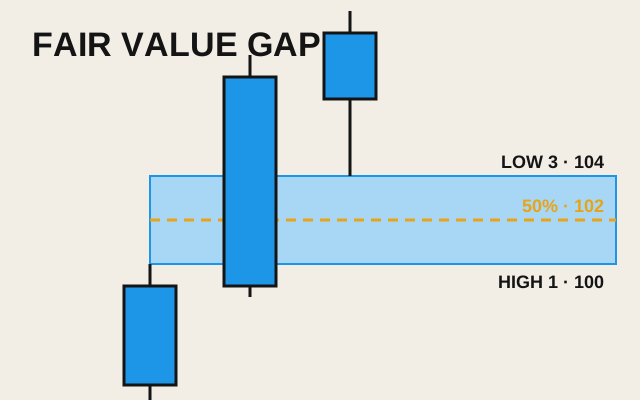
What is a Fair Value Gap
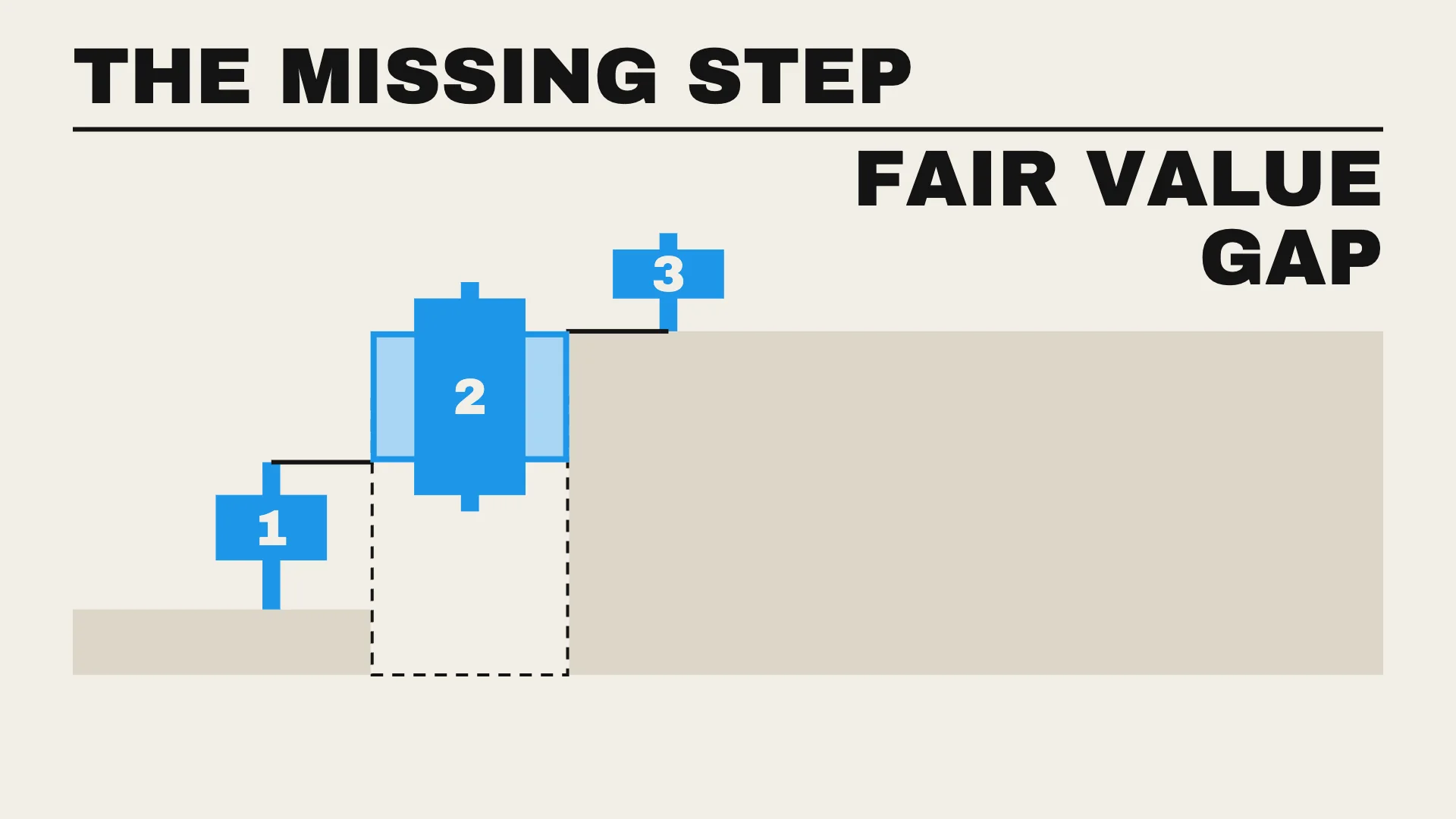
Most of the time, candles overlap. Each new candle trades back into part of the one before it, and price moves step by step like a staircase.
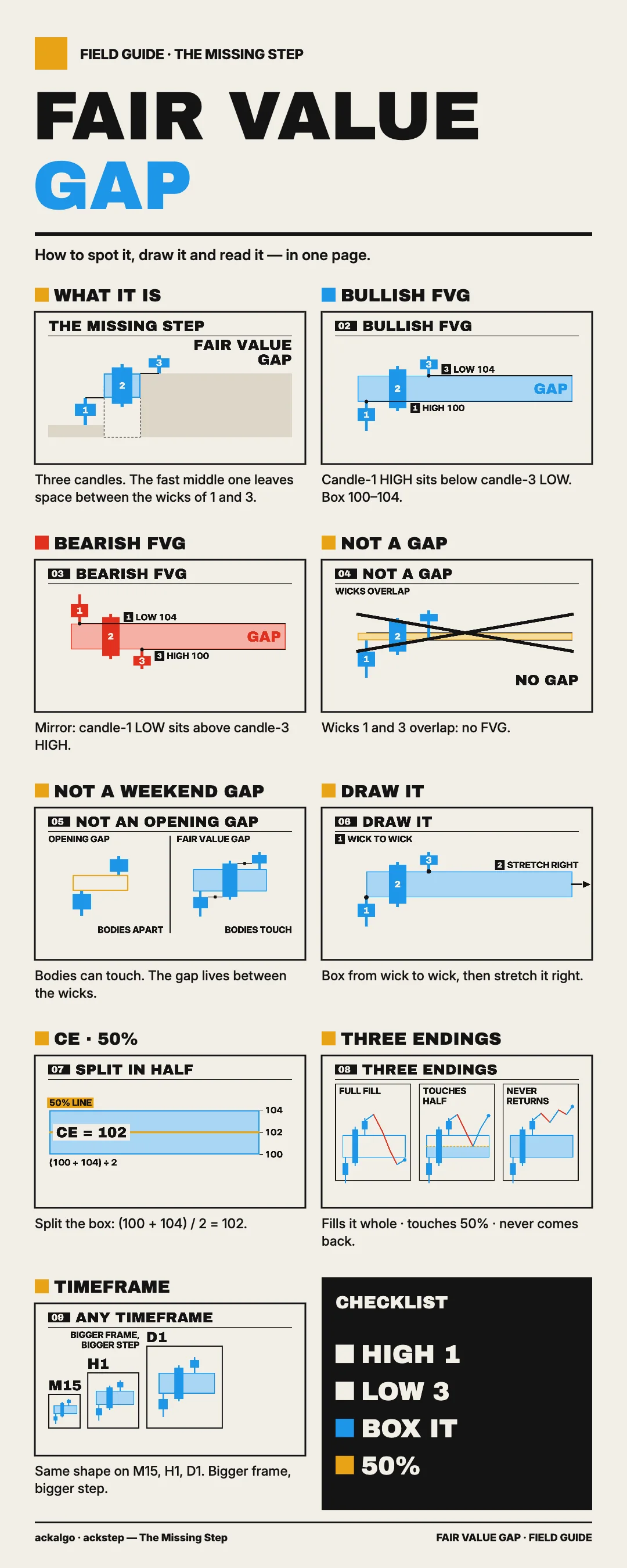
Sometimes one candle runs. Orders flood in on one side, price jumps, and the market skips a step. That skipped step is a Fair Value Gap (FVG) — an imbalance left by a fast, one-sided move. Traders mark it because price often comes back to that area later.
The term was made popular by the ICT (Inner Circle Trader, Michael J. Huddleston) teaching, which spread it through forums and YouTube. The idea of an imbalance is older than the name; ICT made the FVG label widely used.
The 3-candle rule: bullish and bearish
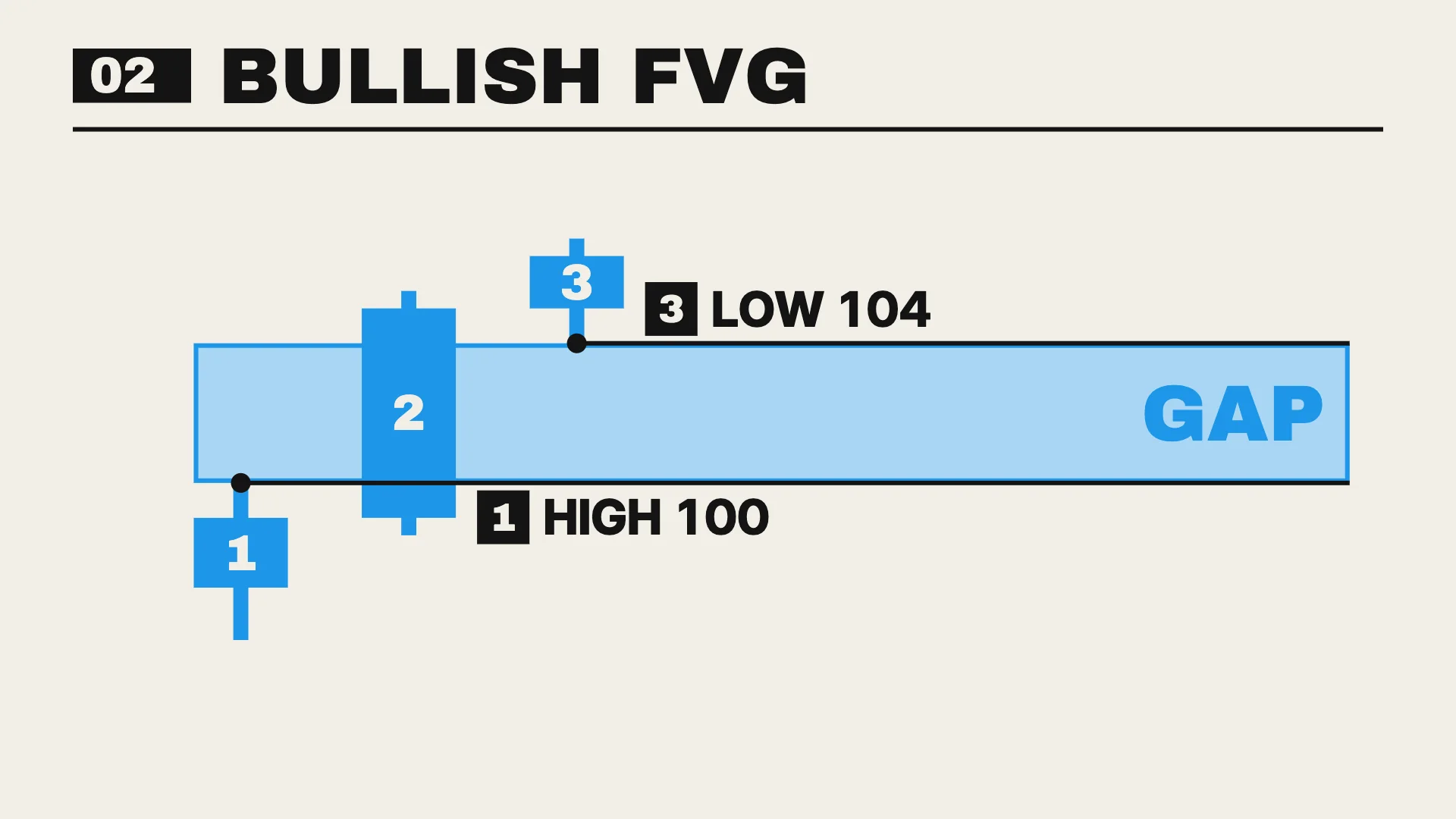
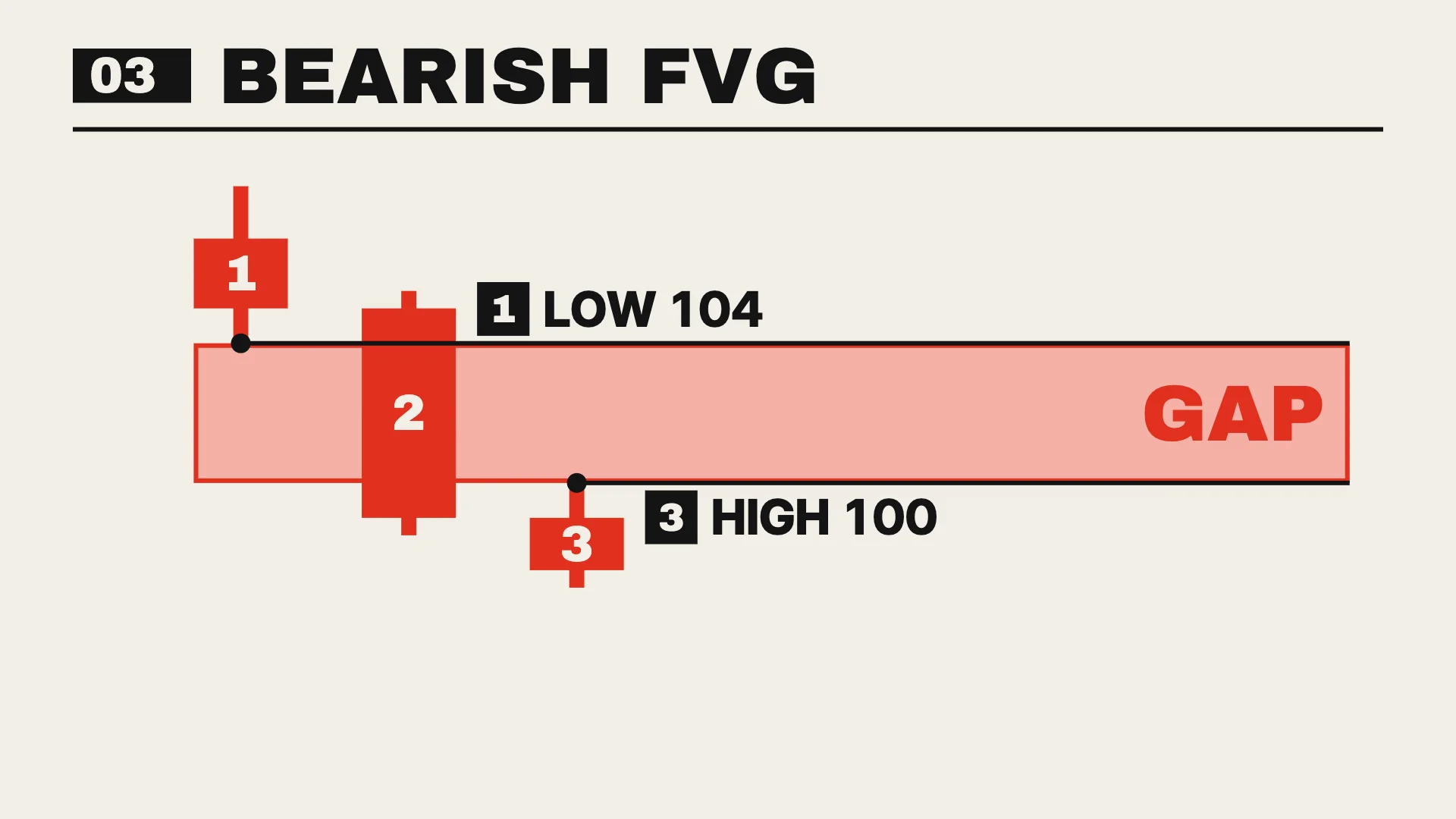
An FVG always uses three candles in a row. Candle 2 is the fast one. You compare the wicks of candle 1 and candle 3 — never the bodies.
- Bullish FVG (price moving up): candle-1 high is lower than candle-3 low. Example: candle-1 high = 100, candle-3 low = 104 → the gap is the zone 100–104.
- Bearish FVG (price moving down): the mirror. Candle-1 low is higher than candle-3 high. Example: candle-1 low = 104, candle-3 high = 100 → the gap is 100–104.
In both examples the gap is 104 − 100 = 4 points tall. On ackalgo diagrams a bullish gap is drawn in sky blue and a bearish gap in red — colour always means direction.
When it is not a gap
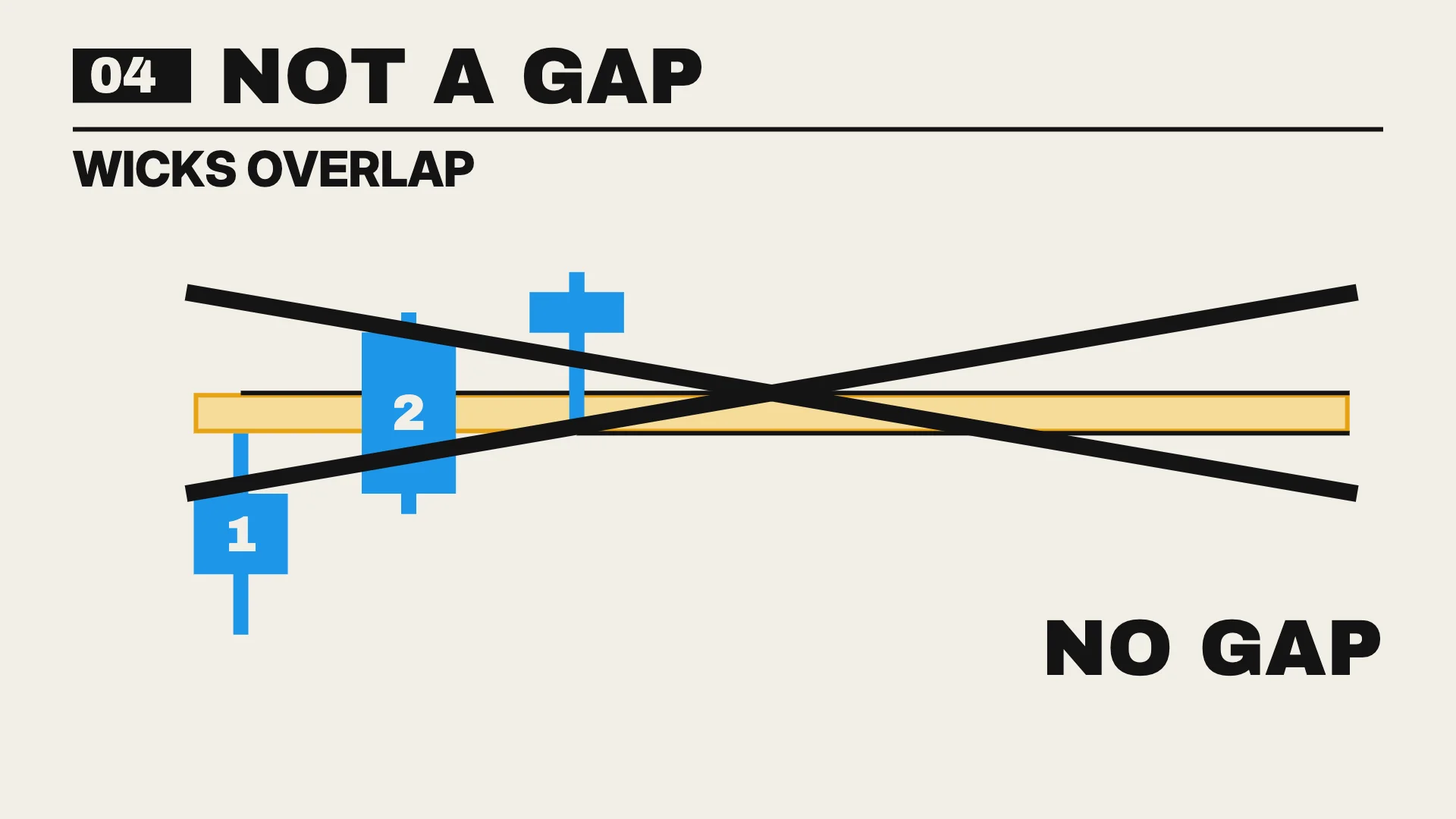
Wicks overlap = no FVG. If candle-3's low reaches down to or below candle-1's high (bullish case), the space is already traded. No gap, no box. This is the check that removes most false marks.
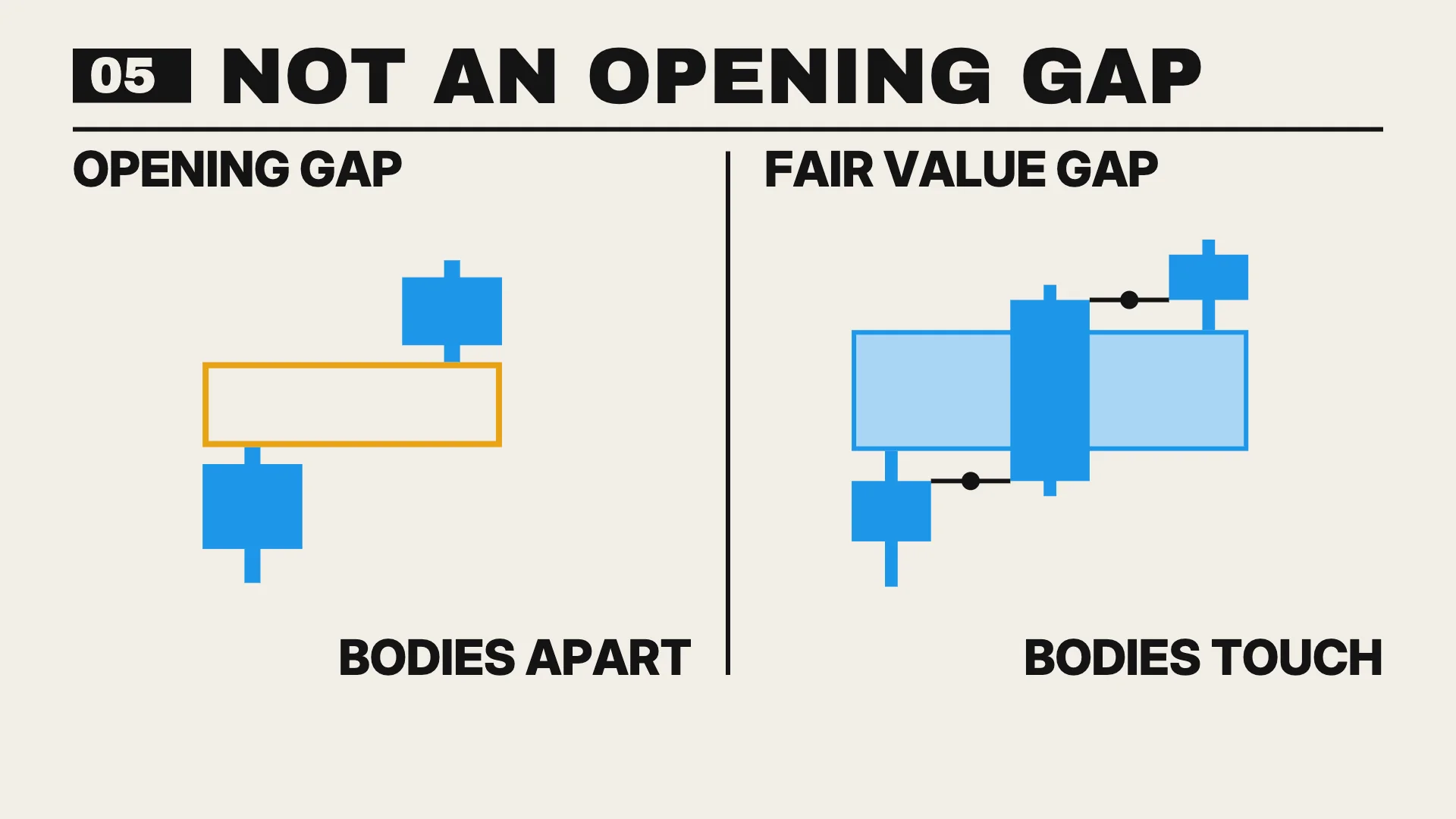
An FVG is not an opening or weekend gap. A classic chart gap is an empty space between one session's close and the next session's open — you see bare chart between the candles. An FVG can form while the candle bodies are fully connected, in the middle of a normal session. The gap lives between the wicks of candles 1 and 3, inside the body of the fast candle 2.
How to draw it — and the 50% CE line
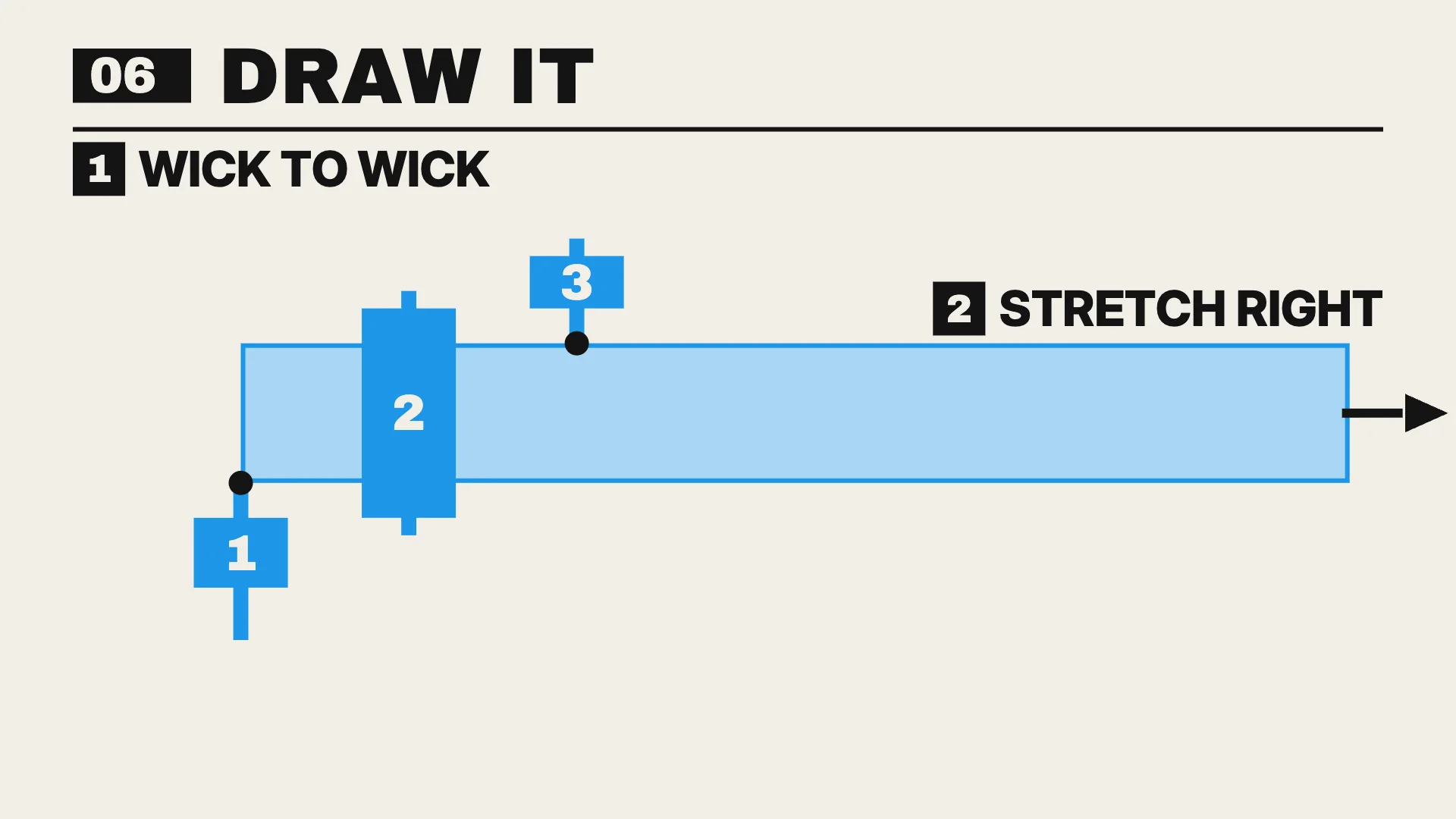
- Find the fast candle and look at its two neighbours.
- Bullish: put the bottom of the box on candle-1 high and the top on candle-3 low. Bearish: top on candle-1 low, bottom on candle-3 high.
- Start the box at candle 1 and extend it to the right, so you see it when price comes back.
- Colour it by direction: sky blue for bullish, red for bearish.
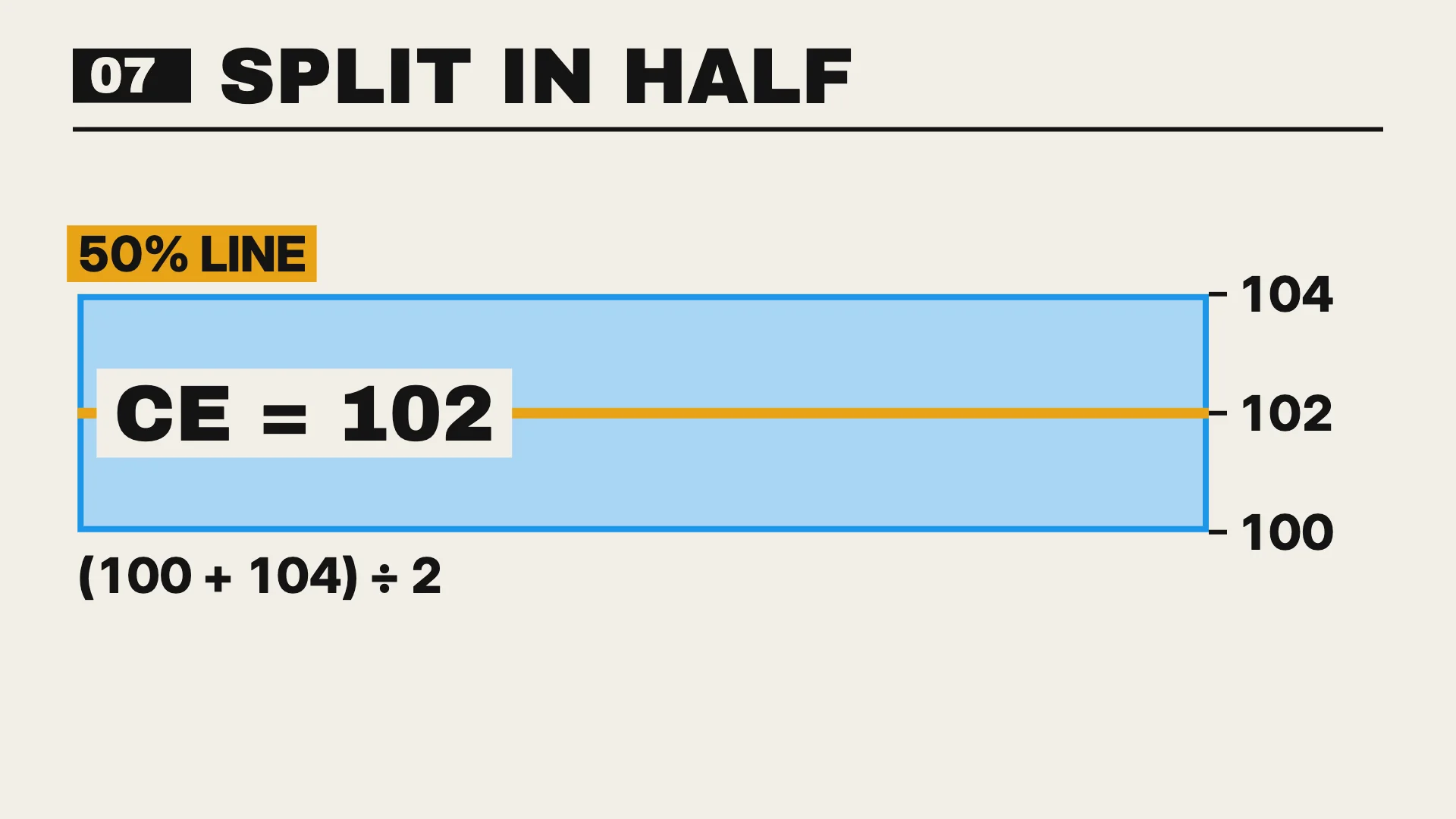
Then split the box in half. The midpoint is called Consequent Encroachment (CE) — the 50% line. In our example, (100 + 104) / 2 = 102. Many FVG playbooks anchor their rules to this line, so mark it on every box.
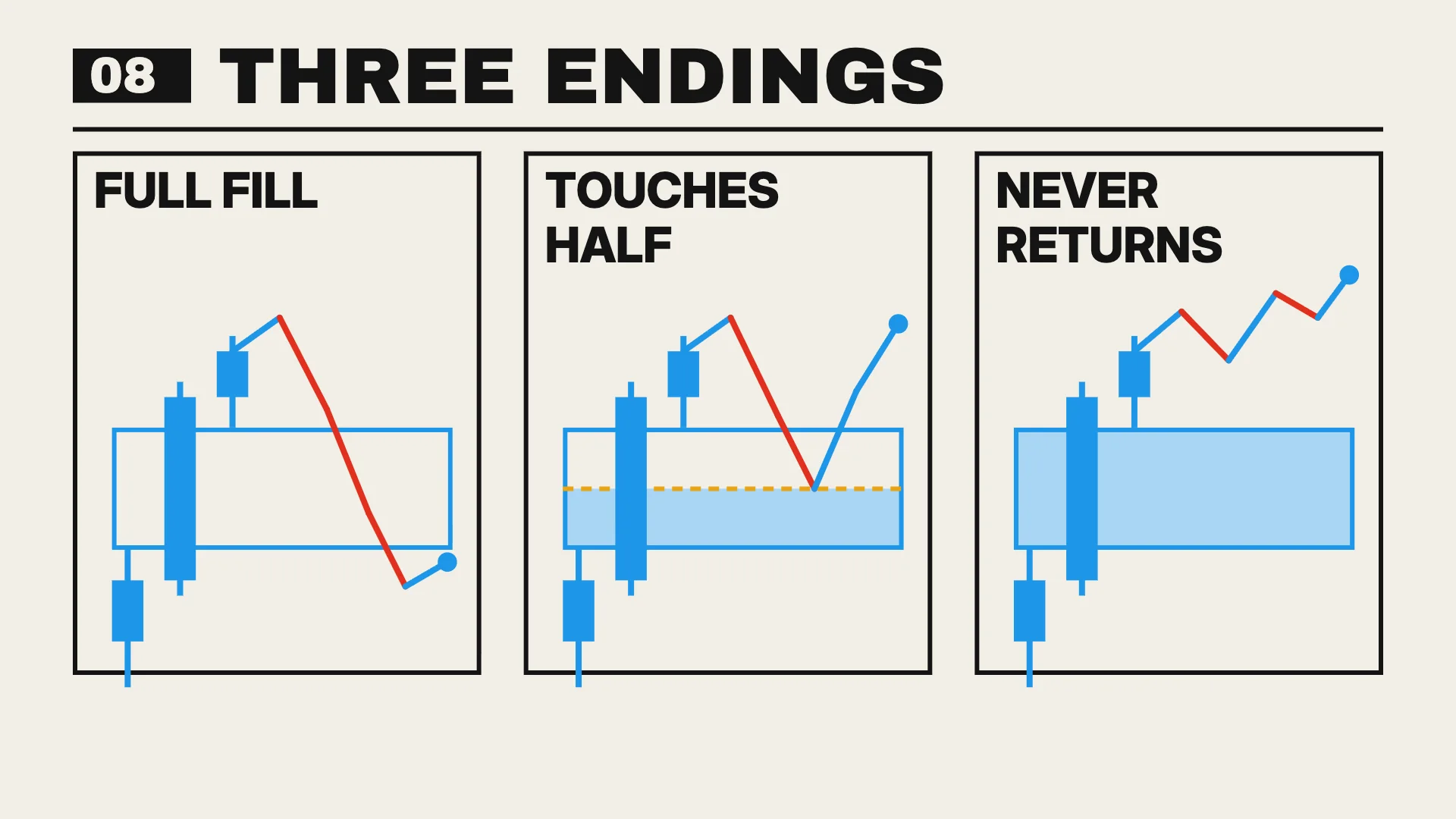
Three endings
Once a gap is boxed, it ends in one of three ways:
- Full fill — price comes back and trades through the whole box. The gap is closed.
- Touches half — price reaches the CE line (50%) and leaves again. The box is partly used.
- Never returns — price keeps going and the box stays open, sometimes for a long time.
The sources used for this guide do not provide a reliable universal frequency for these endings, so we do not quote one. Watch which ending you get, note it, and build your own record.
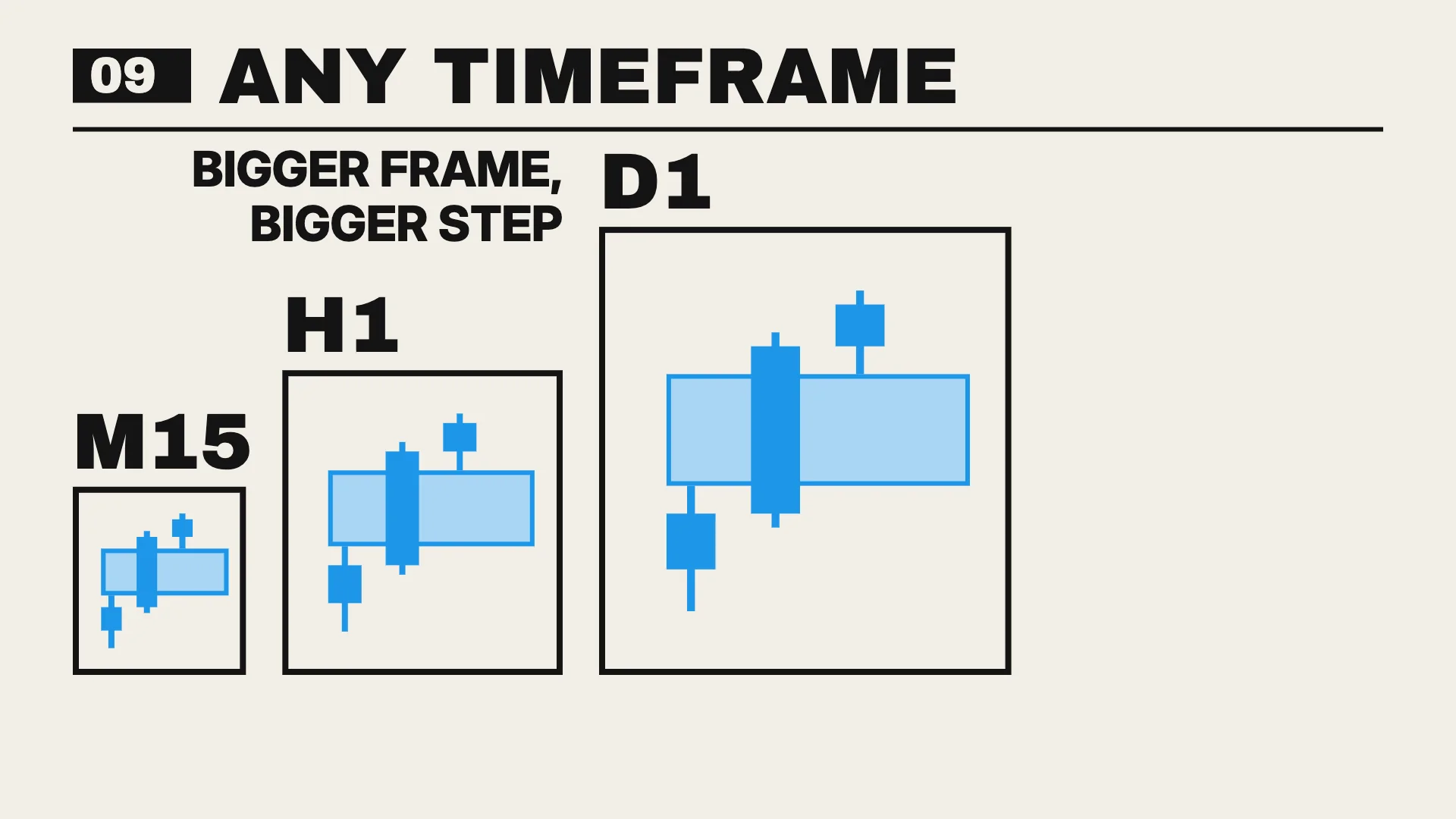
Timeframes
The same 3-candle rule applies on every timeframe — M15, H1, D1 and beyond. The box size always comes from the actual candle-1 and candle-3 wick levels. Higher-timeframe candles often cover more price, so their FVG boxes can be wider, but the timeframe alone does not determine the size.
A practical routine: mark the gaps on your higher timeframe first, then drop to a lower timeframe to see how price behaves when it reaches that box.
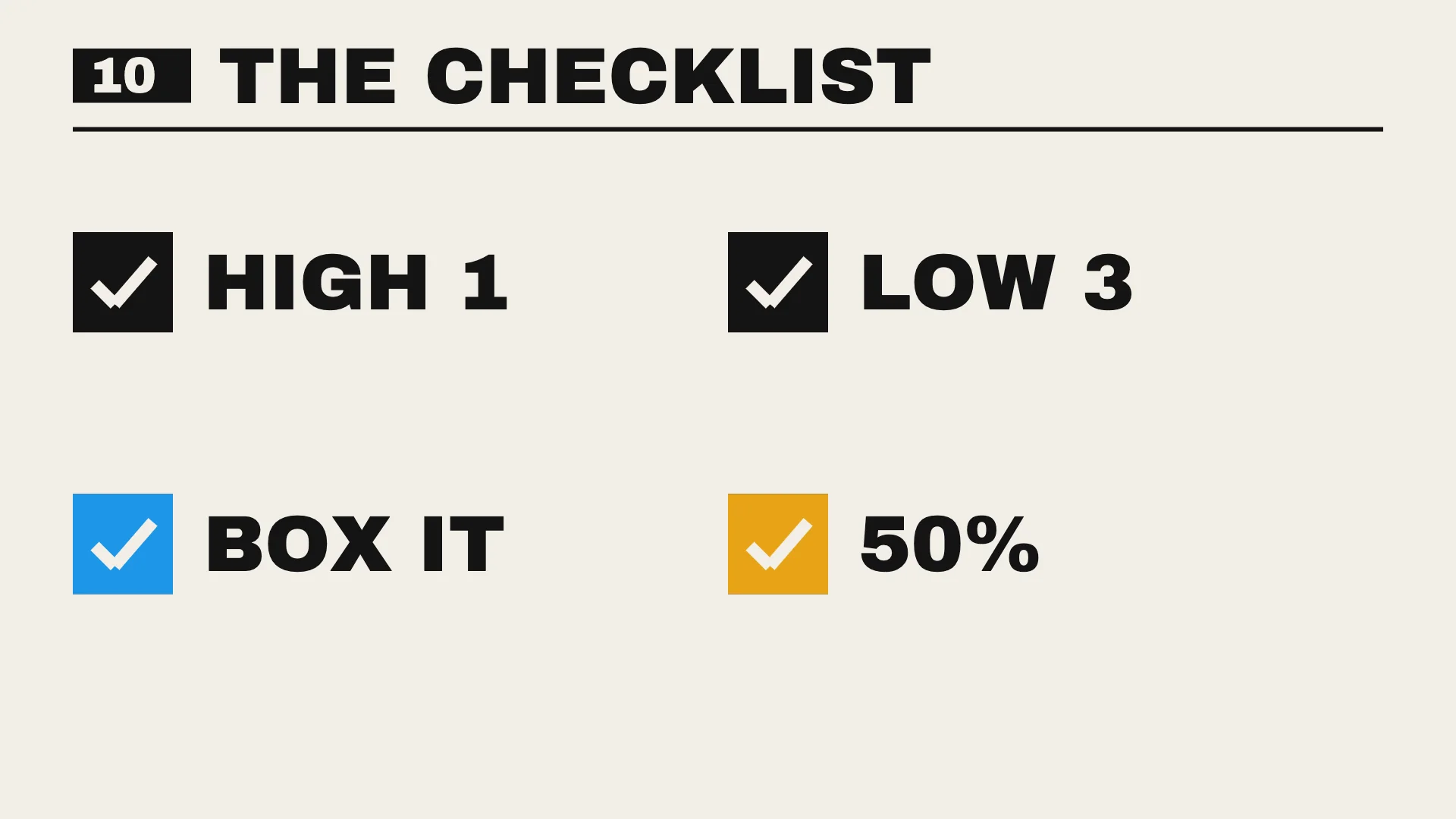
Checklist: HIGH 1 · LOW 3 · BOX IT · 50%
Four steps, every time:
- HIGH 1 — find candle-1's high (bearish: its low).
- LOW 3 — find candle-3's low (bearish: its high). If the wicks overlap, stop — no gap.
- BOX IT — draw the box wick to wick and extend it right. Sky blue up, red down.
- 50% — draw the CE line through the middle of the box.
Mark the box before price returns, test your rules on past charts, and keep notes on which of the three endings you see.
Glossary
- Fair Value Gap (FVG)
- A 3-candle pattern: the space between the wick of candle 1 and the wick of candle 3, left by a fast middle candle.
- Bullish FVG
- An FVG in an up-move: candle-1 high is below candle-3 low. Drawn in sky blue.
- Bearish FVG
- An FVG in a down-move: candle-1 low is above candle-3 high. Drawn in red.
- Imbalance
- A price area crossed quickly during a strongly one-sided move; the FVG is how traders mark it.
- Wick
- The thin line above or below a candle body showing the highest and lowest traded price.
- Consequent Encroachment (CE)
- The 50% midpoint line of an FVG box. For 100–104, CE = 102.
- Fill
- Price returning into the FVG box. A full fill trades through the whole box.
- Opening / weekend gap
- Empty chart between one session's close and the next session's open. Not the same as an FVG.
- ICT
- Inner Circle Trader — Michael J. Huddleston's trading teaching, which made the FVG term widely used.
- Timeframe
- The period each candle covers (M15 = 15 minutes, H1 = 1 hour, D1 = 1 day).
Frequently asked questions
What is a Fair Value Gap?
A 3-candle pattern where a fast middle candle leaves a space between the wick of candle 1 and the wick of candle 3. It marks an imbalance left by a one-sided move.
How do I identify a bullish FVG?
Compare candle-1 high with candle-3 low. If candle-1 high is below candle-3 low, the space between them is a bullish FVG. Example: high 100, low 104 → box 100–104.
How do I identify a bearish FVG?
The mirror: if candle-1 low is above candle-3 high, the space between them is a bearish FVG. Example: low 104, high 100 → box 100–104.
What if the wicks overlap?
Then there is no Fair Value Gap. The zone has already been traded, so there is nothing to box.
Is an FVG the same as an opening or weekend gap?
No. An opening gap is empty chart between one session's close and the next open. An FVG can form with connected candle bodies; the gap is between the wicks of candles 1 and 3.
What is Consequent Encroachment (CE)?
The 50% midpoint of the FVG box. For a 100–104 gap, CE is 102. Many FVG playbooks anchor their rules to it.
Who created the term Fair Value Gap?
The term spread through the ICT (Inner Circle Trader, Michael J. Huddleston) teaching on forums and YouTube. The underlying idea of a price imbalance is older than the name.
Sources
- FVG trading: what is a Fair Value Gap · ATAS
3-candle definition; bullish (candle-1 high / candle-3 low) and bearish mirror. - Consequent Encroachment · LuxAlgo
CE = the 50% midpoint of the gap. - ICT immediate rebalance concept explained · LuxAlgo
The term's place in ICT teaching. - ICT Michael Huddleston method — trading guide · backtrex
How the ICT teaching spread through forums and YouTube. - Fair Value Gap · ForexTester
FVG as an imbalance left by a fast one-sided move; price often returns.